
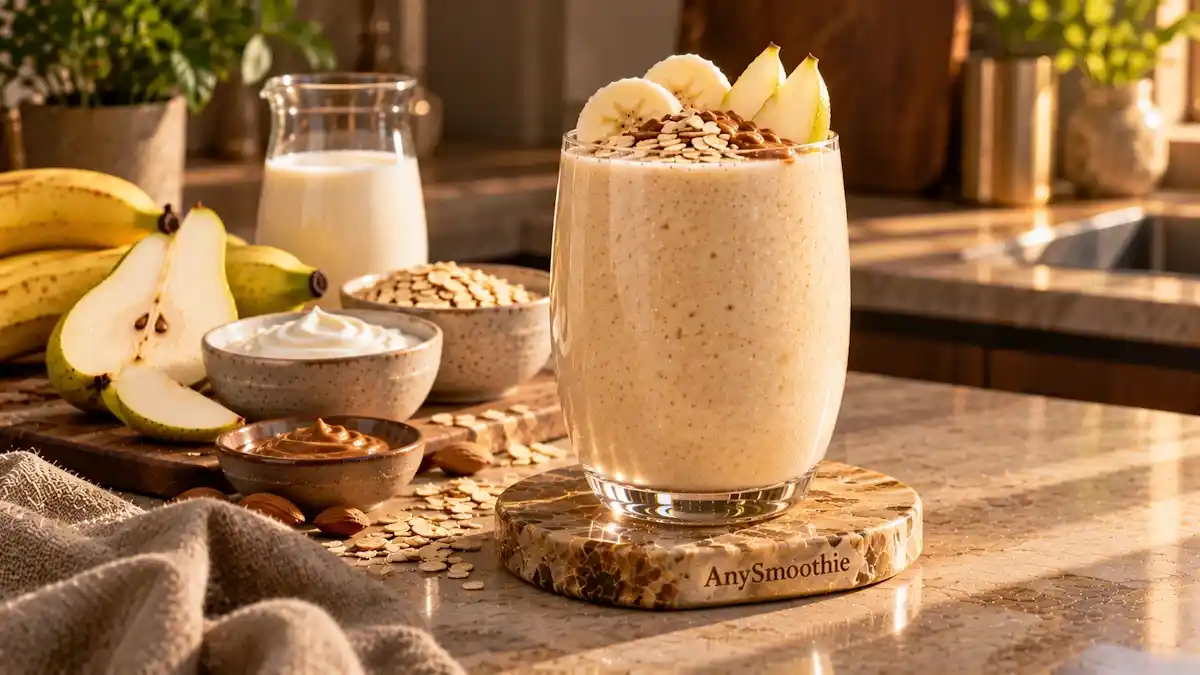
Smoothies can provide vitamin B12 through dairy or fortified plant drinks, while dairy fat contributes small amounts of odd-chain fats. These nutrients participate in normal metabolism, but a smoothie is a food choice, not a treatment.
The base you choose matters: fruit adds flavor and fiber, but it doesn’t naturally supply B12. Before trying the three recipes below, it helps to understand how B12 and odd-chain fats connect inside your body.
How vitamin B12 and odd-chain fats connect in the body
When your body breaks down certain odd-chain fatty acids, it produces propionyl-CoA. Enzymes convert this compound into methylmalonyl-CoA. Then, a B12-dependent enzyme called methylmalonyl-CoA mutase converts it into succinyl-CoA, which participates in normal energy metabolism. For a related but distinct topic on cellular energy, see oxaloacetate smoothies for cellular energy.
A review of B12-dependent enzyme activity describes this biochemical connection. However, providing ingredients involved in that pathway doesn’t establish that a smoothie speeds metabolism or changes a health outcome.
Which smoothie ingredients provide B12 or odd-chain fats?
Milk, plain yogurt, and kefir naturally contain vitamin B12. Their fat can also contain small amounts of odd-chain fatty acids, including pentadecanoic acid (C15:0) and heptadecanoic acid (C17:0).
However, amounts vary with the food, its fat content, and your serving. Fat-free dairy can provide B12 without a meaningful dairy-fat contribution. Plant-based drinks provide B12 when manufacturers add it, so fortification matters. Fruit, oats, nuts, and seeds contribute other nutrients, but they aren’t dependable natural B12 sources. For a separate look at how cells sense amino acid availability, see smoothies for sestrin2 amino acid sensing.
What this pathway means for your smoothie
B12’s enzyme role explains why adequate intake supports normal physiological systems. It doesn’t mean that combining B12 and dairy fat produces an extra metabolic benefit.
Similarly, more dairy fat doesn’t automatically make a smoothie a better choice. Consider the whole serving, including protein, fiber, and total calories. The recipes below offer different combinations, rather than a prescribed ratio of B12 to odd-chain fats. None guarantees a change in metabolism, and their nutrient estimates don’t measure your individual absorption. For another related discussion of cellular energy regulation, see smoothies for adenosine signaling and energy regulation.
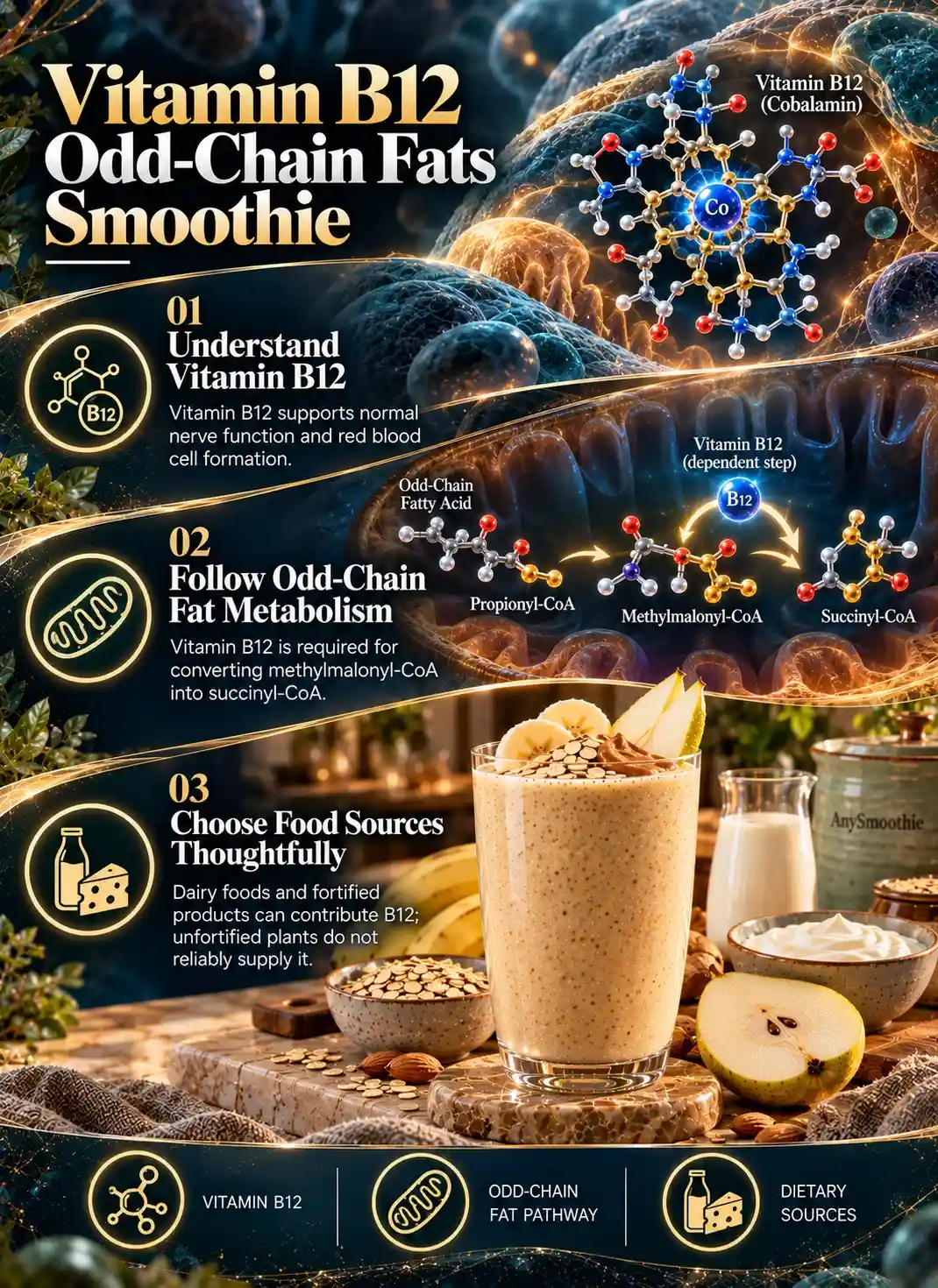
3 Smoothies for Vitamin B12 and Odd-Chain Fat Metabolism
Each recipe makes one serving. Estimates vary with brands and fruit size.
Creamy Berry Kefir Smoothie
Ingredients
- 1 cup plain whole-milk kefir
- 1 cup unsweetened frozen mixed berries
- 1 tablespoon ground flaxseed
Instructions
Blend everything until smooth. Add a splash of cold water if the frozen berries make it too thick.
Estimated Nutrition (per serving)
- Calories: ~260 kcal
- Protein: ~12 g
- Carbohydrates: ~30 g
- Fat: ~12 g
- Fiber: ~7 g
- Sugars: ~21 g
Peach and Yogurt Oat Smoothie
Ingredients
- 3/4 cup plain whole-milk Greek yogurt
- 1 medium peach, pitted
- 1/4 cup rolled oats
- 1/4 cup whole milk
- 1/4 teaspoon cinnamon
Instructions
Blend the oats with milk first. Add yogurt, peach, and cinnamon, then blend until creamy. Thin with water as needed.
Estimated Nutrition (per serving)
- Calories: ~340 kcal
- Protein: ~21 g
- Carbohydrates: ~37 g
- Fat: ~13 g
- Fiber: ~5 g
- Sugars: ~22 g
This smoothie brings together the sweetness of ripe peaches and a hint of cinnamon for a comforting, creamy blend. The oats add body, making it a satisfying choice for a relaxed breakfast or a nourishing afternoon snack.
Chocolate Banana Fortified Soy Smoothie
Ingredients
- 1 cup unsweetened soy beverage labeled B12-fortified
- 1 medium banana
- 1 tablespoon peanut butter
- 1 tablespoon unsweetened cocoa powder
Instructions
Blend until creamy, adding cold water if needed. This dairy-free option provides added B12 but no dairy-derived odd-chain fats.
Estimated Nutrition (per serving)
- Calories: ~290 kcal
- Protein: ~13 g
- Carbohydrates: ~38 g
- Fat: ~13 g
- Fiber: ~8 g
- Sugars: ~17 g
The following table compares the three smoothies based on their nutritional profile, flavor, texture, and intended use, highlighting how each option supports vitamin B12 intake and differs in its contribution to odd-chain fatty acid intake.
| Smoothie | Main Benefit | Nutritional Characteristics | Texture & Flavor | Best Use |
|---|---|---|---|---|
| Creamy Berry Kefir Smoothie | Combines B12-containing dairy with a source of odd-chain fatty acids | Moderate protein, fiber, and fat; approximately 260 kcal | Creamy, tangy, and fruity with a berry-forward taste | A refreshing breakfast or light snack |
| Peach and Yogurt Oat Smoothie | Supports B12 intake and provides dairy-derived odd-chain fatty acids | Highest protein content; moderate fiber and approximately 340 kcal | Thick, creamy, mildly sweet, with warm cinnamon notes | A more filling breakfast or post-activity snack |
| Chocolate Banana Fortified Soy Smoothie | Provides added vitamin B12 when made with fortified soy beverage | Plant-based protein, highest fiber content, and approximately 290 kcal | Smooth, chocolatey, and naturally sweet | A dairy-free breakfast or convenient snack |
Compare smoothie options by their nutrient sources and everyday fit
The kefir option has a tart, berry-forward flavor and a relatively drinkable texture. Its dairy base supplies naturally occurring B12 alongside dairy fat. It fits readers who prefer a fruit-focused smoothie without the thickness of Greek yogurt.
The yogurt option is thicker and has the highest estimated protein content of these three servings. It also supplies naturally occurring B12 and dairy fat. Its peach flavor and oat texture suit a more substantial breakfast choice.
Meanwhile, the fortified soy option offers a chocolate flavor without dairy. Its B12 comes from fortification, and its fats come primarily from soy and peanuts. It fits a dairy-free diet, although peanut allergies require a different recipe.
Choose a smoothie that fits your diet and expectations
Start with the label, especially when choosing plant-based drinks. Look for vitamin B12 in the Nutrition Facts panel rather than assuming every soy, oat, or almond beverage contains it. The NIH’s guide to vitamin B12 sources distinguishes naturally occurring B12 in animal foods from B12 added to fortified foods.
If you avoid animal foods, include a reliable fortified food or supplement source of B12. A plant-based smoothie without fortification doesn’t fill that role.
Also, intake and absorption are different. Oregon State University’s B12 overview explains the digestive processes involved in absorbing this vitamin. If you’re concerned about your intake or absorption, seek advice from a qualified health professional.
Finally, balance smoothies with a varied diet. Choose portions that fit your appetite, and remember that fruit and milk contribute naturally occurring sugars. These recipes support everyday nutrient intake; they don’t guarantee changes in metabolic rate.
Conclusion: Choose your base for taste and dietary needs
Dairy can contribute both B12 and small amounts of odd-chain fats. Fortified plant drinks can provide B12 without those dairy-derived fats.
Choose the recipe that suits your taste and dietary needs. The useful goal is adequate nutrient intake through enjoyable food, without expecting a smoothie to produce a specific metabolic result.
🛡️ Safety Notes & Dietary Interactions
- B12 source: Dairy naturally provides vitamin B12, while plant-based beverages provide it only when fortified. Check the label rather than assuming a soy, oat, or almond beverage contains B12.
- Dairy and fat: Whole-milk kefir, Greek yogurt, and milk provide dairy fat alongside B12, while fat-free dairy can provide B12 without a meaningful dairy-fat contribution. Choose according to your overall dietary needs.
- Allergen awareness: The recipes include dairy, soy, peanuts, and flaxseed. Check ingredient labels and use suitable substitutions when allergies, intolerances, or dietary restrictions apply.
- Plant-based diets: A dairy-free smoothie without B12 fortification does not provide a dependable B12 source. If animal foods are avoided, use a reliable fortified food or supplement source as appropriate.
FAQs
Which smoothie provides the most protein?
The peach and yogurt oat smoothie has the highest estimated protein content at approximately 21 grams per serving. The chocolate banana fortified soy smoothie provides about 13 grams, while the berry kefir version provides around 12 grams. Actual values vary with yogurt, milk, soy beverage, and serving sizes.
Does dairy fat provide vitamin B12 and odd-chain fats at the same time?
Dairy foods can provide both naturally occurring B12 and small amounts of odd-chain fatty acids such as C15:0 and C17:0. However, their amounts vary with the food and fat content. Fat-free dairy can still provide B12 without providing a meaningful dairy-fat contribution.
Can the fortified soy smoothie provide B12 without dairy?
Yes. The chocolate banana smoothie uses a soy beverage specifically labeled as B12-fortified, so its B12 comes from fortification rather than dairy. It provides no dairy-derived odd-chain fats. Check the nutrition label because plant-based beverages differ substantially in their fortification.
Is a B12-fortified plant drink equivalent to naturally occurring B12 from dairy?
Both can provide vitamin B12, but their dietary context differs. Dairy naturally contains B12, whereas fortified plant beverages receive added B12 from the manufacturer. The article emphasizes checking the label and distinguishing reliable fortification from assuming that every plant-based beverage contains B12.
Does combining B12 with dairy fat make metabolism work faster?
No. B12 participates as a cofactor for methylmalonyl-CoA mutase in the pathway that converts methylmalonyl-CoA to succinyl-CoA. Including B12-containing foods and dairy fat supports nutrient intake, but the article does not establish that combining them speeds metabolism or produces a specific metabolic outcome.

Medical Disclaimer: AnySmoothie content is for educational purposes only and is not a substitute for professional medical advice. Consult a healthcare provider for personalized guidance. See our full Disclaimer & Terms of Use. AI Transparency: AnySmoothie may use AI to support content development. All content undergoes human editorial review for accuracy, clarity, and editorial quality. See our full AI Transparency.