
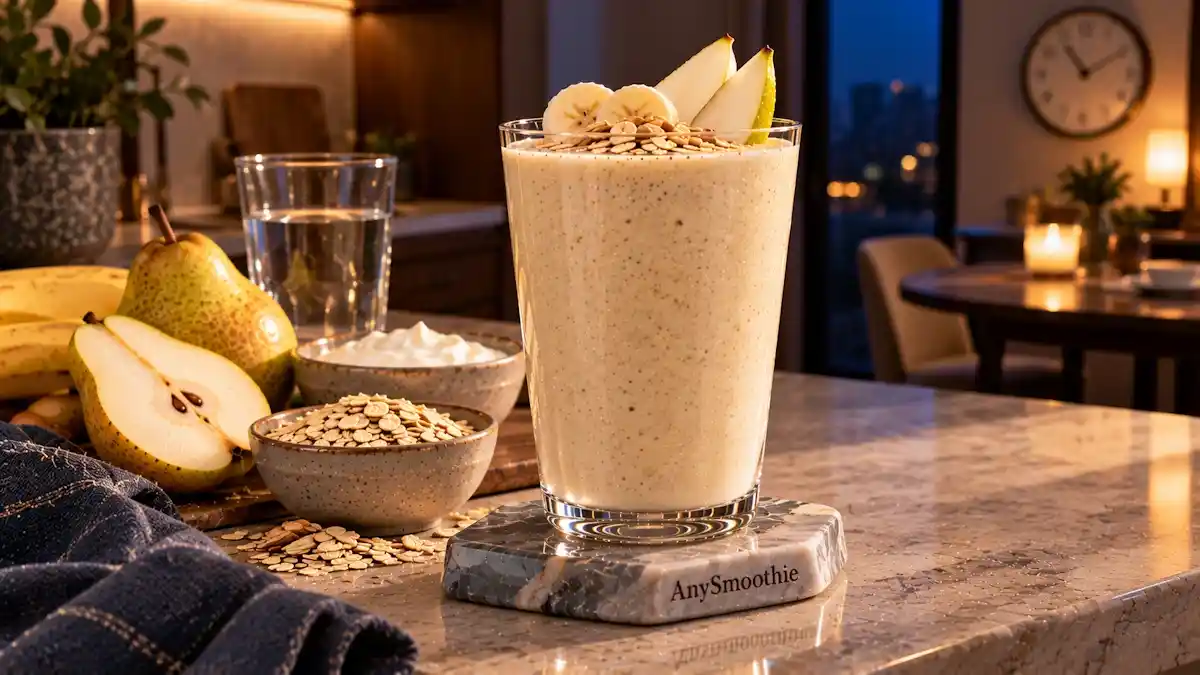
A smoothie can fit into an evening routine when reflux is a concern, but ingredients, portion size, and timing matter. Smoothies for nighttime acid reflux aren’t treatments, and no recipe suits everyone.
If you enjoy an evening smoothie, focus on your own triggers rather than a list of supposedly safe foods. Start with how much you drink and how soon you lie down afterward. For a broader overview, see are smoothies good for acid reflux? a practical guide.
How timing and portion size can affect nighttime reflux
A large smoothie adds volume to your stomach, just as a large meal does. That fullness can increase pressure and make reflux more likely for some people. For a related discussion about evening meals, see smoothies after an extra-late dinner.
Lying down also removes gravity’s help in keeping stomach contents below the esophagus. However, changing your routine doesn’t guarantee symptom relief.
Leave time between a smoothie and lying down
Common advice is to finish eating about two to three hours before lying down. That includes a smoothie, even if you consider it a drink rather than a snack. NIDDK’s guidance for managing reflux includes this timing advice.
For a 10 p.m. bedtime, that means finishing around 7 to 8 p.m. Count backward from when you recline on the couch, too. Personal needs differ, so a clinician can offer guidance if symptoms continue.
Keep the serving modest and sip slowly
Start with around 6 to 8 fluid ounces, rather than a large blender cup. This is a practical trial portion, not a medically established amount that prevents reflux.
Sip slowly so you can notice fullness before finishing. If fullness seems to trigger symptoms, avoid adding another snack or large drink close to bedtime. Also consider dinner: a small smoothie after a substantial meal still adds to what’s already in your stomach.
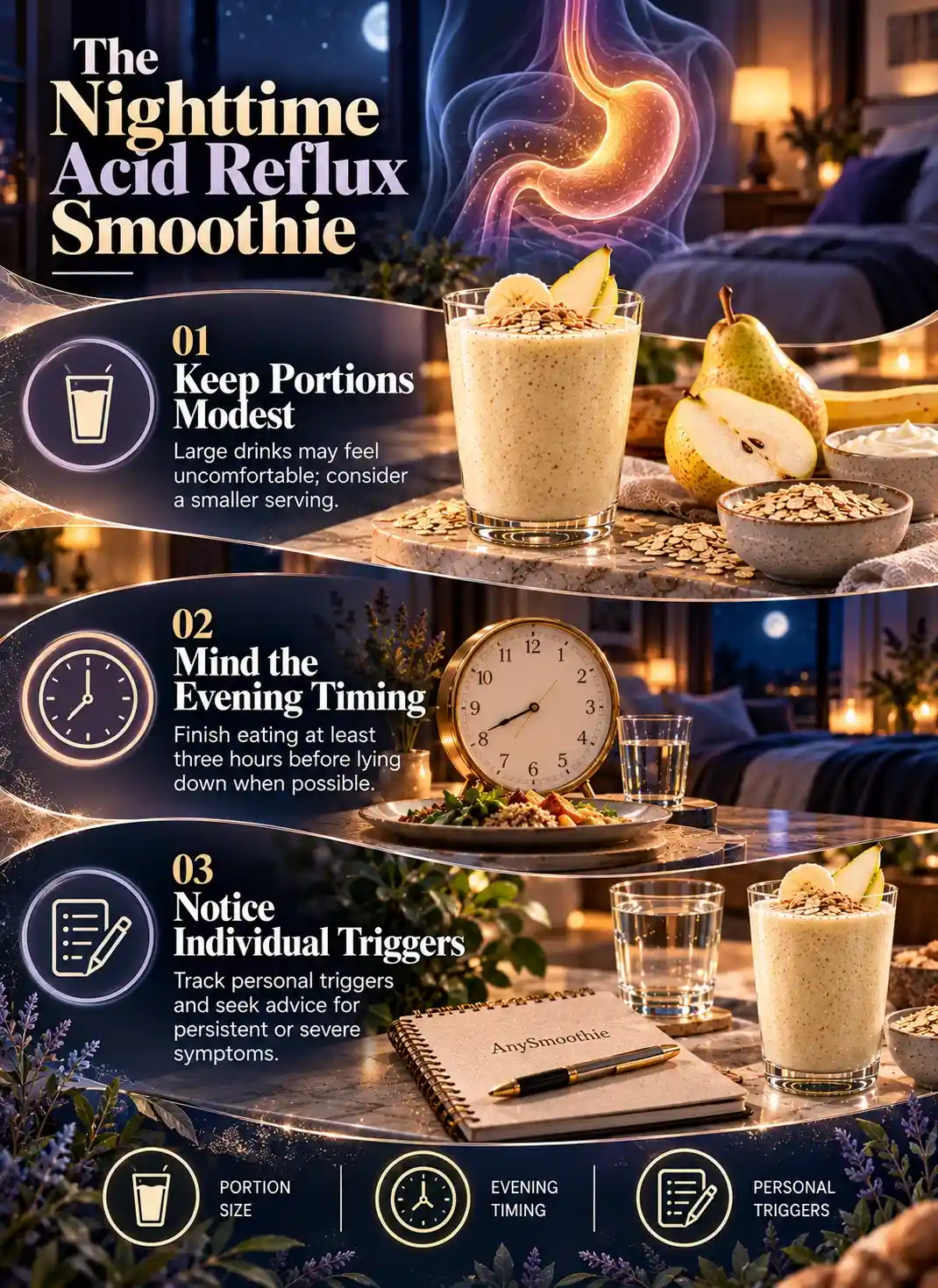
3 Smoothies for Nighttime Acid Reflux: Timing & Portions
These lower-acid recipe ideas are options to test, not proven remedies. Each makes roughly one modest serving, although fruit size and blending affect the final volume. Finish well before lying down.
Use these amounts as starting recipes, adjusting only for ingredients you already tolerate.
Banana-Oat Smoothie
A simple, lightly textured smoothie made with banana and oats, designed for a modest serving size. Its mild flavor and short ingredient list make it easy to adapt to individual tolerance.
Ingredients
- 1/2 medium banana
- 1 tablespoon rolled oats
- 1/2 cup water
Steps
- Add the banana, rolled oats, and water to a blender.
- Blend until smooth, adding a little more water if needed to adjust the consistency.
- Pour into a glass and serve a portion of approximately 6–8 fluid ounces.
Estimated Nutrition per Serving
- Calories: ~75 kcal
- Protein: ~1.6 g
- Carbohydrates: ~17.5 g
- Fiber: ~2.1 g
- Sugars: ~6.9 g
- Fat: ~0.7 g
Reflux-Aware Timing and Notes
Finish this smoothie about 3 hours before lying down. Keep the oat portion modest if fiber or food volume tends to make you feel overly full. Individual tolerance varies, so adjust the serving size to your comfort.
For a smoother texture, blend the oats with the water first, then add the banana. Sip slowly rather than drinking the smoothie quickly, especially in the evening
Pear-Oat Smoothie
This mild fruit-and-oat smoothie combines ripe pear with a small amount of rolled oats. Its simple preparation allows you to adjust the texture and portion according to your personal preferences.
Ingredients
- 1/2 cup peeled, diced ripe pear
- 1 tablespoon rolled oats
- 1/2 cup water
Steps
- Peel and dice the ripe pear.
- Place the pear, rolled oats, and water in a blender.
- Blend until smooth, adjusting the consistency with a little additional water if necessary.
- Serve a portion of approximately 6–8 fluid ounces.
Estimated Nutrition per Serving
- Calories: ~65 kcal
- Protein: ~1.4 g
- Carbohydrates: ~15.8 g
- Fiber: ~2.8 g
- Sugars: ~7.0 g
- Fat: ~0.6 g
Reflux-Aware Timing and Notes
Finish this smoothie about 3 hours before lying down. Try it only if you tolerate pears comfortably. Although pears are generally less acidic than some fruits, their natural sugars and fiber may still cause discomfort in some individuals.
Choose a fully ripe pear for a softer texture and naturally sweet flavor. If you are unsure how you respond to pears, start with a smaller portion and observe your individual toleran
Banana-Yogurt Smoothie
A creamy, lightly sweet smoothie combining banana with plain low-fat yogurt. The yogurt adds protein while keeping the ingredient list short and the preparation simple.
Ingredients
- 1/2 medium banana
- 1/4 cup plain low-fat yogurt
- 1/4 cup water
Steps
- Add the banana, plain low-fat yogurt, and water to a blender.
- Blend until creamy and uniform.
- Add a small splash of water if needed to reach your preferred consistency.
- Serve a portion of approximately 6 fluid ounces.
Estimated Nutrition per Serving
- Calories: ~95 kcal
- Protein: ~3.5 g
- Carbohydrates: ~13.5 g
- Fiber: ~1.5 g
- Sugars: ~9.5 g
- Fat: ~2.0 g
Reflux-Aware Timing and Notes
Finish this smoothie about 3 hours before lying down. Use yogurt only if you tolerate dairy well. Yogurt’s acidity, fat content, and individual tolerance can influence how comfortable the smoothie feels.
For the creamiest consistency, use chilled yogurt and a ripe banana. Choose plain yogurt without added sweeteners, and begin with a small serving if you are uncertain about your tolerance.
Blend until smooth. If the mixture is too thick, add water one tablespoon at a time, keeping the final serving modest. Save any excess rather than finishing it automatically.
There’s no need to add honey or juice before tasting. Extra ingredients make it harder to identify what bothered you if symptoms appear afterward.
Compare these reflux-aware smoothie options to find the best fit for your ingredient tolerance, preferred portion size, and evening routine.
A small serving after a large dinner still adds stomach volume. Consider the whole evening’s intake, not just the smoothie glass.
Compare these reflux-aware smoothie options to find the best fit for your ingredient tolerance, preferred portion size, and evening routine.
| Smoothie | Main Nutritional Feature | Texture | Flavor Profile | Reflux-Aware Consideration |
|---|---|---|---|---|
| Banana-oat | Provides carbohydrates and modest fiber | Smooth and lightly thick | Mild, sweet, and slightly nutty | Keep the oat portion modest if fiber causes fullness |
| Pear-oat | Highest estimated fiber content | Smooth and lightly textured | Delicate, fruity, and sweet | Pear tolerance varies despite its relatively low acidity |
| Banana-yogurt | Highest estimated protein content | Creamy and smooth | Mild, creamy, and sweet | Choose yogurt only if you tolerate dairy comfortably |
Choose smoothie ingredients that suit your evening routine
Simple recipes make it easier to identify what agrees with you. Lower-acid fruits and modest amounts of lower-fat liquids are reasonable options to test, but no ingredient is universally safe. For a complementary ingredient-selection guide, see what makes a smoothie gerd-friendly?.
Start with mild fruits and simple add-ins
Banana, pear, and a small amount of oats offer a starting point. Blend them with water or a tolerated low-fat milk alternative. Check the liquid’s ingredients, since plant-based drinks differ in fat content and flavorings.
NIDDK lists citrus, tomatoes, chocolate, mint, and high-fat foods among commonly reported reflux triggers. Reactions vary, so this isn’t a mandatory avoidance list.
Large amounts of nut butter, cream, or full-fat coconut milk add fat and may prolong fullness. Also, lower acidity doesn’t mean a smoothie stops hydrochloric acid production in your stomach or prevents backflow. For a related explanation of the difference between food acidity and blood pH, see potassium bicarbonate smoothies for acidity balance.
Make one change at a time
Keep a brief food and symptom log over several evenings. Record ingredients, serving size, finishing time, and when you lie down. Note symptoms such as burning or sour-tasting regurgitation, including when they occur.
Then change one factor while keeping the others similar. For example, keep the recipe unchanged while moving it earlier in the evening.
A single uncomfortable night doesn’t establish a food trigger. Look for repeated patterns, and bring your notes to a clinician if symptoms persist. You don’t need to keep drinking something that repeatedly bothers you.
When a bedtime smoothie may not be the right choice
Skipping a late smoothie may be more comfortable if evening drinks repeatedly bring on symptoms. The same applies when you’re already full or plan to lie down soon. You don’t need a bedtime smoothie to complete a healthy eating routine. If fullness after a larger eating episode is also a concern, see smoothies after eating too much the day before.
If you want one, try it earlier rather than squeezing it into the final hour before bed. However, repeated discomfort deserves attention beyond recipe changes.
MedlinePlus’s GERD care guidance describes symptoms that warrant medical attention. Seek care for reflux that’s frequent, worsening, or disruptive to sleep or eating.
Trouble swallowing or unexplained weight loss needs prompt medical assessment. Vomiting blood or passing black, tarry stools requires urgent care. Don’t assume these symptoms are ordinary reflux.
Conclusion: Keep the routine comfortable and personal
Choose ingredients you tolerate, keep the portion small, and leave a few hours before lying down. Personal patterns matter more than a one-size-fits-all smoothie recipe.
If even a modest, earlier smoothie repeatedly causes discomfort, leave it out. Persistent symptoms deserve professional guidance rather than another round of ingredient swaps.
🛡️ Safety Notes & Dietary Interactions
- Timing before bed: A smoothie adds stomach volume even when consumed as a drink. Finish it about two to three hours before lying down, especially if evening fullness tends to worsen symptoms.
- Trigger awareness: Citrus, chocolate, mint, and high-fat ingredients are commonly reported reflux triggers, but responses vary. Keep a brief symptom log and avoid eliminating foods that you consistently tolerate.
- Portion control: Start with roughly 6 to 8 fluid ounces rather than a large blender serving. Sip slowly and consider the smoothie alongside the rest of your evening food and drinks.
- When to seek care: Frequent, worsening, or sleep-disrupting reflux warrants professional assessment. Trouble swallowing, unexplained weight loss, vomiting blood, or black stools require prompt or urgent medical attention.
FAQs
How long should I wait between an evening smoothie and lying down?
The article recommends finishing a smoothie about two to three hours before lying down. This applies even when the smoothie is considered a drink rather than a snack. For a 10 p.m. bedtime, finishing around 7 to 8 p.m. provides a practical starting point, while individual needs can vary.
Is 6 to 8 ounces a medically established reflux-safe portion?
No. The 6-to-8-fluid-ounce range is presented as a practical trial portion, not a medically established amount that prevents reflux. Starting small can make it easier to notice fullness and compare responses. If symptoms continue despite modest portions and earlier timing, professional guidance is more appropriate than continually reducing the recipe.
Which of the three smoothies is the lightest option?
The banana-yogurt smoothie has the smallest suggested portion at about 6 fluid ounces, compared with approximately 6 to 8 ounces for the banana-oat and pear-oat versions. However, portion size alone doesn’t determine comfort. Dairy tolerance, oats, fruit, overall evening intake, and individual reflux triggers can all influence the response.
Can I drink a nighttime reflux smoothie immediately after dinner?
It may be less comfortable if dinner was already substantial because the smoothie adds additional stomach volume. The article suggests considering the entire evening’s intake rather than treating the smoothie separately. If you want one, try having a modest serving earlier and leave several hours before lying down.
When should I stop experimenting with smoothie recipes and talk to a clinician?
If reflux becomes frequent, worsens, disrupts sleep or eating, or continues despite adjusting ingredients, portions, and timing, the article recommends professional assessment. Trouble swallowing or unexplained weight loss needs prompt medical attention, while vomiting blood or passing black, tarry stools requires urgent care.

Medical Disclaimer: AnySmoothie content is for educational purposes only and is not a substitute for professional medical advice. Consult a healthcare provider for personalized guidance. See our full Disclaimer & Terms of Use. AI Transparency: AnySmoothie may use AI to support content development. All content undergoes human editorial review for accuracy, clarity, and editorial quality. See our full AI Transparency.