
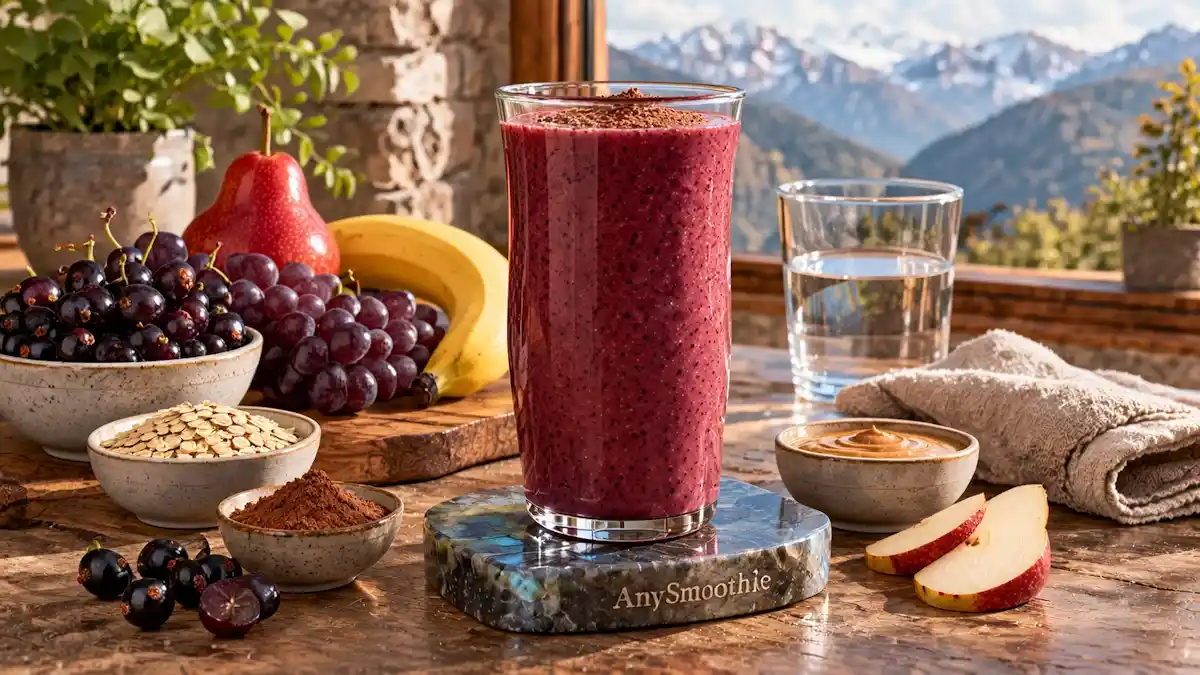
If you’re interested in nutrition and oxygen adaptation, a smoothie can look like an easy place to start. However, smoothies for HIF-1α and oxygen adaptation are nutrient-dense foods, not proven ways to raise oxygen levels or control this protein.
Their value comes from everyday nutrition: ingredients that supply protein, fiber, vitamins, and other compounds that support normal physiological systems. The body’s response to low oxygen depends on cellular processes that a particular recipe can’t reliably direct.
Understanding that distinction makes it easier to appreciate the science, choose among three practical recipes, and fit them safely into your routine.
What HIF-1α Does During Oxygen Adaptation
HIF-1α, short for hypoxia-inducible factor 1-alpha, is a protein involved in how cells respond to low oxygen. It forms part of a transcription factor, a protein complex that helps regulate gene activity.
When oxygen is available, enzymes called prolyl hydroxylases chemically modify HIF-1α. Those modifications allow the von Hippel-Lindau protein to recognize it and help direct it toward breakdown.
When oxygen falls, these enzymes work less effectively. As a result, HIF-1α can accumulate, join its partner protein, and influence genes involved in cellular energy use and responses to low oxygen. Research on HIF oxygen sensing describes the role of prolyl hydroxylase 2 in this regulation.
This process depends on oxygen availability, enzyme activity, and the conditions inside individual cells. It isn’t a dietary switch you can flip with beetroot, cocoa, or another ingredient.
Food supplies nutrients that support normal physiological systems. However, a nutrient’s involvement in a biochemical reaction doesn’t establish that consuming more of it will produce a desired HIF-1α response. Smoothies aren’t a proven method for triggering oxygen adaptation.
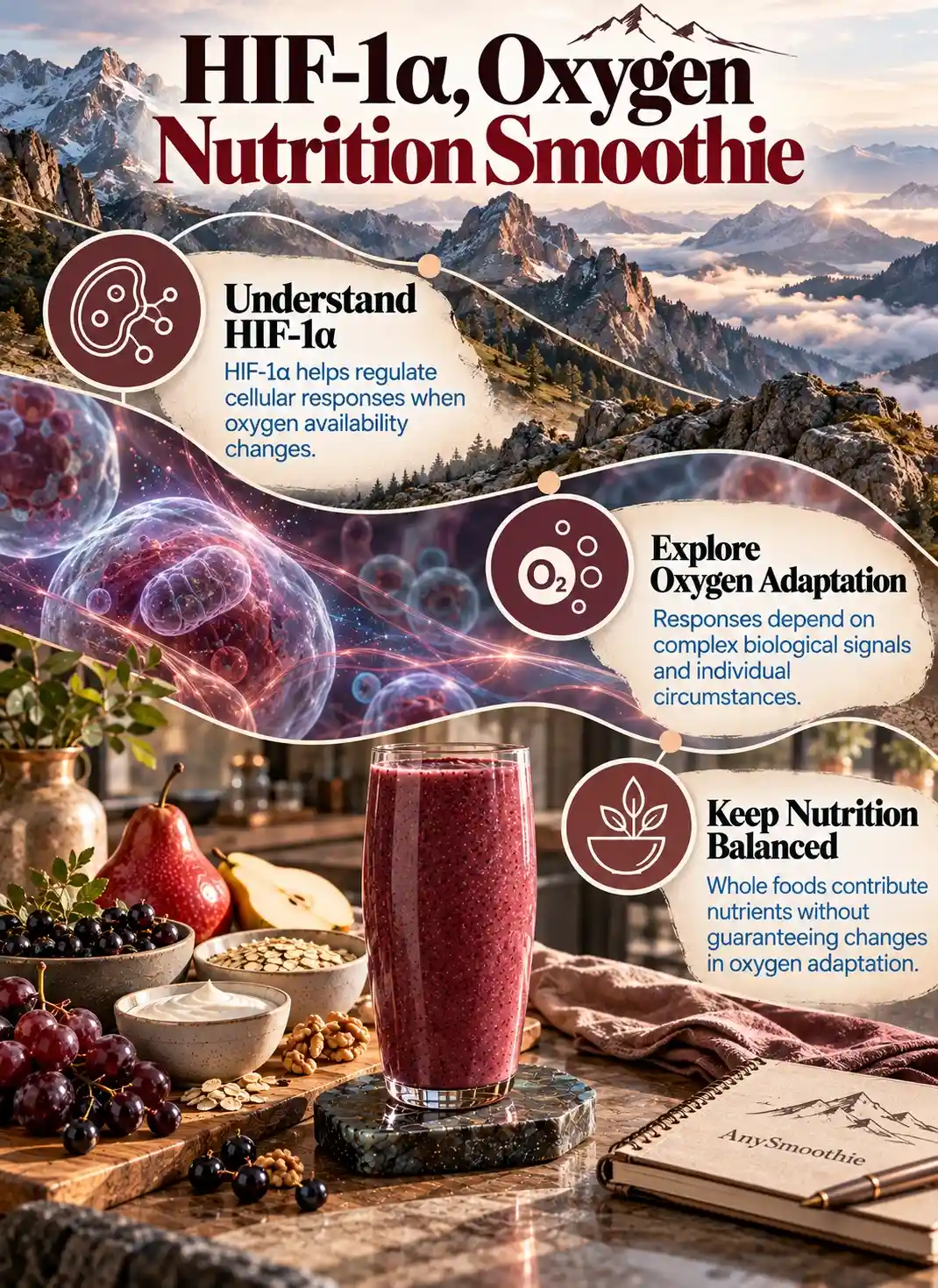
3 Smoothies for HIF-1α and Oxygen Adaptation
Each recipe makes one substantial serving. Use the suggested liquid as a starting point, then add a splash if your blender needs help. Unsweetened ingredients let the fruit supply most of the sweetness.
Berry, Beet, and Yogurt Smoothie
Ingredients
- 3/4 cup frozen mixed berries
- 1/4 cup chopped cooked beet
- 1/2 cup plain nonfat Greek yogurt
- 1/2 cup water
Steps
Add the water and yogurt first, then the beet and berries. Blend until smooth, adding water if the mixture is too thick.
Choose plain precooked beet rather than pickled beet for a less acidic flavor.
Berries provide polyphenols, naturally occurring plant compounds. Yogurt contributes protein, which supplies amino acids for normal tissue maintenance. The beet adds earthy sweetness and color, but neither the color nor the ingredient combination demonstrates an effect on HIF-1α.
Estimated Nutrition per Serving
- Calories: ~145 kcal
- Protein: ~14 g
- Carbohydrates: ~22 g
- Fat: ~1 g
- Fiber: ~6 g
- Sugars: ~15 g
Citrus, Spinach, and Kiwi Smoothie
Ingredients
- 1 medium peeled orange
- 1 medium peeled kiwi
- 1 cup loosely packed baby spinach
- 1/2 cup plain nonfat Greek yogurt
- 1/4 cup water
Steps
Remove orange seeds and any tough pieces of peel. Blend the water, yogurt, and spinach first. Then add the fruit and blend again until the leafy texture disappears.
Orange and kiwi provide vitamin C, which supports collagen formation and helps the body absorb nonheme iron. Spinach supplies folate, which participates in DNA synthesis and normal cell division. These nutrient roles don’t establish improved oxygen adaptation from the finished drink.
Estimated Nutrition per Serving
- Calories: ~180 kcal
- Protein: ~15 g
- Carbohydrates: ~31 g
- Fat: ~1 g
- Fiber: ~6 g
- Sugars: ~22 g
Oat, Banana, and Cocoa Smoothie
Ingredients
- 1/4 cup rolled oats
- 1 small banana
- 1 tablespoon unsweetened cocoa
- 3/4 cup 2% milk
Steps
For a smoother texture, soak the oats in the milk for 10 minutes before blending everything together. Blend until smooth.
A frozen banana gives a thicker consistency without requiring ice.
Oats provide fiber, while dairy milk supplies protein and calcium, as documented in USDA’s FoodData Central database. Fiber supports normal bowel function, and protein contributes amino acids for tissue maintenance. Fortified alternatives differ in protein and nutrient content, so their contribution depends on the product.
Estimated Nutrition per Serving
- Calories: ~270 kcal
- Protein: ~11 g
- Carbohydrates: ~49 g
- Fat: ~6 g
- Fiber: ~6 g
- Sugars: ~22 g
For everyday use, the cocoa-banana blend offers a familiar, mellow flavor and a thicker texture. The citrus version is brighter, while the beet adds an earthier note. Pick the flavor you’d happily drink again rather than trying to target a cellular pathway.
Here’s how the three recipes compare.
| Smoothie | Key ingredients | Notable nutrients | Flavor and texture | Simple prep note |
|---|---|---|---|---|
| Berry, beet, and yogurt | Berries, cooked beet, yogurt | Protein, polyphenols | Tangy, earthy, creamy | Use cooled, cooked beet |
| Citrus, spinach, and kiwi | Orange, spinach, kiwi, yogurt | Vitamin C, folate | Bright, tart, fresh | Peel fruit before blending |
| Oat, banana, and cocoa | Oats, banana, cocoa, milk | Fiber, protein with dairy milk | Chocolatey, thick | Soak oats for smoother texture |
Choose by flavor preference rather than an expected effect on oxygen levels.
How to Use Oxygen Adaptation Smoothies Realistically
Treat these recipes as substantial snacks or parts of meals. If a full serving exceeds your appetite, divide it into two portions. For a meal, consider whether the smoothie supplies enough food for your needs.
Balance Fruit With Protein and Fiber
Keep whole fruit rather than replacing it with juice, since blending retains its fiber. Yogurt, milk, or a suitable protein-rich alternative adds protein without requiring powders. Oats also thicken a drink and contribute fiber.
Adjust ingredients to your taste and dietary needs. Lactose-free dairy may suit lactose intolerance, but it isn’t suitable for a milk allergy. Soy and nut-based alternatives introduce different allergens; people who need gluten-free oats should choose certified gluten-free products. For additional dairy free ideas, see smoothies without dairy.
Keep Altitude Planning Separate
Hydration, overall eating patterns, and training plans deserve attention beyond a single drink. A smoothie cannot replace acclimatization or professional guidance.
The CDC’s high-altitude travel guidance, available through NCBI Bookshelf, explains that acclimatization takes time and emphasizes gradual ascent. Food choices don’t remove that need.
If you have personal health concerns, dietary restrictions, or unexplained breathlessness, seek clinical advice. Trying different ingredients isn’t an appropriate substitute for evaluating a possible oxygen-related problem.
Conclusion: Choose for Taste and Everyday Nutrition
Smoothies can be enjoyable ways to include fruit, vegetables, protein, and fiber. Their value lies in supporting normal physiological systems, without promising direct control over HIF-1α or higher oxygen levels.
The cellular response to low oxygen is complex, and nutrition is only one part of overall health. Choose the berry, citrus, or cocoa recipe according to your taste and dietary needs, then enjoy it as food rather than an oxygen-adaptation strategy.
🛡️ Safety Notes & Dietary Interactions
- Oxygen expectations: These smoothies provide ordinary nutrients but are not established methods for raising oxygen levels or controlling HIF-1α. Do not use them as substitutes for appropriate evaluation of oxygen-related symptoms.
- Altitude safety: A smoothie cannot replace gradual acclimatization, hydration, or appropriate high-altitude planning. Unexplained breathlessness or other concerning symptoms warrant medical attention rather than dietary experimentation.
- Medication considerations: Spinach and beet contribute dietary compounds relevant to individual nutrition, while grapefruit is absent here. If you have prescribed dietary restrictions or take medications affected by diet, review regular use with a clinician.
- Digestive tolerance: Oats, berries, spinach, beet, kiwi, and cocoa increase fiber or acidity in different ways. Start with portions you tolerate, particularly if these ingredients are not already routine foods.
FAQs
Can any of these smoothies directly increase HIF-1α activity?
The article does not establish that any recipe directly increases HIF-1α activity. HIF-1α regulation depends on oxygen availability, enzyme activity, and cellular conditions. Although beet, cocoa, berries, and other ingredients contain interesting nutrients or compounds, their presence in a smoothie does not make the drink a reliable way to direct this cellular pathway.
Which smoothie is the lightest option?
The berry, beet, and yogurt smoothie is the lightest by the article’s estimated calories, at about 145 kcal per serving, while the citrus version provides about 180 kcal and the oat-banana-cocoa version about 270 kcal. The berry blend also supplies approximately 14 grams of protein and 6 grams of fiber.
Does the beet smoothie help with altitude acclimatization?
No specific acclimatization effect is established by the article. Beet is included as a whole-food ingredient alongside berries and yogurt, but eating it does not remove the need for gradual ascent and appropriate altitude planning. The article specifically separates nutrition from acclimatization and recommends professional guidance when altitude-related concerns arise.
Why does the citrus smoothie contain both orange and kiwi?
Orange and kiwi provide vitamin C, which the article notes supports collagen formation and helps the body absorb nonheme iron. The combination also gives the smoothie its bright, tart flavor. Spinach adds folate, while Greek yogurt contributes protein. These nutritional roles do not demonstrate improved oxygen adaptation from drinking the smoothie.
Can I use plant-based milk or yogurt instead of dairy?
Yes, provided the alternative fits your dietary needs. The article notes that fortified alternatives can differ in protein and nutrient content, so their nutritional contribution depends on the specific product. Lactose-free dairy may suit lactose intolerance, but it is still unsuitable for someone with a milk allergy; check labels carefully.

Medical Disclaimer: AnySmoothie content is for educational purposes only and is not a substitute for professional medical advice. Consult a healthcare provider for personalized guidance. See our full Disclaimer & Terms of Use. AI Transparency: AnySmoothie may use AI to support content development. All content undergoes human editorial review for accuracy, clarity, and editorial quality. See our full AI Transparency.