
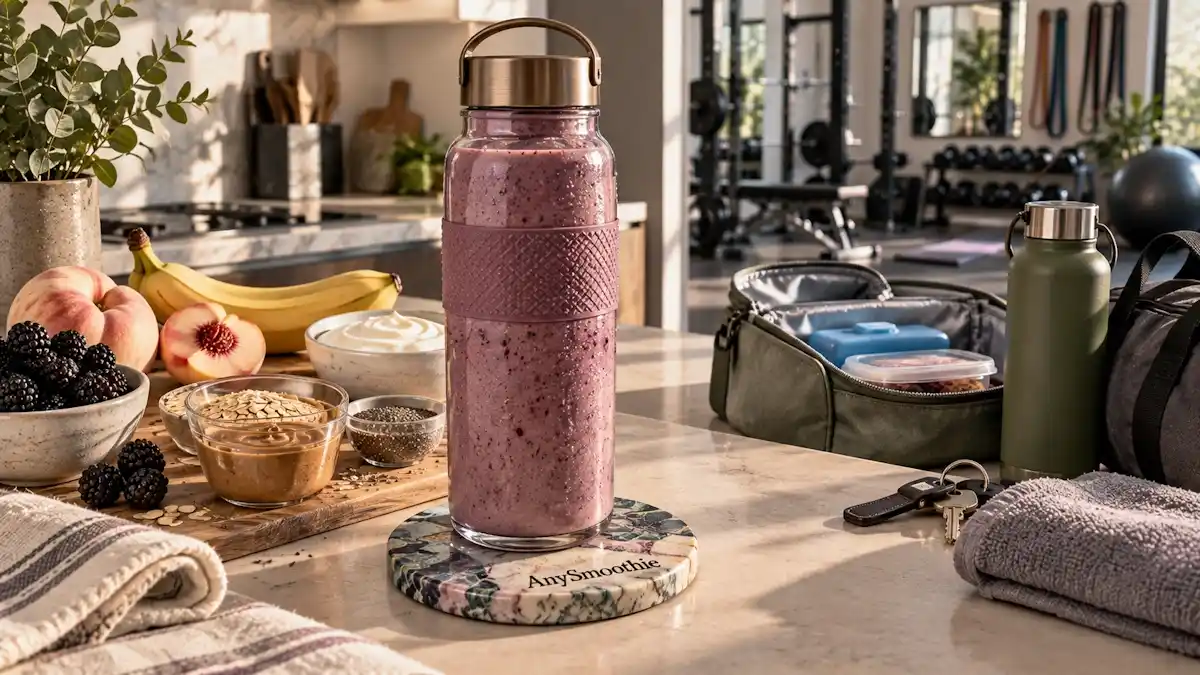
Coaching back-to-back sessions can leave you with ten minutes to eat and a long afternoon ahead. Well-planned smoothies for personal trainers offer a quick way to combine protein, carbohydrates, fluids, and produce when a sit-down meal doesn’t fit.
The ingredients matter more than a complicated recipe. Start with a simple blend, then adjust its size and texture to match your training day.
Build a Blend for Your Training Day
A useful smoothie has four parts: a protein source, a carbohydrate source, fruit or vegetables, and a liquid base. Greek yogurt, silken tofu, and soy milk are convenient protein options. Banana, oats, and berries provide carbohydrates, while water or milk helps you set the thickness.
Carbohydrates supply glucose that muscles can use for energy. Protein supplies amino acids involved in normal muscle maintenance. Fluids support hydration, and produce adds fiber and a range of nutrients.
Choose ingredients that match the moment
Before a session, a smaller smoothie with banana, yogurt, and enough liquid to sip comfortably may suit you better than a thick blend packed with oats and nut butter. If you’ll be demonstrating exercises soon, pay attention to how much volume and fiber feels comfortable. For more ideas tailored to the period before training, explore these pre-workout smoothies for metabolic priming.
After training or between clients, add oats, tofu, or nut butter when you want something more filling. There’s no universal smoothie schedule. Your appetite, the time until your next meal, and what sits well in your stomach are better guides than a rigid clock. For more ideas around training sessions, explore these post-workout smoothies for glycogen synthesis.
Sports nutrition research also emphasizes adjusting food, fluids, and macronutrient timing to the training context rather than relying on one universal schedule.
Balance protein, carbs, and produce
Try Greek yogurt or silken tofu for protein, oats or banana for carbohydrates, and berries or spinach for produce. Plain ingredients let you control sweetness without giving up flavor. Frozen fruit also thickens a blend without ice.
A smoothie can fill a gap in a packed day, but it doesn’t need to replace every meal. When you have time to sit down, other foods can add textures and variety a drink can’t offer. Keep the blend practical: choose ingredients you’ll buy, use, and enjoy. If you want more ways to increase protein without relying on powders, see these naturally high-protein smoothies.
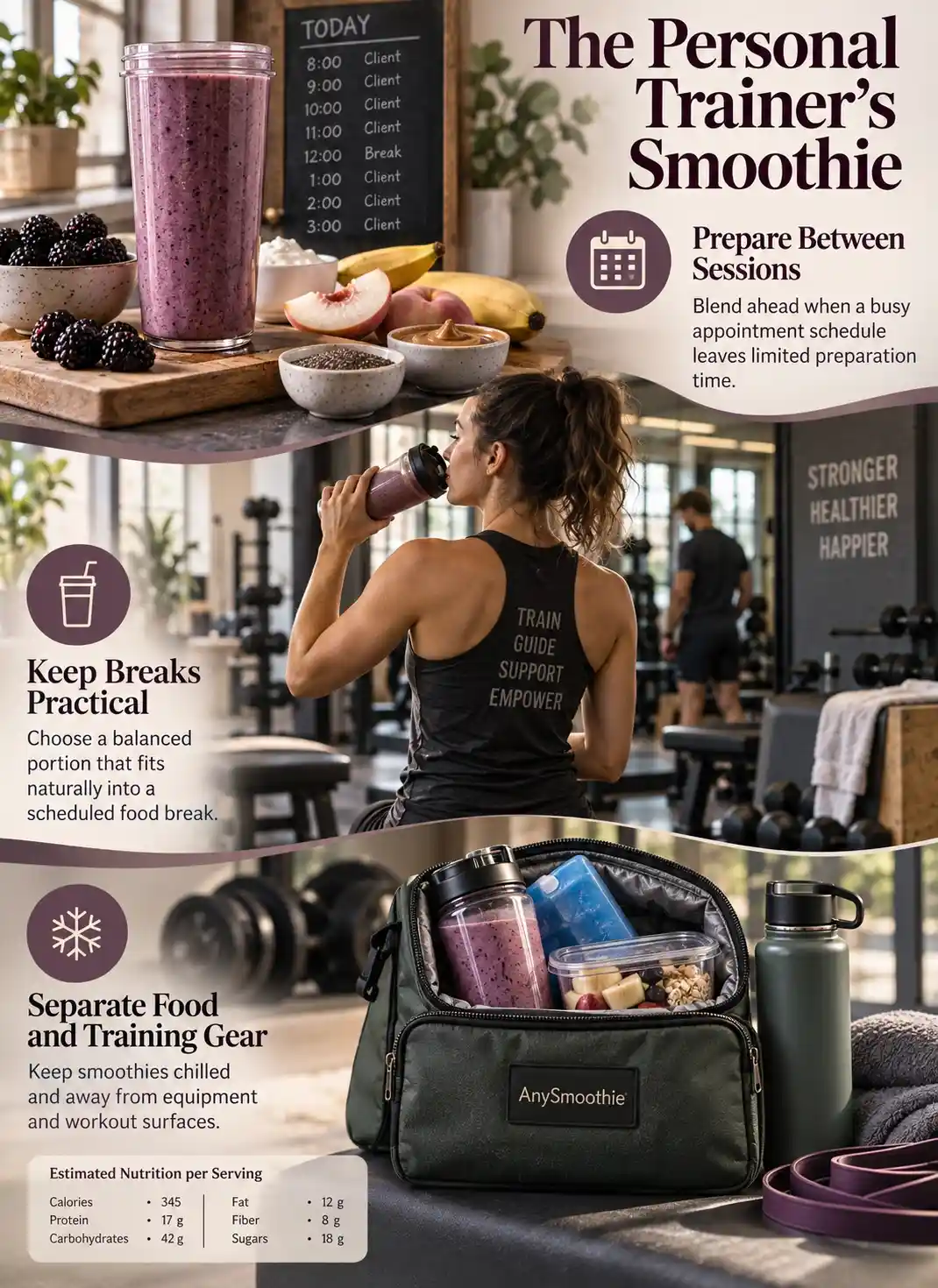
3 Smoothies for Personal Trainers
Each recipe makes one serving. Start with the listed liquid, then add a splash more if your blender needs it. For a dairy-free version, choose plain soy yogurt or silken tofu in place of Greek yogurt and use an unsweetened plant milk.
Banana-oat blend for a busy morning
Ingredients
- 1 medium banana
- 1/3 cup rolled oats
- 3/4 cup plain Greek yogurt
- 3/4 cup milk
- 1 tablespoon peanut butter
Steps
Blend 1 medium banana, 1/3 cup rolled oats, 3/4 cup plain Greek yogurt, and 3/4 cup milk until smooth. Add 1 tablespoon peanut or almond butter if you want a richer, more filling drink. For a dairy-free version, use plain soy yogurt and soy milk.
This blend fits a morning when breakfast needs to travel with you. To get ahead, measure the oats and portion the banana the night before; keep the yogurt and milk chilled until blending.
Estimated Nutrition per Serving
- Calories: ~536 kcal
- Protein: ~32 g
- Carbohydrates: ~66 g
- Fat: ~20 g
- Fiber: ~7 g
- Sugars: ~31 g
Berry-yogurt blend for after training
Ingredients
- 1 cup mixed berries
- 3/4 cup plain Greek yogurt
- 3/4 cup milk
Steps
Blend 1 cup mixed berries, 3/4 cup plain Greek yogurt, and 3/4 cup milk. For more texture, add 2 tablespoons oats or 1 tablespoon chia seeds. Frozen berries work well, though they may call for a little extra liquid.
The fruit and yogurt offer a straightforward mix of carbohydrates and protein after a workout. Choose plain soy yogurt and soy milk if you’re avoiding dairy, and check the yogurt label if protein content matters to your plan.
Sports nutrition research supports carbohydrate and protein as useful components of post-exercise recovery, particularly when the recovery window is short. nutrition to support recovery from endurance exercise
Estimated Nutrition per Serving
- Calories: ~292 kcal
- Protein: ~24 g
- Carbohydrates: ~32 g
- Fat: ~9 g
- Fiber: ~6 g
- Sugars: ~25 g
Human Touch: If I had only a short break after training, I’d keep the base recipe simple and skip the optional oats or chia seeds if I knew a larger meal was coming soon.
Green tropical blend between clients
Ingredients
- 1 packed cup spinach
- 3/4 cup frozen pineapple
- 1/2 banana
- 1/2 cup silken tofu
- 3/4 cup water
Steps
Blend 1 packed cup spinach, 3/4 cup frozen pineapple, 1/2 banana, 1/2 cup silken tofu, and 3/4 cup water. Plain yogurt can replace the tofu; unsweetened soy milk can replace the water for a creamier texture.
Pineapple and banana give this blend an approachable fruit flavor, while the spinach adds greens without much prep. It’s a handy choice for a short break, especially when you want something lighter than the banana-oat blend.
Estimated Nutrition per Serving
- Calories: ~185 kcal
- Protein: ~10 g
- Carbohydrates: ~33 g
- Fat: ~4 g
- Fiber: ~5 g
- Sugars: ~20 g
Here’s how the three recipes compare at a glance.
| Smoothie | Best fit | Protein source | Carbohydrate source | Prep note |
|---|---|---|---|---|
| Banana-oat | Busy morning | Greek or soy yogurt | Banana and oats | Portion oats ahead |
| Berry-yogurt | After training | Greek or soy yogurt | Berries | Frozen berries work |
| Green tropical | Between clients | Silken tofu or yogurt | Pineapple and banana | Bag produce ahead |
The best fit depends on your next session and your appetite. Treat these as starting portions, not fixed requirements.
Prep and Personalize Smoothies Around a Coach’s Schedule
A little setup can make a smoothie realistic on a day when clients run late. Keep rolled oats in a sealed container, portion frozen fruit into individual bags, and wash spinach ahead of time. Then you can put the ingredients in the blender without measuring everything during a short break.
Save time without sacrificing freshness
Keep milk, yogurt, and tofu refrigerated until you’re ready to blend. Store liquids separately from portioned oats and frozen produce so the ingredients don’t become soggy overnight. If you make a smoothie before leaving home, refrigerate it promptly.
For travel, use an insulated bag with ice packs to keep a perishable blend cold. Avoid leaving it on a desk or in a warm car between appointments. If you can’t keep it chilled, packing the ingredients separately and blending later is the safer plan.
Food-microbiology research on a fresh vegetable smoothie found Listeria growth at 15 °C and 25 °C, while growth was not observed at 5 °C in that study, reinforcing the importance of keeping fresh blends cold.
Adjust portions and ingredients to suit your needs
For a lighter drink, use less oats or nut butter and add liquid gradually. For something more substantial, increase the yogurt or tofu, or add oats. Adjust fruit to suit your taste, while remembering that a larger portion also changes the amount of carbohydrate in the glass.
Check labels when swapping ingredients. Soy, dairy, peanuts, and tree nuts are common allergens, and flavored yogurts or plant milks can contain added sugars.
Conclusion: Find the Blend That Fits Your Day
A useful smoothie starts with protein, carbohydrates, produce, and enough liquid to make it drinkable. The right version is one you can prepare, keep cold, and enjoy within your schedule.
Start with one recipe and change a single ingredient or portion after you’ve tried it. A busy coaching day calls for food that fits, not a perfect formula.
🛡️ Safety Notes & Dietary Interactions
- Pre-Session Comfort: Thick smoothies containing oats, chia, nut butter, or larger portions may feel heavy before demonstrating exercises. Choose a smaller serving and test fiber tolerance before using it between demanding sessions.
- Cold Storage: Milk, yogurt, tofu, and prepared smoothies are perishable. Refrigerate ingredients promptly and transport finished blends in an insulated bag with ice packs, especially when coaching across multiple locations.
- Allergen Awareness: Greek yogurt, soy, peanuts, and tree nuts may present allergy concerns. Check labels carefully when substituting ingredients, particularly when preparing smoothies in shared staff kitchens or for clients.
- Hydration During Coaching: A smoothie contributes fluids but should not automatically replace water during active training days. Keep plain water available throughout sessions, particularly when exercising or coaching in warm conditions.
FAQs
Which smoothie works best before a training session?
The Green Tropical Blend is the lightest option because it uses water, spinach, pineapple, banana, and silken tofu without oats or nut butter. For a session starting soon, keep the portion moderate and adjust the water for easier sipping. Your own tolerance for volume, fiber, and texture should guide the final serving.
Can I prepare these smoothies before a full day of clients?
Yes, but perishable ingredients require careful temperature control. You can portion oats, frozen fruit, and washed spinach ahead of time, then blend when convenient. If making the complete smoothie at home, refrigerate it promptly and transport it in an insulated bag with ice packs rather than leaving it at room temperature.
Should I avoid oats or chia before demonstrating exercises?
Not necessarily, but larger amounts of fiber can feel uncomfortable for some people during movement. The Banana-Oat Blend becomes more substantial with oats, while chia adds additional thickness to the Berry-Yogurt Blend. If you’re coaching soon, start with smaller amounts and use a thinner consistency if that feels better.
How can I make the recipes dairy-free without changing them completely?
Use plain soy yogurt or silken tofu instead of Greek yogurt, and choose unsweetened soy milk when milk is needed. The Green Tropical Blend already uses tofu and water, making it straightforward to keep dairy-free. Check labels because plant-based substitutes vary in protein, sweetness, ingredients, and allergen information.
Can a smoothie replace a meal during a packed coaching day?
It can fill a short-term gap, but the article’s approach does not treat smoothies as necessary replacements for every meal. When you have time, other foods provide textures and variety. If a smoothie leaves you hungry, increase its portion or pair it with another food rather than relying on the drink alone.

Medical Disclaimer: AnySmoothie content is for educational purposes only and is not a substitute for professional medical advice. Consult a healthcare provider for personalized guidance. See our full Disclaimer & Terms of Use. AI Transparency: AnySmoothie may use AI to support content development. All content undergoes human editorial review for accuracy, clarity, and editorial quality. See our full AI Transparency.