
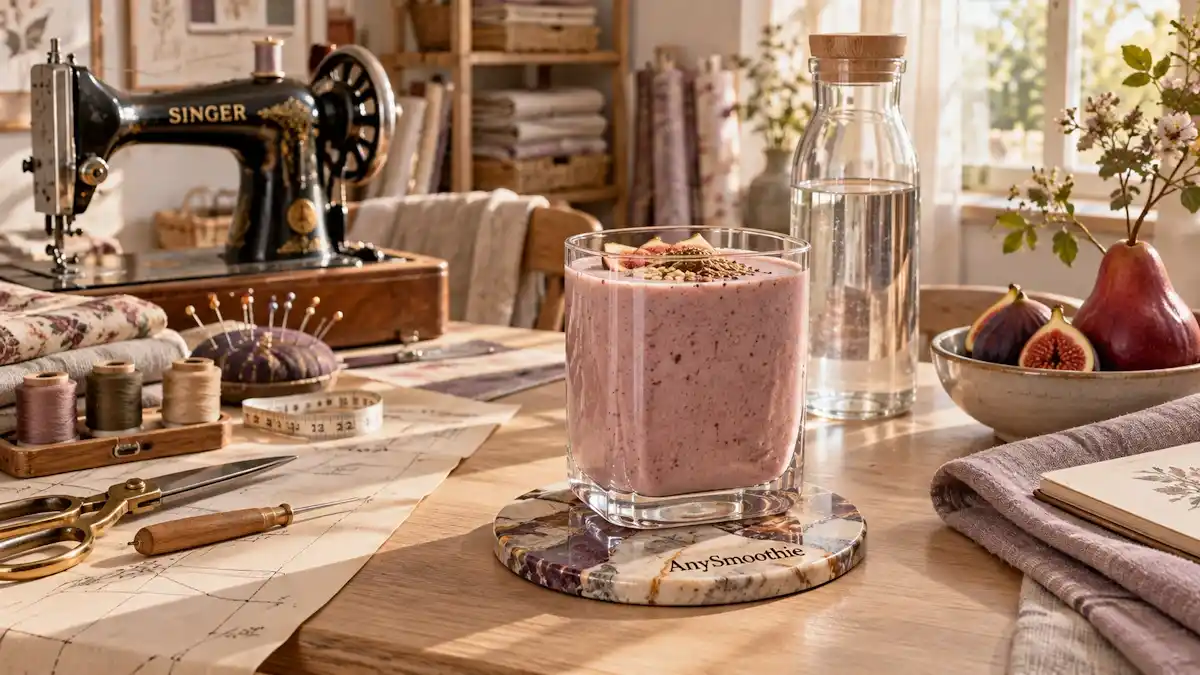
You have a seam pinned, a bobbin ready, and hours of sewing ahead. Stopping to make lunch can feel like a bigger task than finishing the next row. Smoothies for long sewing sessions offer a quick snack or light meal, provided you take a break away from the machine to enjoy one.
Fruit, a protein source, and a little fat make a more satisfying blend than fruit alone. With ingredients ready in the freezer or fridge, you can choose a portion that fits your appetite and get back to sewing without rushing your break.
For another long, hands-on hobby where preparation matters, smoothies for long home baking days offers a similar approach to keeping food convenient.
How to Choose and Prep Smoothies for a Sewing Day
Match the drink to the length of your session and how hungry you are. A smaller glass may suit a short pause between meals. If sewing runs through your usual lunchtime, one full recipe may make more sense as a light meal. There’s no need to finish a portion simply because it filled the blender.
Fruit and oats supply carbohydrates, which your body breaks down into glucose for its cells to use. Yogurt, milk, and tofu contribute protein, which provides amino acids for normal tissue upkeep. Nut butter and flaxseed add fat, which your body uses for ordinary cell functions. Choose ingredients you enjoy and can eat safely rather than following a rigid formula.
Make-ahead prep, storage, and easy ingredient swaps
Portion berries or mango into freezer bags so they’re ready when your project is underway. Keep oats and flaxseed measured in a dry container, and add refrigerated ingredients when you blend. Making the smoothie shortly before your break gives you the best texture.
For dairy-free smoothies, try soy milk and plain soy yogurt in the berry or banana recipes, or use the silken tofu option. For a nut-free banana blend, substitute sunflower seed butter after checking the label. Frozen fruit and store-brand oats can help keep costs down without changing the basic recipe.
If you have leftovers, pour them into a sealed container and refrigerate them promptly. Stir the smoothie before drinking it later, since the ingredients may separate.
Food microbiology research also shows why refrigeration matters for fresh smoothies: in one study, Listeria monocytogenes grew in a vegetable smoothie stored at 15 °C and 25 °C, while no growth was observed at 5 °C. Study of storage conditions and microbial behavior in a fresh smoothie.
For more detailed make-ahead considerations, smoothie storage and micronutrient stability covers preparation and storage separately.
Sip without risking spills near your sewing machine
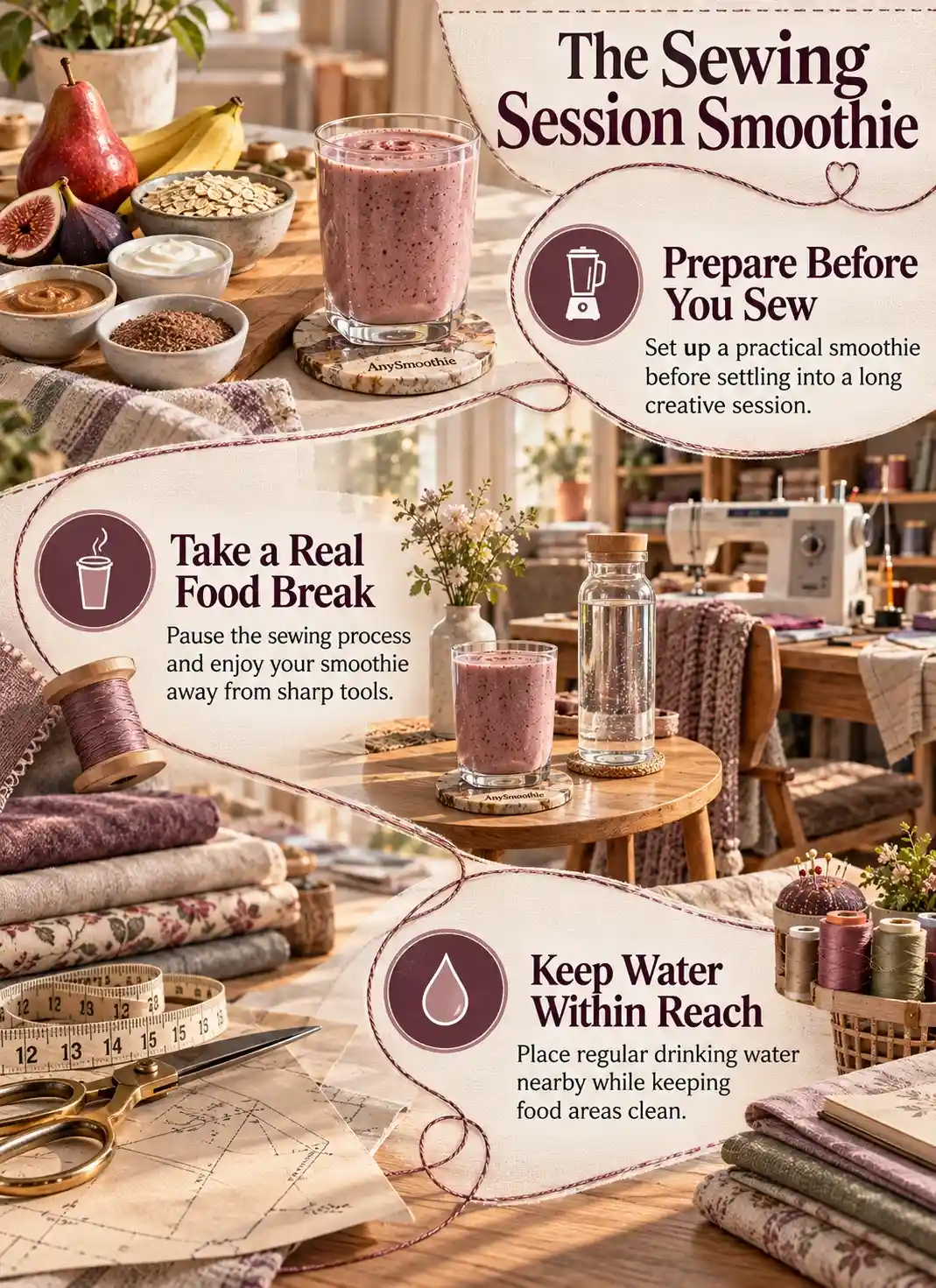
Take your cup to a separate spot before drinking. A lidded cup helps contain splashes on the way there, but it isn’t a reason to sip while operating the machine. Keep the drink clear of fabric, scissors, pattern pieces, and electrical parts.
When your break is over, set the cup away from the work area and dry your hands before handling your materials again. Those small habits protect the project you spent the morning putting together.
3 Smoothies for Long Sewing Sessions
Each recipe makes one generous serving. Add the ingredients to a blender, blend until smooth, and pour into a lidded cup. Use a little more liquid if your blender struggles or you prefer a thinner drink.
Berry-oat smoothie for a steady, filling snack
Ingredients
- 1 cup berries
- 1/4 cup rolled oats
- 3/4 cup low-fat milk
- 1/2 cup plain Greek yogurt
- 1 tablespoon ground flaxseed
Steps
Add the milk and Greek yogurt first, followed by the berries, oats, and ground flaxseed. Blend until smooth.
If you have fresh berries instead of frozen, add a small handful of ice for a colder smoothie. Give the oats another few seconds in the blender if you prefer a smoother texture.
Berries and oats provide carbohydrates, while yogurt adds protein and flaxseed adds fat. The oats also make this a thicker choice when you want something substantial but aren’t ready for a full meal. Dairy-free milk works here, though its protein content varies by type.
Estimated Nutrition per Serving
- Calories: ~335 kcal
- Protein: ~22 g
- Carbohydrates: ~45 g
- Fat: ~8 g
- Fiber: ~7 g
- Sugars: ~27 g
Estimate uses low-fat dairy milk and plain nonfat Greek yogurt.
Banana-peanut butter smoothie for a richer option
Ingredients
- 1 medium banana
- 2 tablespoons peanut butter
- 3/4 cup low-fat milk
- 1/2 cup plain Greek yogurt
Steps
Add the milk and yogurt first, followed by the banana and peanut butter. Blend until smooth.
A frozen banana makes the drink thicker; add milk a splash at a time until it pours easily. If you’d like a colder drink with a fresh banana, blend in a few ice cubes.
The banana supplies carbohydrates, yogurt and milk contribute protein, and peanut butter adds fat and a nutty flavor. Check for peanut allergies before making this for someone else. If peanuts aren’t an option, sunflower seed butter is a practical swap; check its label for other allergens.
Estimated Nutrition per Serving
- Calories: ~455 kcal
- Protein: ~24 g
- Carbohydrates: ~48 g
- Fat: ~19 g
- Fiber: ~5 g
- Sugars: ~33 g
Estimate uses low-fat dairy milk and plain nonfat Greek yogurt.
If I wanted this during a shorter sewing break, I’d start with half the serving rather than feeling obligated to finish a generous glass.
Green mango smoothie for a fresh, lighter taste
Ingredients
- 1 cup mango
- 1 loosely packed cup spinach
- 1/2 cup silken tofu
- 3/4 cup cold water
- 1 tablespoon ground flaxseed
Steps
Blend the spinach and water first. Add the mango, silken tofu, and ground flaxseed, then blend until smooth.
Mango’s sweetness balances the spinach without covering its fresh taste entirely. Fruit provides carbohydrates, tofu contributes protein, and flaxseed adds fat. These nutrients support normal body processes; the green color doesn’t give the smoothie special cleansing or energy effects.
Estimated Nutrition per Serving
- Calories: ~245 kcal
- Protein: ~8 g
- Carbohydrates: ~45 g
- Fat: ~6 g
- Fiber: ~6 g
- Sugars: ~38 g
A quick way to choose among the three when you pause your project.
| Smoothie | Key ingredients | Flavor | Protein source | Best-fit break or appetite |
|---|---|---|---|---|
| Berry-oat | Berries, oats, flaxseed | Tart and creamy | Greek yogurt, milk | Filling mid-session snack |
| Banana-peanut butter | Banana, peanut butter | Sweet and nutty | Yogurt, milk | Heartier break |
| Green mango | Mango, spinach, flaxseed | Fruity and fresh | Silken tofu | Lighter-tasting pause |
Portion size matters more than the name of the recipe. Save some for later if a generous glass is more than you want at one sitting.
For another quiet hobby built around extended seated sessions, smoothies for cozy reading sessions offers another practical break-time context.
Get the Texture Right Before You Sit Down
A smoothie that’s easy to sip makes for a more relaxed break. Frozen fruit chills and thickens a blend, while fresh fruit usually needs less liquid to move through the blender. Start with the listed amount, then adjust by a tablespoon or two at a time.
Oats continue to absorb liquid after blending. If the berry-oat smoothie sits while you finish a seam, stir it and add a splash of milk before drinking. Ground flaxseed can also thicken a drink as it stands. For a thinner green mango blend, add cold water rather than more fruit.
Pour your smoothie before returning to your sewing space. That gives you a chance to check the lid, wipe any drips from the cup, and leave the blender cleanup for after your break. Smoothies for long sewing sessions are easiest to enjoy when the drink is ready before you sit down.
People who spend similarly long periods on another creative project may also find easy smoothies for long painting sessions useful for comparing break-friendly options.
Conclusion: A Better Break Between Seams
Choose berry-oat when you want a filling snack, banana-peanut butter when you want something richer, or green mango when a fresh taste sounds good. Prep the fruit ahead, then blend the portion that suits your appetite.
Step away from the machine, put the lid on your cup, and enjoy your smoothie before picking up the next seam.
🛡️ Safety Notes & Dietary Interactions
- Machine-Side Spills: Keep smoothies away from sewing machines, electrical cords, fabric, scissors, pins, and pattern pieces. Drink only during a proper break in a separate area, then dry your hands before returning to the machine.
- Cold Storage: Smoothies containing milk, yogurt, tofu, or fresh fruit are perishable. Refrigerate them promptly and use an insulated bag with a cold pack if the drink must remain outside the refrigerator during a long sewing session.
- Allergen Awareness: Peanut butter, dairy, soy, and flaxseed can create allergy concerns. Check labels carefully when sharing smoothies, and use sunflower seed butter or suitable dairy-free alternatives when required rather than assuming a substitution is allergen-free.
- Fiber and Fullness: Oats and flaxseed continue absorbing liquid after blending and can make the smoothie thicker and more filling. Start with moderate portions, especially when you need to return comfortably to a long seated session.
FAQs
Which smoothie is best for a longer sewing break?
The Berry-Oat Smoothie is the most substantial choice because oats, Greek yogurt, milk, and flaxseed provide a combination of carbohydrates, protein, and fat. It suits a longer mid-session break when you want something more filling. If a thick drink feels uncomfortable, reduce the oats or add a little more milk.
Can I prepare a sewing-session smoothie the night before?
Yes. Prepare it in a clean, sealed container and refrigerate it promptly. The berry-oat and green mango versions may thicken as oats or flaxseed absorb liquid, while ingredients can separate naturally. Shake or stir before drinking and add a small splash of liquid if the texture has become too dense.
How can I safely drink a smoothie around my sewing machine?
Take the smoothie completely away from the machine before opening or drinking it. A secure lid helps during transport, but the safest routine is to keep liquids away from electrical equipment, fabric, scissors, pins, and pattern pieces. After your break, wipe any drips and dry your hands before sewing again.
Which recipe is easiest when I want something lighter?
The Green Mango Smoothie has a fresh, lighter profile and uses cold water rather than milk as its main liquid. Mango supplies sweetness, while spinach, silken tofu, and flaxseed add nutrients without requiring a heavy oat base. You can thin it further with cold water if the consistency feels too thick.
What can I use instead of peanut butter?
Sunflower seed butter is the most direct substitution in the Banana-Peanut Butter Smoothie. It provides a similar creamy texture and nutty character without peanuts. However, check the product label for other allergens and possible cross-contact if the smoothie is being prepared for someone with a significant food allergy.

Medical Disclaimer: AnySmoothie content is for educational purposes only and is not a substitute for professional medical advice. Consult a healthcare provider for personalized guidance. See our full Disclaimer & Terms of Use. AI Transparency: AnySmoothie may use AI to support content development. All content undergoes human editorial review for accuracy, clarity, and editorial quality. See our full AI Transparency.