
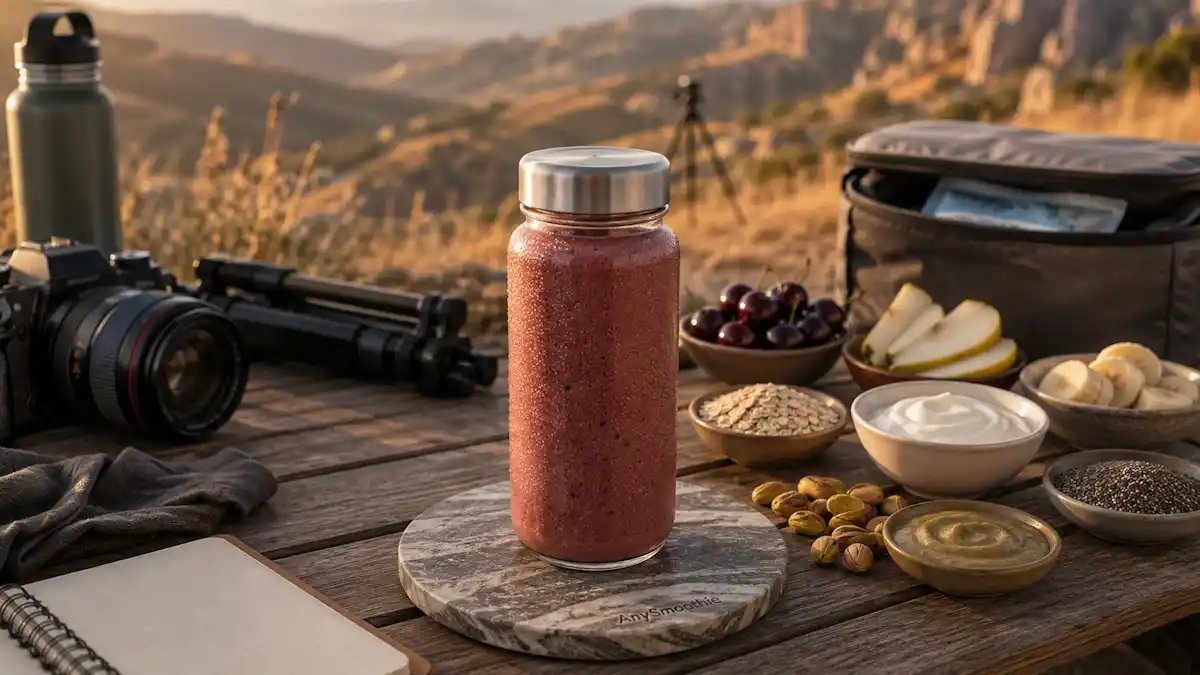
Early call times, weather shifts, and hours on your feet can make food an afterthought on a shoot day. Yet a drinkable breakfast or snack is easier to manage than a plate when you’re carrying light stands, lenses, and backup batteries.
On location smoothies for photographers offer a practical way to combine fluids, carbohydrates, protein, fats, and micronutrients in one portable bottle. Choose one that fits your schedule, pack it safely, and keep solid food nearby for longer assignments.
How to Prepare Portable Smoothies for a Photo Shoot
A little prep keeps breakfast from competing with battery charging and route planning. Frozen fruit, banana slices, berries, chopped mango, oats, and chia seeds work well in pre-portioned packs.
For another field-ready breakfast routine, these breakfast smoothies for early birdwatching offer useful ideas that can be adjusted to your bottle size and shooting schedule.
Pack Ingredients So Blending Takes Less Than Five Minutes
Label each freezer bag with the recipe name, liquid amount, and date. Pack a leakproof bottle, compact blender, charging cable or power bank, reusable straw, napkins, and a small cleaning brush.
Add liquid first, then soft ingredients, followed by frozen fruit. That order helps the blades move freely. Portable rechargeable blenders cost less space and can work well for soft fruit, but they often struggle with ice and thick mixtures. Thaw frozen ingredients slightly, and add extra liquid before blending.
A home blender gives the smoothest texture and most power, although it needs an outlet and creates more noise. A pre-blended smoothie in an insulated bottle needs no power and no on-site cleanup, but its texture may separate by lunchtime. Shake it before drinking.
Keep Smoothies Cold, Safe, and Easy to Clean on Set
Store dairy, yogurt, cut fruit, and protein blends in an insulated cooler with frozen ice packs. USDA guidance recommends keeping cold foods at or below 40°F (4.4°C) and limiting unrefrigerated time to two hours, or one hour when temperatures are above 90°F (32.2°C).
A smoothie that has been warm for too long can spoil even if the bottle still feels cool on the outside.
Discard a drink that smells sour or has spent too long in heat. Rinse the blender promptly with water, then wash it fully when you have access to soap. Keep sticky ingredients away from cameras, lenses, memory cards, and lighting gear. If you share drinks with a crew, label allergens clearly.
For another outdoor work setting where cold storage and portability matter, see outdoor workday smoothies for landscapers.
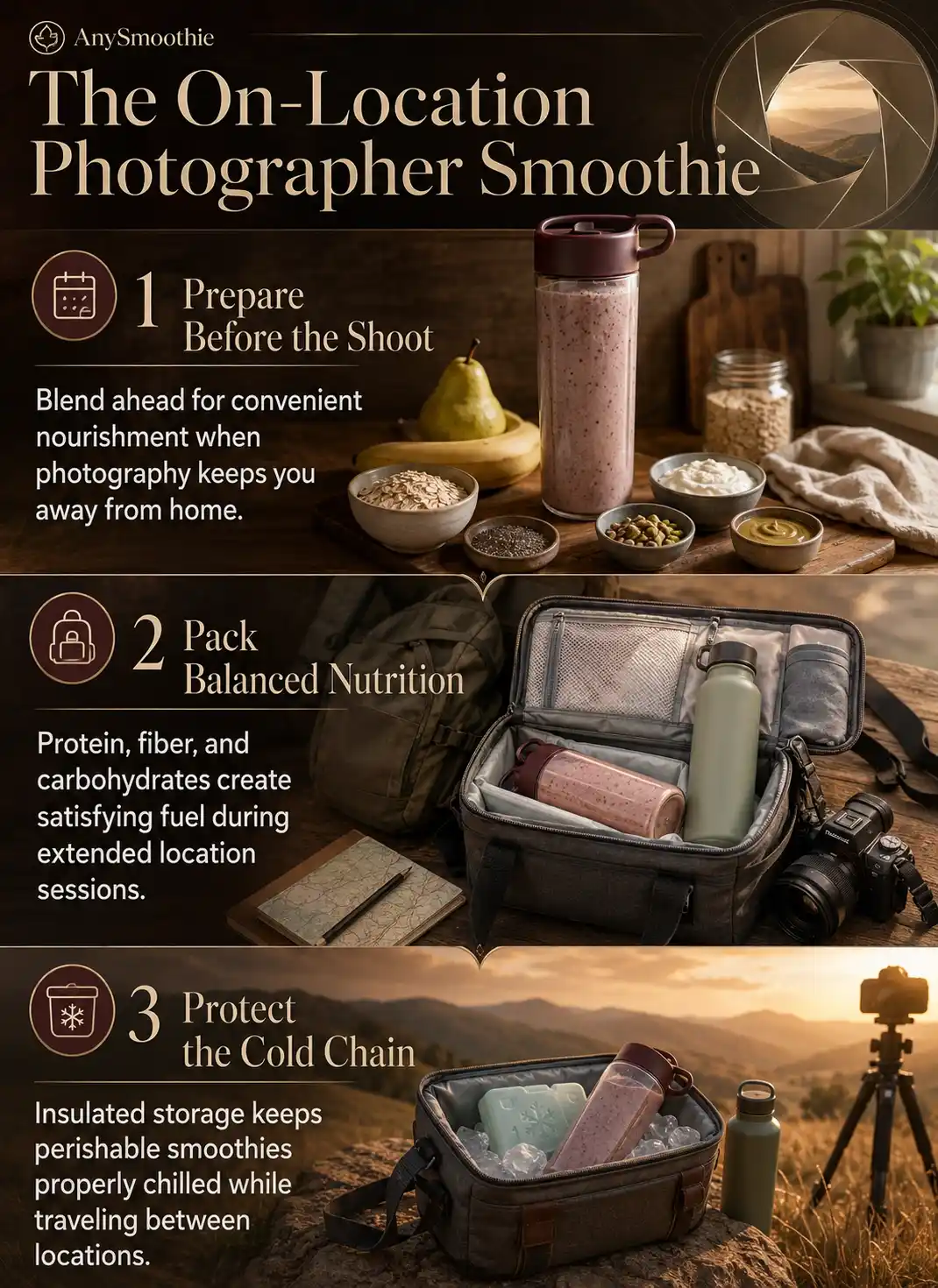
3 On-Location Smoothies for Photographers
These on-location blends fit three common moments: before setup, during a hot outdoor session, and after packing down. Carbohydrates enter normal energy pathways, protein supplies amino acids for tissue maintenance, and fats slow digestion. Meanwhile, fluids support normal circulation and temperature regulation.
| Smoothie | Best Shoot Timing | Key Ingredients | Approximate Prep Time | Storage Guidance |
|---|---|---|---|---|
| Balanced Breakfast | Before an early call | Oats, banana, yogurt, milk | 4 minutes | Chill overnight |
| Fresh Fruit Refresher | Midday outdoors | Berries, cucumber, water | 3 minutes | Keep in a cooler |
| Protein-Packed Berry Blend | Trip home | Soy milk, berries, seed butter | 4 minutes | Drink cold the same day |
A Balanced Breakfast Smoothie for Early Call Times
Ingredients
- 1/3 cup rolled oats
- 1 medium banana
- 3/4 cup plain Greek yogurt
- 3/4 cup milk
- Pinch of cinnamon
- 1 tablespoon ground flaxseed, optional
Steps
Blend until fully smooth, then pour it into a leakproof bottle for quick sips between setup tasks.
The oats and banana add carbohydrates, while yogurt contributes protein and a thicker texture. Add the ground flaxseed if you want extra fiber.
For a faster morning, freeze banana slices and oats in a labeled bag. Keep the yogurt and milk refrigerated until blending.
Estimated Nutrition per Serving
Estimated with 2% dairy milk, plain nonfat Greek yogurt, and no optional flaxseed.
- Calories: ~455 kcal
- Protein: ~30 g
- Carbohydrates: ~72 g
- Fat: ~8 g
- Fiber: ~7 g
- Sugars: ~33 g
A Fresh Fruit Smoothie for Hot Outdoor Shoots
Ingredients
- 1 cup frozen mixed berries
- 1/2 cup chopped cucumber
- 3/4 cup cold water
- Squeeze of lime
- 1 teaspoon chia seeds, optional
Steps
Blend until smooth and cold. Add the chia only if you want a slightly thicker texture.
Fruit supplies natural sugars, while cucumber and liquid add volume without making the smoothie heavy. To reduce sweetness, use berries instead of mango and add extra cucumber or citrus.
Coconut water can be used in place of water, but it isn’t a complete meal. Pack a sandwich, crackers, fruit, or another solid snack when the job runs long.
Estimated Nutrition per Serving
Estimated with mixed berries, cucumber, water, lime, and no optional chia.
- Calories: ~105 kcal
- Protein: ~2 g
- Carbohydrates: ~25 g
- Fat: ~1 g
- Fiber: ~7 g
- Sugars: ~15 g
If I were packing this for a hot location shoot, I’d keep the cucumber and berries fully chilled and skip extra ice. That keeps the drink cold without making it watery after an hour in the cooler.
A Protein-Packed Smoothie for the Trip Home
Ingredients
- 1 cup milk or unsweetened soy milk
- 1 cup frozen berries
- 1 tablespoon peanut butter or sunflower-seed butter
- 1 tablespoon unsweetened cocoa powder or 1/4 teaspoon cinnamon
- Protein powder, optional
Steps
Blend until completely smooth. Add protein powder only if you already know it agrees with you.
Protein provides amino acids, and this blend offers a convenient source of nutrients after moving cases and working a demanding location day. Soy milk and sunflower-seed butter make an easy vegan, nut-free option.
Check powder labels for milk, soy, peanut, and tree-nut allergens. A paid shoot isn’t the day to try an unfamiliar supplement or a new flavor that may upset your stomach.
Estimated Nutrition per Serving
Estimated with unsweetened soy milk, frozen mixed berries, peanut butter, cocoa powder, and no optional protein powder.
- Calories: ~300 kcal
- Protein: ~15 g
- Carbohydrates: ~35 g
- Fat: ~13 g
- Fiber: ~9 g
- Sugars: ~17 g
Choose the Right Smoothie Strategy for Your Shooting Schedule
Blending on location works best when you have a quiet corner, water, power, and time for cleanup. It gives you the freshest texture, but it adds equipment and possible spills.
Bringing a chilled smoothie from home is easier for short shoots or urban assignments. Use an insulated bottle and cooler, especially when the route includes a warm car. USDA guidance recommends packing cold foods with ice or frozen gel packs and keeping perishables properly chilled during transport, as outlined in its food safety while hiking and camping guidance.
For on location smoothies for photographers who travel far or lack refrigeration, shelf-stable backups help. Keep single-serve nut or seed butter, oats, shelf-stable milk, and a banana in your kit. Those ingredients are less fresh than a cold blend, but they don’t depend on a powered blender.
For another portable-food context, portable smoothies for day hikers is a useful companion topic.
Smoothies are portable and customizable, yet they can leak, spoil, or fall short of the calories needed for a full workday. Pair yours with filling food, such as a sandwich, boiled eggs, fruit, or crackers, when your schedule doesn’t allow a real meal break.
A Better Shoot-Day Smoothie Routine
The most reliable on location smoothies for photographers are the ones you can make without rushing. Pick one recipe, portion its ingredients ahead of time, keep it cold, and pack a backup snack.
Test both the recipe and your portable blender before a paid shoot. A smoothie can support a busy day, but it works best alongside varied meals, water, and regular breaks.
🛡️ Safety Notes & Dietary Interactions
- Location Cold Storage: Yogurt, milk, cut fruit, and prepared smoothies require reliable chilling throughout a shoot. Keep bottles in an insulated cooler with frozen packs, especially when equipment and food may spend hours inside a warm vehicle.
- Gear and Food Separation: Smoothie spills can damage cameras, lenses, batteries, memory cards, and other equipment. Use genuinely leakproof bottles, keep drinks in a separate compartment, and avoid blending or pouring liquids directly beside valuable photographic gear.
- Allergens and Supplements: Dairy, soy, peanuts, seeds, and protein powders may require consideration for allergies or intolerances. When working with a crew, label shared food clearly and avoid testing unfamiliar powders or supplements during an important assignment.
- Heat and Hydration: A fruit smoothie contributes fluid but should not replace regular water during long outdoor shoots. Heat, sun exposure, walking, and carrying equipment can increase fluid needs, so maintain convenient water access throughout the assignment.
FAQs
Which smoothie is best before an early photography call time?
The balanced breakfast smoothie is the most substantial option because oats and banana provide carbohydrates while Greek yogurt and milk contribute protein. Ground flax can add additional fiber if you already tolerate it well. It works particularly well before setup when an early departure might otherwise cause you to postpone breakfast until several hours into the shoot.
Which smoothie works best during a hot outdoor photo shoot?
The berry or mango and cucumber smoothie is the lightest option, combining fruit with cucumber and water or coconut water without the heavier oats and yogurt of the breakfast recipe. Keep it properly chilled and continue drinking plain water separately. Pack solid food as well when the assignment extends through a normal meal period.
Is an insulated bottle enough to keep my smoothie safe all day?
Not necessarily. An insulated bottle can help maintain temperature, but it should not automatically be treated as refrigeration for an entire location day. For smoothies containing dairy, soy milk, cut produce, or other perishables, use a properly chilled bottle inside an insulated cooler with frozen packs and minimize unnecessary opening during the shoot.
Should I blend my smoothie on location or prepare it at home?
Preparing it at home is usually simpler when a shoot offers limited water, power, time, or cleanup space. On-location blending can work when those resources are reliably available. Whichever approach you choose, test your blender, bottle, recipe consistency, and packing system beforehand rather than discovering equipment limitations during a paid assignment.
What should I pack if a smoothie may not be enough for the whole shoot?
Bring water plus portable solid food that fits the expected duration and conditions, such as a sandwich, fruit, crackers, or another familiar meal or snack. A smoothie can cover a convenient breakfast or break, but unpredictable schedules, travel, equipment moves, and delayed meal breaks make a shelf-stable backup particularly useful on location.

Medical Disclaimer: AnySmoothie content is for educational purposes only and is not a substitute for professional medical advice. Consult a healthcare provider for personalized guidance. See our full Disclaimer & Terms of Use. AI Transparency: AnySmoothie may use AI to support content development. All content undergoes human editorial review for accuracy, clarity, and editorial quality. See our full AI Transparency.