
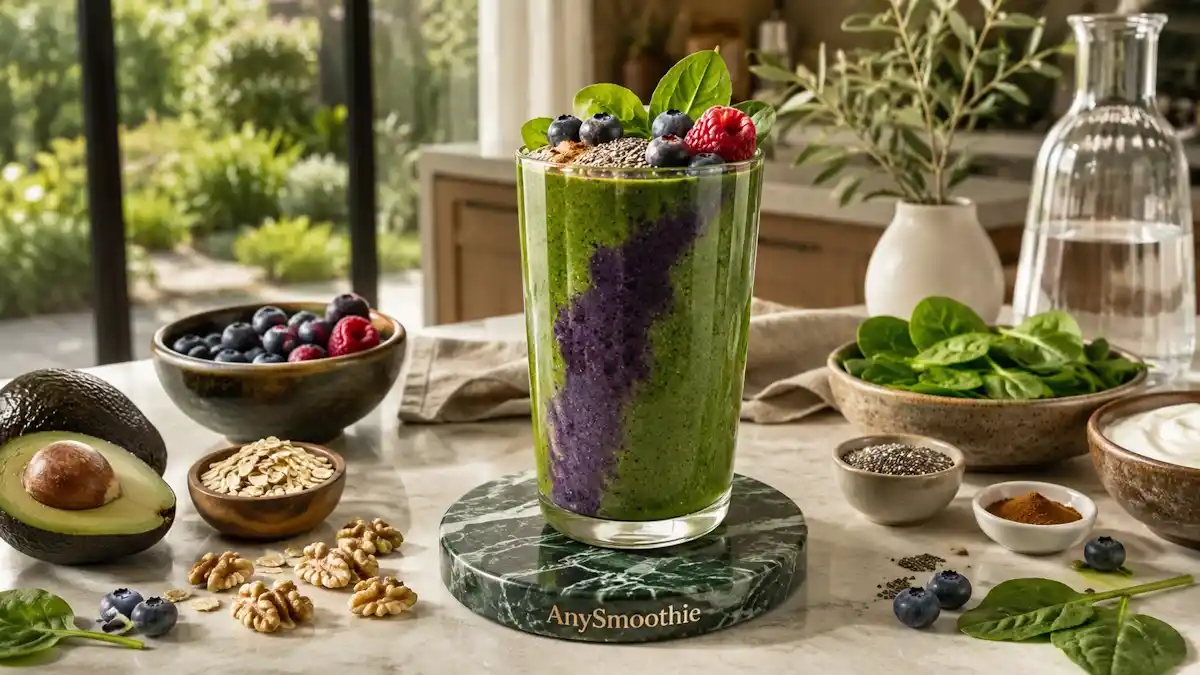
A smoothie after a meal can be convenient, but its ingredients and serving size shape how quickly its carbohydrates are digested. Smoothies for postprandial glucose support are built to encourage a steadier natural glucose response after eating, not to treat or cure a health condition.
Fruit, protein, fiber, and fat all affect the final blend. The recipes below use moderate portions, familiar whole foods, and no added sweeteners.
What Makes a Smoothie Helpful for Postprandial Glucose Support?
Blending fruit doesn’t remove its natural sugars or carbohydrates. A large Smoothie with several fruits, juice, honey, and sweetened yogurt can add a substantial carbohydrate load, even if every ingredient sounds healthy.
However, fiber, protein, and fat can change the pace of digestion. Berries, leafy greens, chia seeds, ground flaxseed, plain Greek yogurt, unsweetened soy milk, cinnamon, and natural nut butter create more balance than juice or flavored protein powder alone. Acidic ingredients such as lime can add brightness without added sugar.
Whole-food ingredients also give you more texture and volume. A measured fruit portion paired with protein and fiber usually feels more satisfying than a fruit-heavy drink.
Blending makes food easier to drink, so portion size still matters even when the ingredients are nutrient-dense.
Choose unsweetened milk, yogurt, and nut butter whenever possible. Check labels for cane sugar, syrups, fruit concentrates, and sweetened powders. Individual glucose responses vary, especially if you monitor glucose or use glucose-lowering medication.
Building meals around whole grains, fruits, vegetables, legumes, and unsweetened dairy or fortified soy products aligns with widely accepted healthy eating guidance. The American diabetes association Nutrition guidance offers practical information about balanced meal planning and carbohydrate quality.
Build, Portion, and Time Your Smoothie
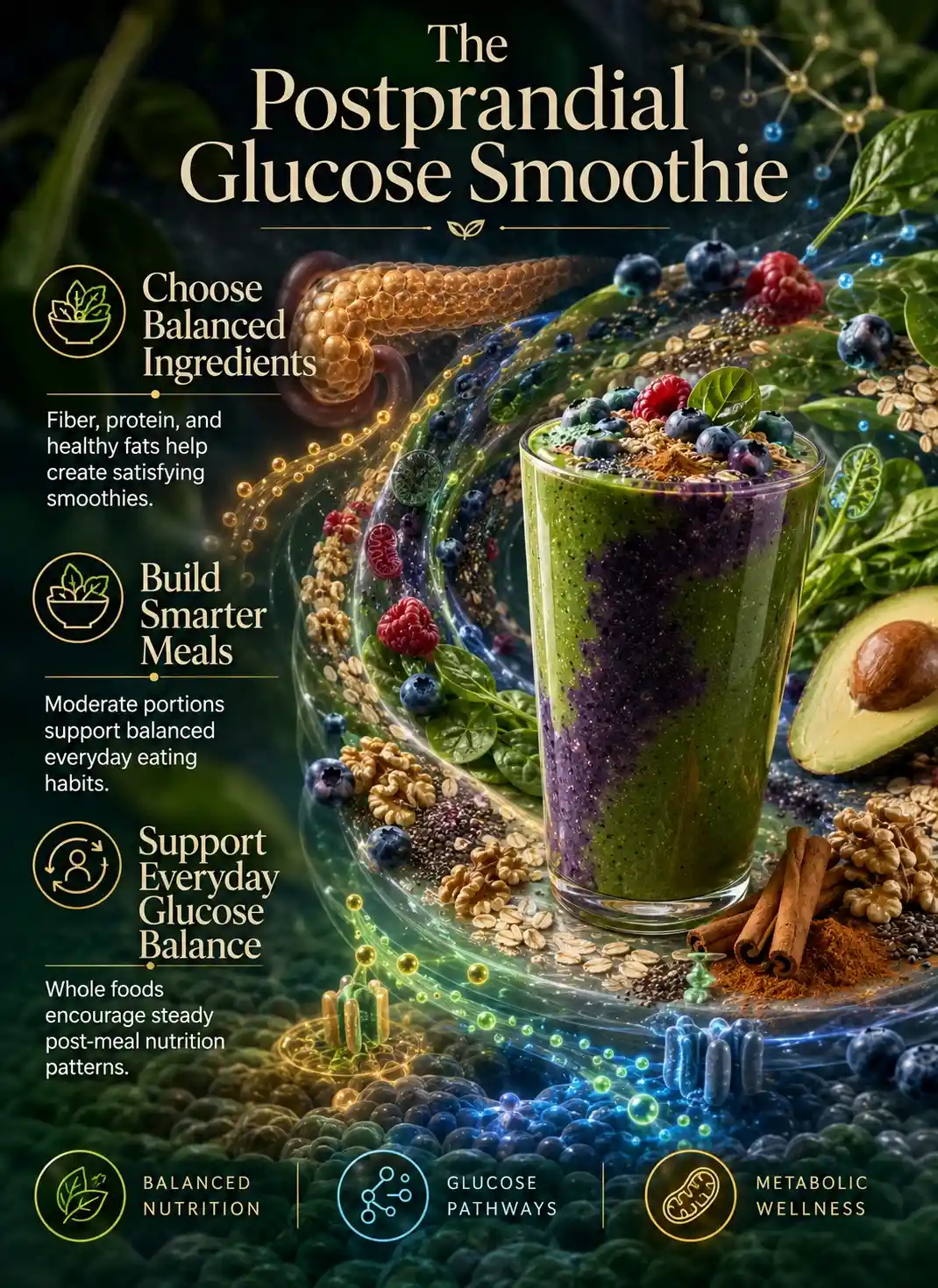
A repeatable formula keeps smoothies for postprandial glucose support practical. Start with an unsweetened liquid. Add nonstarchy vegetables, then include one measured fruit portion if desired. Finish with a clear protein source and a fiber or healthy-fat booster. If you’re looking for another satisfying option, our High protein smoothie guide offers additional recipes built around balanced nutrition.
Drink the smoothie with a meal, or use it as a planned snack. Adding it after a full meal increases the total carbohydrate and calorie intake. Sip slowly and choose moderate portions rather than oversized smoothie servings.
| Smoothie | Main carbohydrate source | Protein source | Fiber or fat boosters | Best use |
|---|---|---|---|---|
| Berry Chia Yogurt | Berries and yogurt | Greek yogurt | Chia seeds, spinach | Snack or light meal |
| Green Avocado Flax | Soy milk and vegetables | Soy or pea milk | Avocado, flaxseed, spinach | Lower-fruit option |
| Cocoa Peanut Butter | Milk, optional banana | Milk and Greek yogurt | Peanut butter, cocoa | Dessert-style snack |
The table shows that the fruit-free options still contain some carbohydrates, often from milk or yogurt. Measure ingredients with cups and tablespoons, since free-pouring nut butter, fruit, and seeds can quickly change a serving.
If you track glucose, use your own readings as useful feedback alongside hunger, meal size, and activity. People with diabetes, prediabetes, or medication-related glucose concerns should speak with a qualified clinician or dietitian before making major dietary changes. Don’t change medication based on a smoothie response.
3 Smoothies for Postprandial Glucose Support
These smoothies for postprandial glucose support keep carbohydrates controlled while adding protein, fiber, or unsaturated fat. Use them as part of a meal or as a planned snack, rather than drinking a large serving on top of a full meal.
Berry Chia Yogurt Smoothie for Fiber and Protein
Ingredients
- 1 cup plain unsweetened Greek yogurt
- 1/2 cup fresh or frozen berries
- 1 tablespoon chia seeds
- 1 handful spinach
- 1/4 teaspoon cinnamon
- Water or unsweetened milk, as needed
Blend until smooth, then let it sit for three to five minutes. The chia seeds absorb liquid and create a thicker texture.
The berries provide a moderate fruit portion, while Greek yogurt brings protein and chia adds soluble fiber. This blend contains carbohydrates from berries and dairy, but it avoids the larger fruit load found in many smoothie-shop drinks. For more ways to use the same protein base, try this Greek yogurt smoothie recipe.
Skip flavored yogurt and sweetened milk. Both can add more sugar than expected.
Estimated Nutrition per Serving
Estimated with plain nonfat Greek yogurt, mixed berries, chia seeds, spinach, cinnamon, and water.
- Calories: ~245 kcal
- Protein: ~25 g
- Carbohydrates: ~27 g
- Fat: ~5 g
- Fiber: ~9 g
- Sugars: ~14 g
A full cup of Greek yogurt plus chia produces a particularly dense smoothie. If you prefer something easier to drink rather than spoon-thick, add the liquid gradually before the resting period—the chia will continue tightening the texture afterward.
Green Avocado Flax Smoothie for a Creamy, Low-Sugar Option
Ingredients
- 1/2 small avocado
- 1 cup unsweetened soy milk
- 1 cup spinach
- 1 tablespoon ground flaxseed
- Juice from 1/2 lime
- Ice
- Optional cucumber slices
Blend these ingredients until creamy.
This smoothie keeps fruit out of the equation and gets its smooth texture from avocado. Spinach and cucumber add volume with little carbohydrate, while flaxseed contributes fiber and unsaturated fat.
Avocado and flax are energy-dense, so measure them instead of pouring freely. If you don’t use soy milk, unsweetened pea milk is a practical swap with a similar protein-focused profile.
Estimated Nutrition per Serving
Estimated with half a small avocado, unsweetened soy milk, spinach, ground flaxseed, lime juice, and without optional cucumber.
- Calories: ~260 kcal
- Protein: ~11 g
- Carbohydrates: ~17 g
- Fat: ~19 g
- Fiber: ~9 g
- Sugars: ~3 g
Cocoa Peanut Butter Smoothie With Controlled Carbohydrates
Ingredients
- 1 cup unsweetened dairy milk or soy milk
- 1 tablespoon natural Peanut butter
- 1 tablespoon unsweetened cocoa powder
- 2 tablespoons plain Greek yogurt
- Ice
- Optional 1/4 banana
Blend until smooth.
Cocoa and peanut butter create a dessert-like flavor without syrups, dates, honey, or sweetened protein powders. The milk and yogurt add protein, while peanut butter adds fat that can make the drink more filling.
Use banana only when you want extra sweetness, and keep it to one-quarter of a medium banana. That choice matters most when the smoothie follows a meal that already included bread, rice, potatoes, or another starch. Choose peanut butter made with peanuts and salt, without added sugar when available.
Estimated Nutrition per Serving
Estimated with unsweetened soy milk, natural peanut butter, unsweetened cocoa, plain nonfat Greek yogurt, and without the optional banana.
- Calories: ~220 kcal
- Protein: ~16 g
- Carbohydrates: ~14 g
- Fat: ~13 g
- Fiber: ~4 g
- Sugars: ~5 g
Cocoa without added sweetener can taste more bitter than expected when banana is omitted. Blend the peanut butter and cocoa completely before deciding it needs sweetness; the nutty flavor becomes rounder after a thorough blend, especially when the drink is well chilled.
Conclusion: A Steadier Smoothie Starts With the Whole Meal
The most useful smoothies for postprandial glucose support pair a moderate fruit portion with fiber, protein, and no added sugar. Compare the smoothie with the rest of your meal, because a balanced recipe can still be too much when added to an already carbohydrate-heavy plate.
Try one recipe, then adjust the portion over time if a clinician has advised you to monitor your response. Smoothies can fit a balanced eating pattern, but they don’t replace individualized medical care.
🛡️ Safety Notes & Dietary Interactions
- Support Healthy Glucose Responses, Not Disease Treatment: These smoothies are designed to provide balanced combinations of protein, fiber, healthy fats, and moderate carbohydrates as part of a healthy eating pattern. They do not treat diabetes, lower blood glucose on their own, or replace prescribed medical care.
- Personalize Recipes to Your Health Needs: If you have diabetes, prediabetes, kidney disease, food allergies, digestive disorders, pregnancy, or follow a medically prescribed diet, choose ingredients and portion sizes with guidance from your healthcare provider or registered dietitian.
- Monitor Added Sugars and Portions: Choose plain yogurt, unsweetened milk or fortified plant-based alternatives, natural nut butters, and unsweetened cocoa powder. Measuring fruit, seeds, and nut butter helps keep carbohydrate and calorie intake consistent from one smoothie to the next.
- Do Not Change Medications Independently: If you monitor your blood glucose or use glucose-lowering medications, continue following your prescribed treatment plan. Discuss significant dietary changes or unexpected glucose readings with your healthcare professional before adjusting any medication.
FAQs
Can smoothies help support post-meal glucose balance?
A balanced smoothie containing protein, fiber, healthy fats, and moderate portions of whole fruit may fit into an eating pattern that supports a steadier post-meal glucose response. However, smoothies do not prevent or treat blood glucose disorders, and individual responses vary.
Which ingredients are best for postprandial glucose-supportive smoothies?
Plain Greek yogurt, unsweetened soy milk, berries, leafy greens, chia seeds, ground flaxseed, avocado, natural peanut butter, unsweetened cocoa powder, and cinnamon are commonly used ingredients that provide protein, fiber, healthy fats, and nutrients without relying on added sugars.
Is fruit still okay if I’m watching my glucose?
Yes. Whole fruit can be included in balanced smoothies, especially when paired with protein, fiber, and healthy fats. Measuring portions and choosing whole fruit instead of juice generally creates a more balanced smoothie than fruit-heavy or sweetened recipes.
Should I drink a smoothie after every meal?
Not necessarily. A smoothie can work as part of a meal or as a planned snack, but adding one after an already large, carbohydrate-rich meal may increase your total calorie and carbohydrate intake more than intended. Portion size and overall meal balance are important.
Can I use these smoothies if I have diabetes?
Many of these ingredient combinations may fit into a diabetes-friendly eating plan, but nutritional needs vary between individuals. If you have diabetes or take glucose-lowering medications, work with your healthcare provider or registered dietitian to tailor ingredients, portions, and meal timing to your personal needs.

Medical Disclaimer: AnySmoothie content is for educational purposes only and is not a substitute for professional medical advice. Consult a healthcare provider for personalized guidance. See our full Disclaimer & Terms of Use. AI Transparency: AnySmoothie may use AI to support content development. All content undergoes human editorial review for accuracy, clarity, and editorial quality. See our full AI Transparency.