
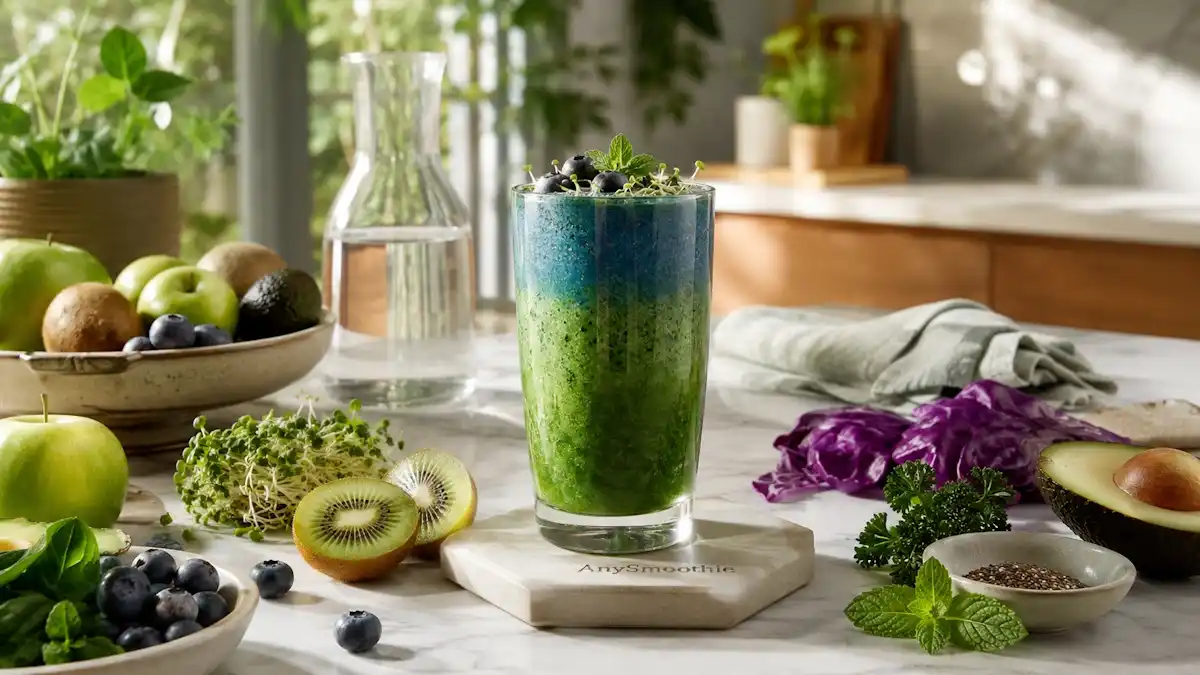
Your body handles cleanup all day long. Cells break down fuel, move out leftovers, and rely on digestion, hydration, and antioxidant defenses to keep things running smoothly.
That is where smoothies to support cellular cleanup can fit in. The right blend can bring fiber, fluid, color, and steady nutrition into one easy glass, without turning breakfast into a science project. The best recipes stay simple, use everyday ingredients, and work with your normal routine.
What cellular cleanup means, and why smoothies can fit into the picture
Cells are busy. They make energy, use nutrients, and leave behind byproducts that the body has to process through normal pathways. Digestion helps move waste out, the liver handles many compounds, and hydration supports transport and elimination.
Smoothies do not “clean out” the body on their own, and they do not replace the systems that already do that work. They can still support those systems by helping you eat more fiber, drink more fluids, and get more plant compounds in one sitting. A review on dietary antioxidants and normal oxidative stress also points to how food-based antioxidants work alongside the body’s own defenses.
The body’s natural cleanup systems in simple terms
Think of cleanup as a chain, not a switch. Digestion breaks food down, the liver processes what comes through, and the intestines move what stays behind. Water matters too, because fluid helps move nutrients and waste through those pathways.
Antioxidant nutrients matter as well. Vitamin C, carotenoids, and polyphenols help the body manage everyday oxidative stress from normal metabolism. That is a support role, not a dramatic fix.
Why smoothie ingredients can help support those pathways
Fruit, leafy greens, seeds, and liquids each add something useful. Berries bring polyphenols. Greens add folate, magnesium, and carotenoids. Chia and flax contribute fiber. Unsweetened liquids help the whole blend stay easy to drink.
Vegetable-forward blends can also broaden the nutrient mix without leaning too hard on sugar, a point that lines up with this overview of vegetable smoothie benefits. In practice, that means a smoothie can be both easy and useful.
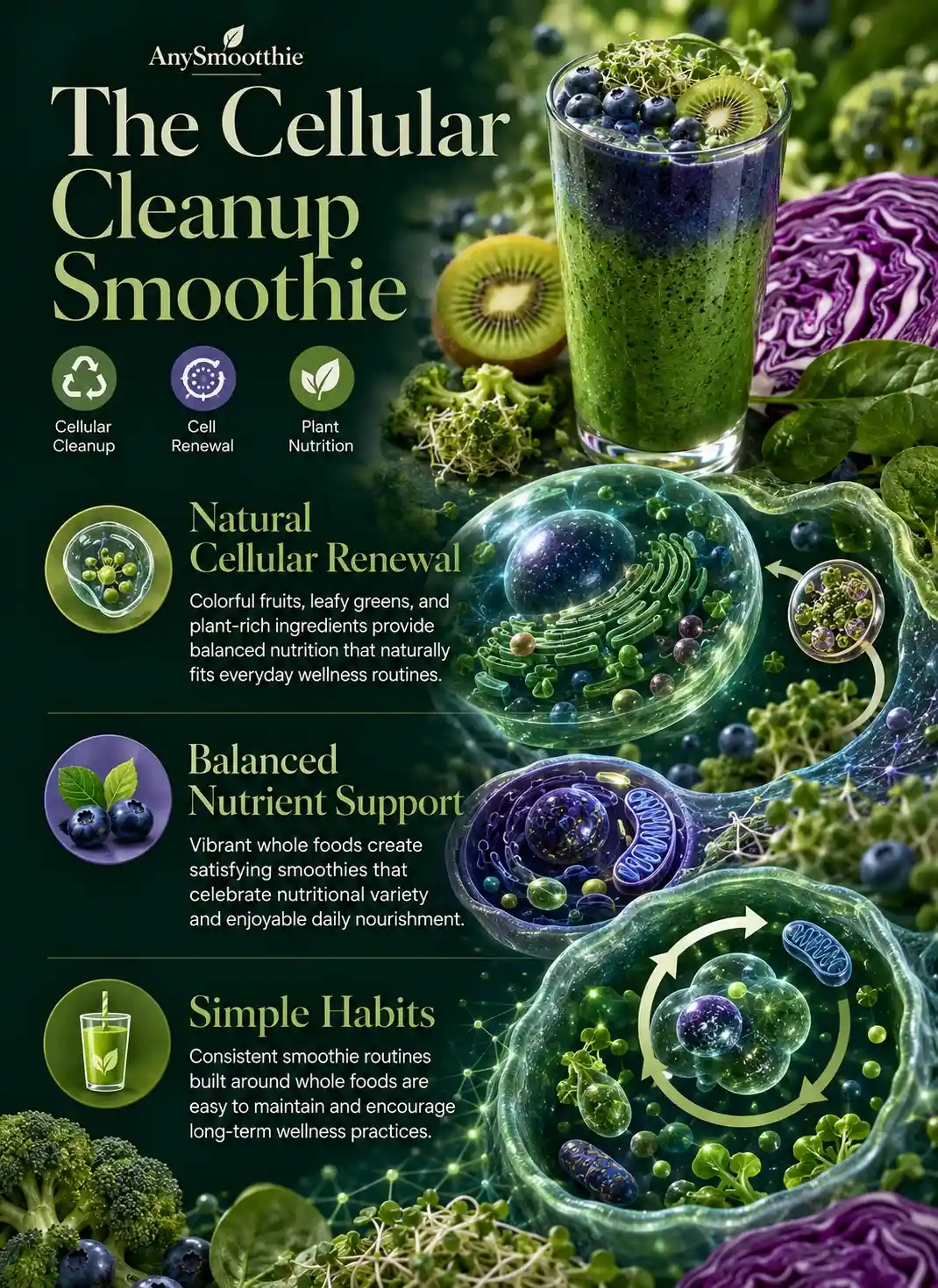
How to build smoothies to support cellular cleanup without overcomplicating them
A good smoothie follows a simple pattern. Start with liquid, add produce for color, include fiber, then finish with fat or protein for balance. That keeps the texture smooth and the drink more satisfying.
| Ingredient group | Key nutrients | Main role | Best examples | Simple smoothie use case |
|---|---|---|---|---|
| Liquid base | Water, minerals | Helps blending and hydration | Water, unsweetened milk, coconut water | Start every smoothie here |
| Leafy greens | Folate, magnesium, carotenoids | Adds micronutrients with little sugar | Spinach, kale, romaine | Blend a handful into almost any recipe |
| Colorful fruit | Vitamin C, fiber, polyphenols | Adds flavor and plant compounds | Berries, citrus, kiwi | Use frozen fruit for thicker texture |
| Seeds and fats | Fiber, omega-3s, healthy fats | Slows digestion and improves satiety | Chia, flax, hemp, avocado | Add one tablespoon or a few slices |
| Protein | Amino acids, calcium, probiotics | Makes the smoothie more filling | Greek yogurt, kefir, protein powder | Use when the smoothie replaces a snack or meal |
Start with a smart base, then layer in fiber and color
Unsweetened almond milk, dairy milk, kefir, or plain water all work well. From there, frozen fruit gives body, while leafy greens keep sugar in check and increase micronutrient density. If you want a more gut-focused approach, how to build gut-friendly smoothies expands on the same fiber-first idea.
Add fats, seeds, and protein for a steadier smoothie
Chia, flax, hemp, nut butter, Greek yogurt, and protein powder all change how a smoothie feels in your body. They slow digestion a bit, add staying power, and help the drink feel like part of a meal instead of a sugar rush.
Keep sugar in check and avoid common mistakes
Fruit juice, sweetened yogurt, and syrup can crowd out the ingredients that make a smoothie worth drinking. Whole fruit usually works better because it keeps fiber in the glass. Vegetable-heavy blends can help too, especially when you want more volume without more sweetness.
3 Smoothies to support cellular cleanup
These three blends each take a different angle. One leans on antioxidants, one supports digestion with fiber and brightness, and one brings steady energy with healthy fats.
Making cellular cleanup smoothies part of everyday Life
The best routine is the one you can repeat. Some people like a smoothie in the morning. Others use one after a workout or as an afternoon snack. The main idea is to rotate ingredients so you do not rely on the same blend every day.
When to drink them and how often to rotate recipes
Morning is a natural fit because smoothies are fast and easy. Post-workout works too, especially when you add protein. Snack time is useful when you need something structured between meals.
Rotate the recipes through the week. That keeps flavors fresh and gives you a wider spread of nutrients.
Simple prep habits that make healthy blends easier
Wash greens ahead of time, portion fruit into freezer bags, and keep a short list of basics on hand. Chia, flax, hemp, plain yogurt, and unsweetened milk cover a lot of ground.
People with diabetes, kidney issues, or digestive concerns should tailor fruit, fiber, and mineral-rich add-ins to their own needs with professional guidance. Small adjustments matter.
Conclusion
Smoothies to support cellular cleanup work best when they stay simple, colorful, and balanced. They do not need exotic powders or complicated formulas.
A good blend gives you fiber, fluids, and plant compounds your body can use during normal cleanup work. Keep the routine steady, rotate ingredients, and let the glass do its job one day at a time.

Medical Disclaimer: AnySmoothie content is for educational purposes only and is not a substitute for professional medical advice. Consult a healthcare provider for personalized guidance. See our full Disclaimer & Terms of Use. AI Transparency: AnySmoothie may use AI to support content development. All content undergoes human editorial review for accuracy, clarity, and editorial quality. See our full AI Transparency.