
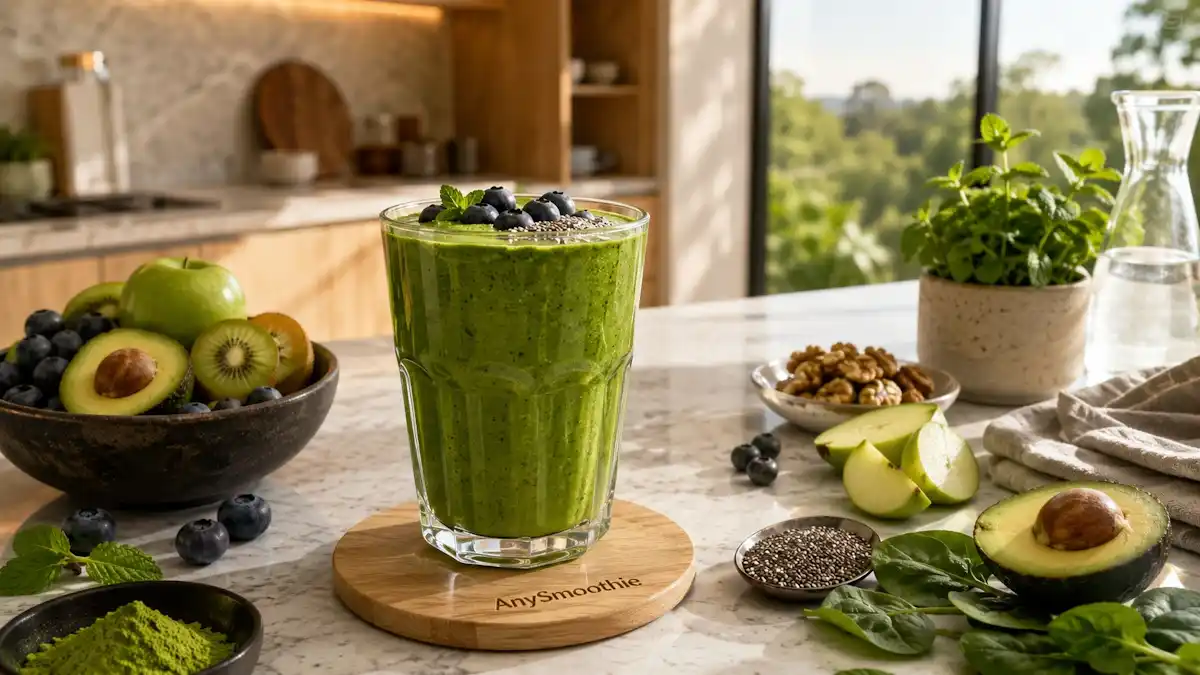
AMPK is one of the body’s main energy sensors. When cells notice low fuel, this pathway helps shift energy use toward activity and away from storage. AMPK pathway smoothies for metabolic health sound technical, but the idea is practical, because the right smoothie can support steadier energy without a sugar surge.
This guide focuses on food patterns and ingredients that may support healthy metabolic signaling. It is not medical treatment, and it does not turn a smoothie into a fix-all. The best blends are built for blood sugar balance, satiety, and nutrient density.
Start with what the pathway does, because the ingredient choices make more sense after that.
What the AMPK pathway does in everyday metabolism
AMPK, short for AMP-activated protein kinase, helps cells read their energy status. When energy is low, it nudges cells toward using fuel instead of storing it. A review on nutritional modulation of AMPK describes how this shift touches glucose, lipid, and mitochondrial metabolism.
That matters because metabolic health depends on more than calories. Better energy handling, steadier glucose response, and efficient fuel use all matter across the day. Older work on AMP-activated protein kinase in metabolic control explains how the pathway helps direct ATP use in the body.
AMPK responds to energy status, so smoothies work best when they lower sugar load and raise fullness.
How AMPK helps cells respond to energy demand
When you exercise, fast overnight, or go longer between meals, AMPK activity tends to rise. That doesn’t mean you should chase low energy all day. It means the pathway responds to real demand, so food choices can shape a healthier metabolic environment without forcing a switch.
Food can’t command AMPK on demand, but it can set the stage. A smoothie with protein, fiber, and low added sugar gives cells a steadier input than a sweet drink in a hurry.
Why smoothie ingredients matter more than a single superfood
No berry, seed, or powder does the job alone. A smoothie works best when it fits healthy eating habits for metabolic balance, because protein, fiber, fat, and plant compounds work together.
Fiber slows digestion. Protein improves satiety. Healthy fats help the drink feel like a meal. Meanwhile, colorful produce adds phytonutrients that support a broader eating pattern. One spoonful of flax won’t fix a poor base, but it can help inside a balanced formula.
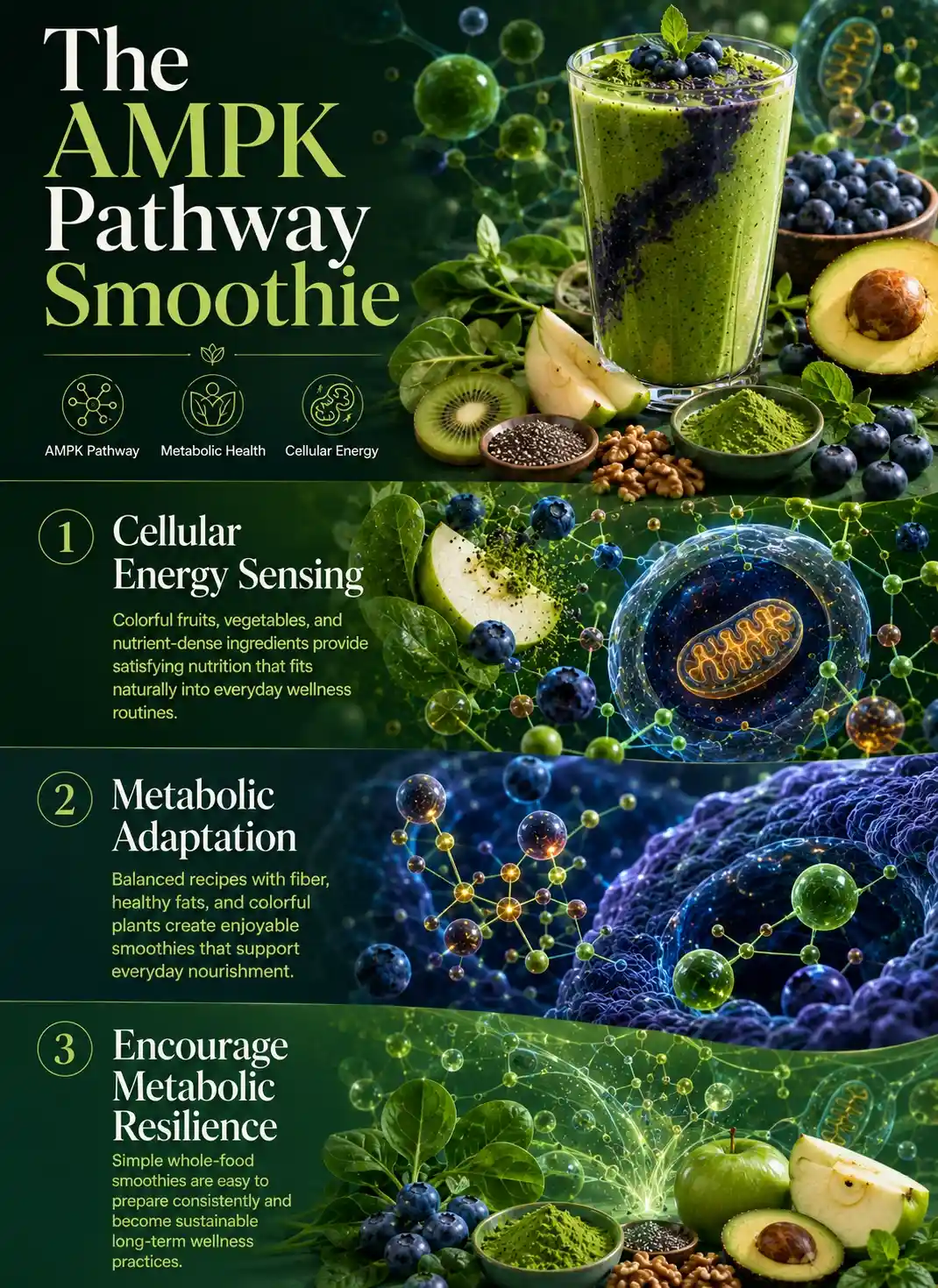
How to build AMPK-friendly smoothies for metabolic health
This is where theory turns into kitchen work. Build the smoothie in layers, first the liquid, then protein and fiber, then fat and flavor. If mornings are your main smoothie window, starting the day with metabolic-friendly smoothies gives more template ideas.
| Smoothie style | Main ingredients | Protein level | Fiber level | Best use case |
|---|---|---|---|---|
| Berry balance | Berries, flax, protein, unsweetened almond milk | Medium-high | Medium-high | Breakfast or post-workout |
| Green cream | Spinach, avocado, cucumber, Greek yogurt | Medium | High | Light meal or busy morning |
| Cocoa chia | Unsweetened cocoa, chia, protein, almond milk | Medium-high | High | Dessert-like snack |
| Recovery oats | Berries, oats, protein, kefir | High | Medium | Harder training days |
The pattern is simple. If a smoothie tastes like dessert first, the balance is off.
Choose a base that keeps sugar low and texture smooth
Unsweetened almond milk, plain kefir, water, and cooled green tea all work well. They keep the flavor clean without loading the glass with extra sugar. Fruit juice and sweetened milks can push the drink in the wrong direction fast.
A good base also affects texture. Thin enough to drink, thick enough to feel satisfying, that is the target. A smoothie should act like a meal, not flavored juice.
Add protein, fiber, and fat to slow the spike
Protein powder, Greek yogurt, chia seeds, ground flax, nut butter, avocado, and even a small amount of oats all help. They slow digestion and make the smoothie more filling. That matters because a drink that leaves you hungry an hour later doesn’t help metabolic stability.
Balance beats perfection here. You don’t need every ingredient at once. You do need a protein anchor and one or two texture builders.
Use produce and spices that add color and phytochemicals
Berries, spinach, kale, cucumber, cinnamon, cocoa, ginger, turmeric, and citrus zest all fit this style. They add taste first, then color and plant compounds. Variety matters because a rotating set of ingredients keeps the routine useful and easy to repeat.
3 AMPK Pathway smoothies for metabolic health
Keep these recipes simple enough to make on a busy morning. The goal is steady energy, not a long ingredient list.
How to get the most from AMPK-Friendly smoothies
Timing matters, but consistency matters more. A balanced smoothie fits best at breakfast, after training, or on days when a full meal is hard to eat. It can also fill in for a rushed lunch, as long as it has enough protein and fiber.
Best times to use a metabolic health smoothie
After a morning fast, a smoothie can be an easy first meal. After exercise, it can help replace energy without a heavy feeling. On hectic days, it can keep you from skipping food and then overcorrecting later.
Common smoothie mistakes to avoid
- Too much fruit can turn the drink into a sugar-heavy meal. Keep berries as the main fruit and use banana sparingly.
- Juice and syrup push the sugar load up fast. Use whole fruit and unsweetened liquid instead.
- Flavored yogurt hides added sugar. Plain Greek yogurt or protein powder works better.
- Skipping protein leaves the smoothie thin and short-lived. Add one clear protein source.
- Oversized portions can turn a smoothie into two meals. Keep the serving aligned with your actual hunger.
A few simple fixes go a long way. Small changes in the base, protein, and fruit amount usually make the biggest difference.
Conclusion
AMPK pathway smoothies for metabolic health work best when they are balanced, low in added sugar, and built with real food ingredients. The pathway responds to energy demand, so your smoothie should support that pattern with protein, fiber, fat, and color.
Start with one recipe and repeat it for a week. Then adjust the fruit, protein, or thickness until it fits your day. Small, repeatable choices matter more than complicated blends.
🛡️ Safety Notes & Dietary Interactions
- Balanced Expectations: Foods and smoothies can support healthy metabolic function, but they do not directly activate or control AMPK in the way medications or exercise physiology may influence this pathway. Focus on long-term eating patterns rather than single ingredients.
- Blood Sugar Awareness: If you have diabetes or another condition affecting glucose regulation, choose smoothies with balanced protein, fiber, and healthy fats, and discuss significant dietary changes with your healthcare provider.
- Supplement Caution: If you add green tea extract, berberine, concentrated botanical powders, or other metabolic supplements to your smoothie, check for potential interactions with prescription medications before regular use.
- Consistency Over Complexity: The greatest benefits usually come from repeating balanced habits. Regular physical activity, adequate sleep, hydration, and a varied whole-food diet work alongside nutritious smoothies to support overall metabolic health.
FAQ
What is the AMPK pathway in simple terms?
AMPK is often described as one of the body’s energy sensors. When cells detect lower energy availability, this pathway helps coordinate how fuel is used to support normal metabolism. While food alone does not directly switch AMPK on or off, healthy lifestyle habits such as regular exercise, balanced nutrition, and appropriate meal timing all contribute to a healthier metabolic environment.
Which smoothie ingredients best support metabolic health?
The strongest foundation usually includes a quality protein source, fiber-rich ingredients such as berries, chia, flax, or leafy greens, healthy fats from foods like avocado or nuts, and an unsweetened liquid base. This combination supports satiety, steadier energy, and a more balanced nutritional profile than smoothies built primarily around fruit juice or added sugars.
Are fruit smoothies bad if I’m trying to support insulin sensitivity or metabolic health?
Not at all. The key is balance rather than avoiding fruit completely. Whole fruits provide fiber, vitamins, minerals, and beneficial plant compounds. Pairing fruit with protein, healthy fats, and fiber slows digestion and creates a more satisfying smoothie than relying on fruit or juice alone, which can make the drink much higher in rapidly absorbed sugars.
Can I drink an AMPK-friendly smoothie every day?
Yes, provided the smoothie is built around whole-food ingredients and fits your overall diet. Rotating fruits, vegetables, protein sources, seeds, and healthy fats can increase nutrient variety while preventing menu fatigue. A repeatable, balanced smoothie often contributes more to long-term dietary quality than constantly changing recipes in search of the “perfect” combination.
Is an AMPK-friendly smoothie better at breakfast or after exercise?
Both times can work well depending on your routine. Breakfast smoothies may help provide a balanced start to the day, while post-exercise smoothies can support recovery by supplying protein and carbohydrates after activity. The most effective timing is the one that consistently fits your schedule and encourages sustainable healthy eating habits over the long term.

Medical Disclaimer: AnySmoothie content is for educational purposes only and is not a substitute for professional medical advice. Consult a healthcare provider for personalized guidance. See our full Disclaimer & Terms of Use. AI Transparency: AnySmoothie may use AI to support content development. All content undergoes human editorial review for accuracy, clarity, and editorial quality. See our full AI Transparency.