
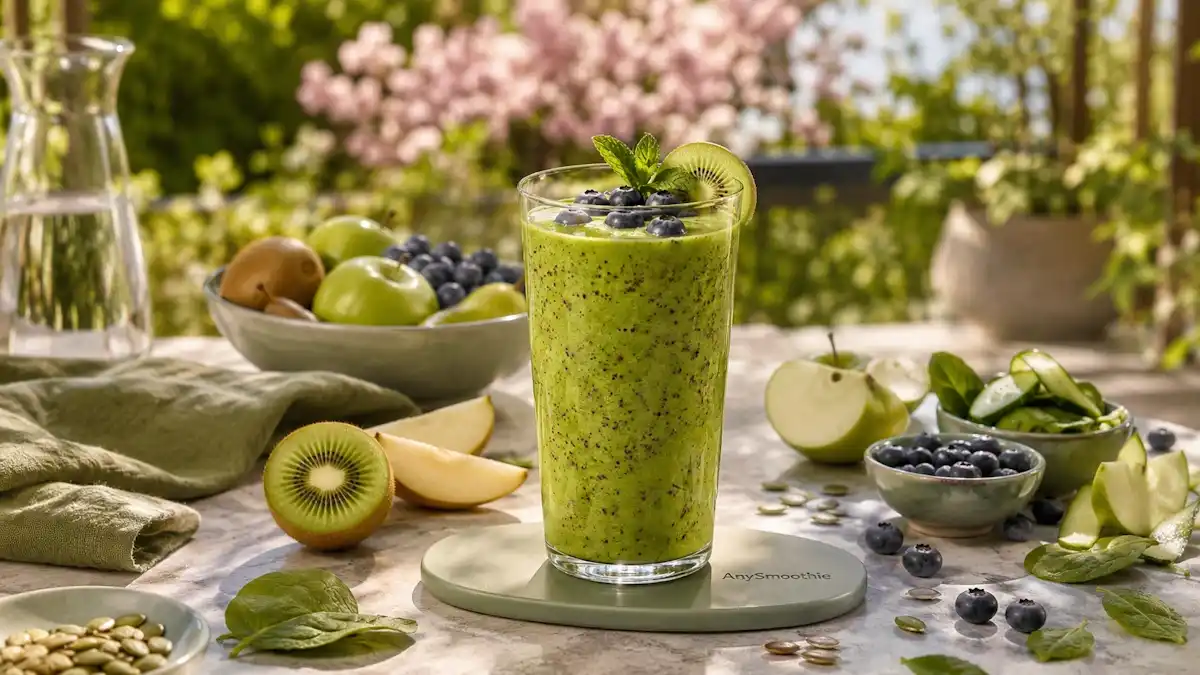
Seasonal allergies can leave you dry, tired, and less interested in a full meal. That makes breakfast or lunch harder than usual, especially when your throat feels scratchy and your appetite drops.
That is where smoothies for seasonal allergy nutrition support fit well. They give you fluid, fruit, greens, and a few steady add-ons in one glass, so you can keep eating even on rushed mornings.
The goal is simple, build blends that support normal hydration, fiber intake, and nutrient coverage without feeling heavy. Start with smart ingredients, then keep the recipe easy enough to use on repeat.
What smoothies can do during allergy season
Smoothies won’t change pollen exposure, and they are not a cure. They can still help you keep up with basics when seasonal allergies make meals feel harder to handle.
Food matters because the body still needs water, vitamin C, vitamin E, magnesium, fiber, and enough protein to keep daily systems running well. For a plain look at what foods provide, Nutrition.gov’s food nutrient guide is a useful reference. A smoothie can make those pieces easier to get when you do not want a big plate of food.
A good allergy-season smoothie does one job well: it keeps you fed, hydrated, and comfortable enough to eat again later.
Liquid meals also tend to feel easier on a scratchy throat. When congestion, fatigue, or mouth dryness shows up, a cold, smooth drink can be more appealing than a heavy breakfast.
The nutrient gaps allergy season can make harder to fill
When allergies flare, people often skip breakfast or grab something plain and starchy. As a result, intake of produce, fluids, and protein can drop for a few days in a row. That matters because vitamin C, vitamin E, magnesium, quercetin-rich foods, fiber, and water are easier to miss when you are eating less overall. A smoothie closes that gap with less effort than cooking a full meal.
Why blended foods can be easier to use
Blending turns several small food choices into one drink. You can fit fruit, greens, seeds, yogurt, or a nut butter into a single serving, then adjust the texture to match how you feel. That makes balanced eating more realistic on mornings when you are tired, stuffed up, or moving fast. It also helps you carry food in a cup instead of skipping it.
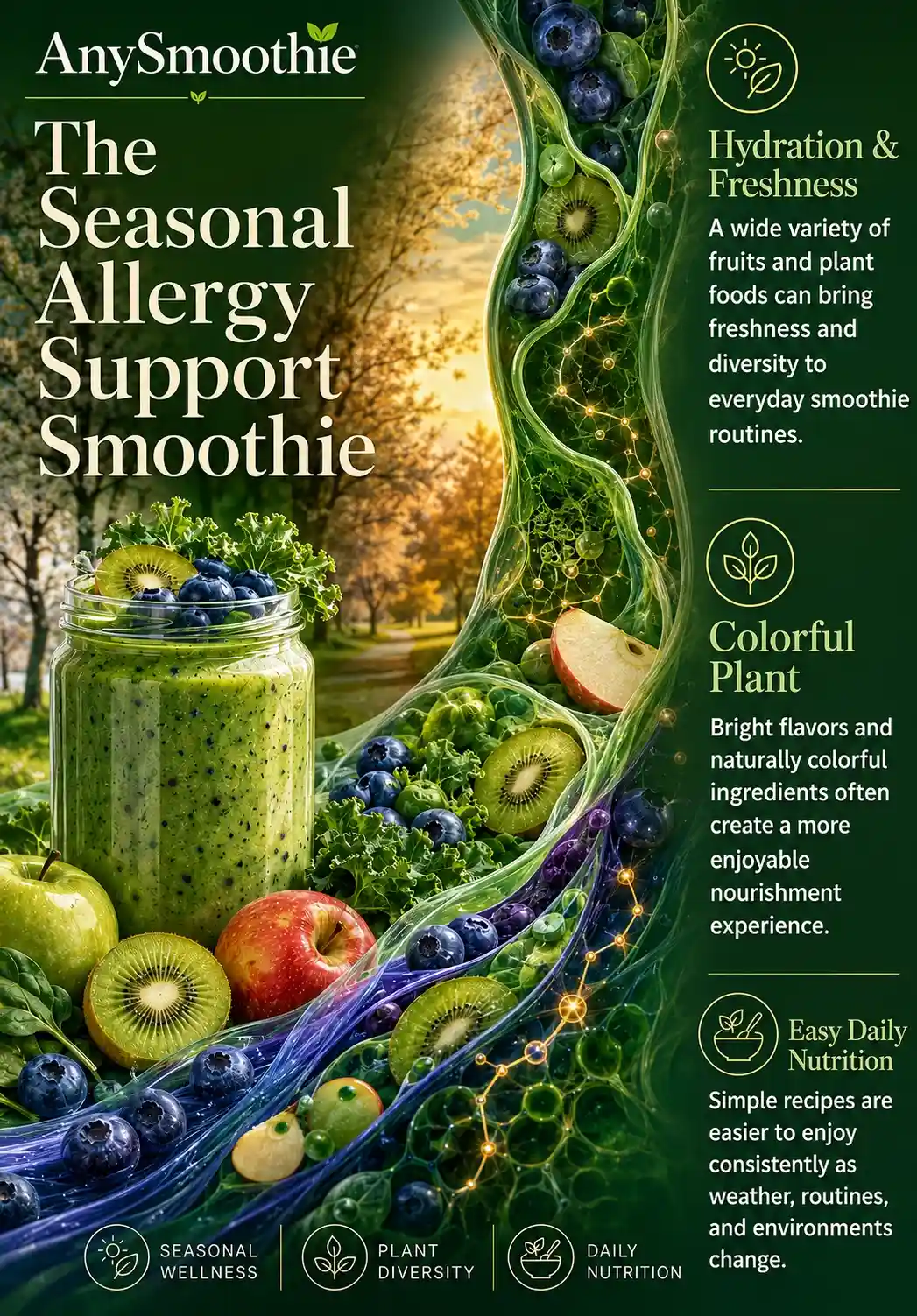
The best ingredients for smoothies for seasonal allergy nutrition support
The best allergy-season smoothies keep the flavor bright and the texture easy. Each ingredient group should do a clear job, like adding fluid, fiber, protein, or minerals, without making the drink hard to enjoy.
Bright fruits that bring vitamin C and antioxidants
Strawberries, kiwi, oranges, pineapple, cherries, and berries bring color and sharp flavor. They also add water and plant compounds that help support healthy cells during everyday stress. Citrus can make a smoothie taste lighter, while berries give more body and sweetness with less effort. If you want a simple base, blend fruit with ice and a little liquid first, then build from there.
Leafy greens and herbs that add minerals without overpowering flavor
Spinach, romaine, cucumber, parsley, and mint keep the drink fresh instead of heavy. Spinach and parsley add magnesium and potassium, while cucumber adds more fluid and a clean taste. Mint can make a thick blend feel brighter. A nutritious banana spinach smoothie shows how a green smoothie can stay mild enough for daily use.
Seeds, nuts, and yogurt for staying power
Chia, flax, hemp hearts, almond butter, Greek yogurt, and kefir help the smoothie last longer. They add protein, fat, and fiber, which slow digestion and make the drink more filling. People who avoid dairy can choose a plant-based yogurt or milk they tolerate well. For a helpful template, a balanced fruit smoothie shows how fruit and protein work together in one cup.
3 Smoothies for seasonal allergy nutrition support
These three blends use the same basic logic, but each one leans on a different texture and energy level.
| Smoothie | Main ingredients | Texture | Best time to drink | Why it fits allergy season |
|---|---|---|---|---|
| Green citrus | Spinach, orange or pineapple, cucumber, ginger, yogurt or hemp seeds | Light, cold, bright | Early morning | Adds fluid and easy calories when appetite is low |
| Berry flax | Mixed berries, banana, chia or flax, yogurt or oat milk | Creamy and thick | Midmorning | Brings fiber and polyphenols with simple ingredients |
| Peach oat | Peaches, oats, almond butter, milk of choice | Smooth and filling | Between meals | Helps bridge hunger gaps when fatigue makes eating harder |
Use the lighter blend when your throat feels rough, and save the oat version for days when you need more staying power.
How to build a smoothie that feels good on your body
A good smoothie formula doesn’t need a long ingredient list. It needs enough balance to taste good and hold you over.
A simple formula that keeps the smoothie balanced
Use this order, fruit, greens, protein, healthy fat, liquid. Fruit brings flavor and quick energy, greens add minerals, protein supports satiety, fat slows digestion, and liquid sets the texture. Keep added sugar low by relying on fruit for sweetness and choosing plain yogurt or unsweetened milk.
What to adjust if your throat, stomach, or energy feels off
If your throat feels scratchy, keep the smoothie cold and skip sharp citrus for a day. If your stomach feels touchy, choose softer fruit like banana or peach and use more liquid. When you need more staying power, add chia, hemp seeds, or nut butter. If you want something lighter, thin it with water or unsweetened milk.
Conclusion
Seasonal allergies can make simple eating feel harder than it should. A smart smoothie keeps hydration, fiber, and nutrient intake within reach, even when appetite is off.
Start with one recipe that matches your morning. Then tweak the fruit, greens, and protein until the taste and texture feel easy.
Healthy routines do not need to be complicated. They need to be repeatable.
🛡️ Safety Notes & Dietary Interactions
- Individual Sensitivities: Seasonal allergies and food sensitivities do not always overlap, but certain fruits, herbs, or dairy products may feel less comfortable for some individuals. Introduce new ingredients gradually.
- Oral Allergy Awareness: Cross-Reactivity: Some people with pollen allergies may notice itching or mouth discomfort from raw fruits such as apples, peaches, or kiwi. Blending may not eliminate these reactions.
- Protein Balance: Smoothies rich in fruit but low in protein may leave you hungry soon afterward. Adding yogurt, kefir, hemp seeds, or a suitable protein source can improve staying power.
- Medical Considerations: Persistent Symptoms: Seasonal allergy symptoms, breathing difficulties, or suspected food-related reactions should be discussed with a qualified healthcare professional for individualized guidance.
FAQ
What nutrients are most useful during allergy season?
A balanced intake of fluids, fiber, vitamin C, vitamin E, magnesium, protein, and a variety of plant compounds can help support normal nutrition during allergy season. Smoothies provide a convenient way to combine many of these nutrients in a single serving.
Are smoothies easier to consume when allergies affect appetite?
Many people find smoothies easier to tolerate when congestion, throat irritation, or fatigue reduce their interest in larger meals. The smooth texture and customizable consistency can make it simpler to maintain regular nutrient intake.
Which fruits work well in seasonal allergy support smoothies?
Berries, cherries, kiwi, peaches, pineapple, oranges, and bananas are popular options. They provide flavor, hydration, and a range of vitamins and plant compounds while blending easily with greens, yogurt, seeds, or milk alternatives.
Can dairy-free smoothies still provide staying power?
Yes. Plant-based yogurts, chia seeds, flax seeds, hemp hearts, oats, and nut butters can add protein, fiber, and healthy fats. These ingredients help create a more satisfying smoothie without relying on dairy products.
How can I make an allergy-season smoothie more filling?
Adding a protein source, a small amount of healthy fat, and fiber-rich ingredients can increase satiety. Oats, Greek yogurt, hemp seeds, chia seeds, flax, and almond butter are common additions that help a smoothie feel more like a complete snack or light meal.

Medical Disclaimer: AnySmoothie content is for educational purposes only and is not a substitute for professional medical advice. Consult a healthcare provider for personalized guidance. See our full Disclaimer & Terms of Use. AI Transparency: AnySmoothie may use AI to support content development. All content undergoes human editorial review for accuracy, clarity, and editorial quality. See our full AI Transparency.