
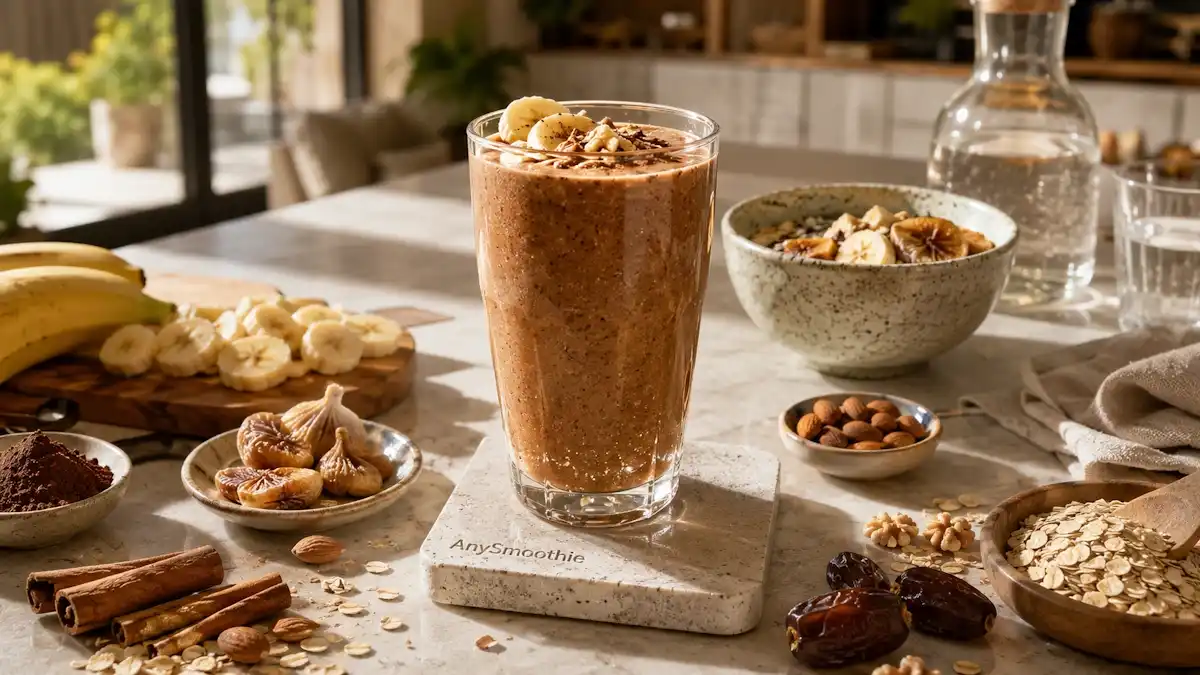
Low energy often starts long before you feel tired. Your cells use ATP as their energy currency, and that system depends on a steady supply of nutrients.
Magnesium orotate is interesting because it pairs magnesium with orotic acid, and many people use it in energy-focused routines. Smoothies make that easier to repeat, since you can combine the supplement with food, flavor, and a better texture in one habit.
This guide keeps the focus on normal energy pathways, not medical claims. You’ll see how ATP works, why magnesium matters, how to build magnesium orotate smoothies for ATP support, and a few recipe ideas you can actually use.
What magnesium orotate does in the body, and why ATP matters
Energy production depends on more than calories alone. Cells rely on ATP to power countless daily functions, and magnesium is involved in many of the reactions that help create and use that energy. Magnesium orotate attracts attention because it combines magnesium with orotic acid, making it a popular addition to routines focused on everyday vitality and metabolic support.
ATP explained without the science overload
ATP is the molecule your cells use to move, think, contract muscle, and recover. When you exercise, work, or even just stay upright, ATP gets used and remade again and again.
That constant recycle matters. If the body’s nutrient supply is off, the process still runs, but it may not feel as smooth. That is why people pay attention to magnesium in daily routines.
Why magnesium is central to energy metabolism
Magnesium helps activate many enzymes that are involved in making and using ATP. It also supports muscle function, nerve signaling, and normal cellular processes.
A review in PubMed Central notes magnesium’s role in muscle relaxation and metabolic functions. That fits the bigger picture here, since energy is not only about calories. It is also about how well cells can use what you eat.
Where magnesium orotate stands out from other forms
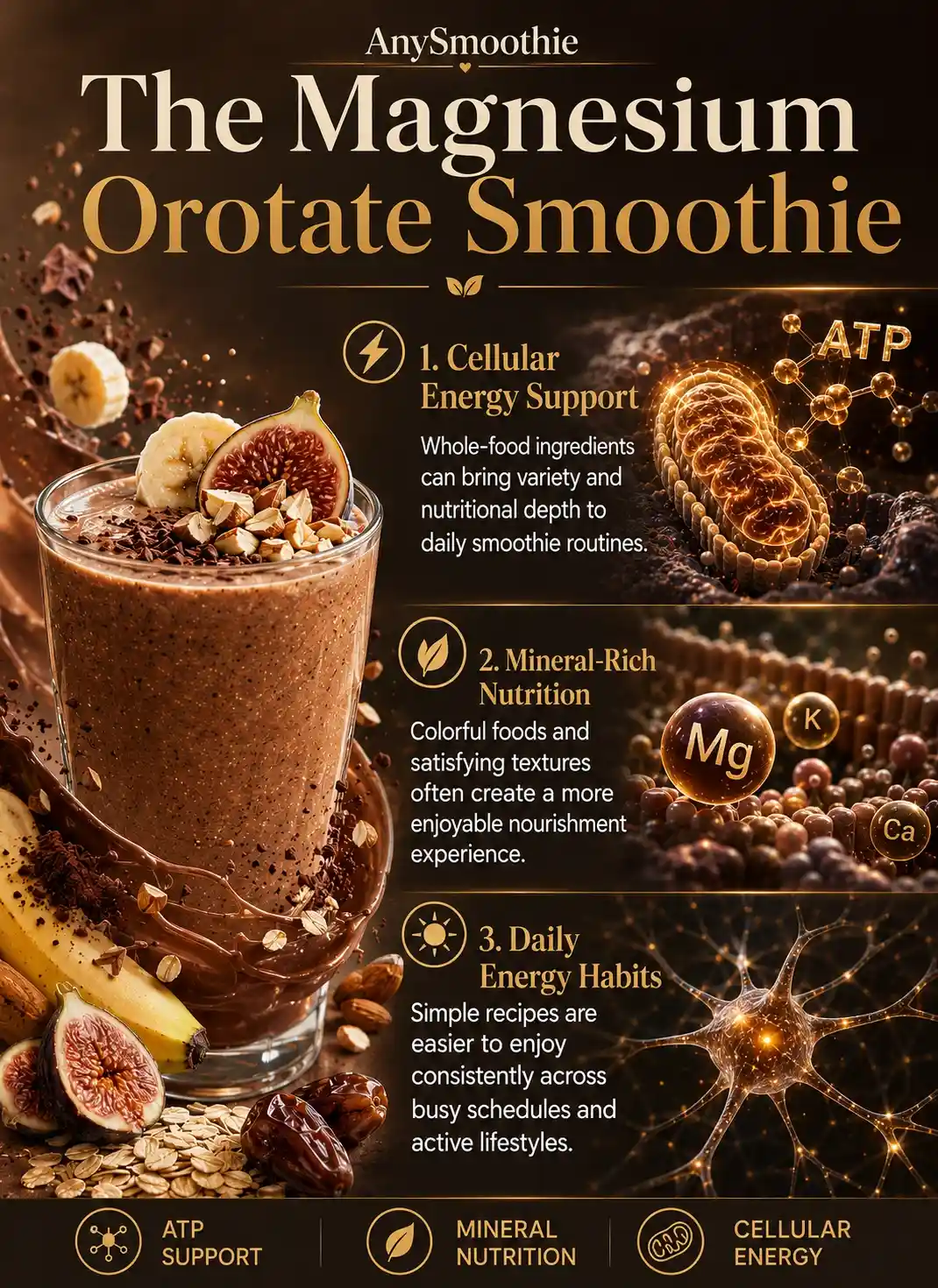
Magnesium orotate is magnesium paired with orotic acid. Some people like it because it fits neatly into performance or daily energy routines.
Other forms have their own place. Citrate is common, glycinate is often chosen for a gentler feel, and malate shows up in active-day stacks. Orotate is one option, not a universal winner.
How to build magnesium orotate smoothies for ATP support
A good smoothie does more than hide a supplement. It gives you protein, carbs, fat, and micronutrients in a form that is easy to repeat.
A high protein yogurt smoothie base works well because it brings creaminess and protein without much effort. From there, you can adjust the fruit, greens, and fat based on your day.
| Smoothie goal | Key ingredients | Magnesium orotate use | Taste profile | Best time to drink |
|---|---|---|---|---|
| Clean morning start | Berries, citrus, yogurt, chia | Take with the smoothie or follow label directions | Bright and light | Morning |
| Pre-workout support | Banana, cacao, milk, nut butter, protein | Mix into the routine with breakfast or a snack | Rich and filling | 60 to 90 minutes before training |
| Steady afternoon fuel | Spinach, protein, green apple, lemon, flax | Pair with a snack-sized smoothie | Mild and less sweet | Midafternoon |
The pattern is simple. Use fruit for flavor, protein for balance, and a little fat for staying power. That gives the smoothie a better shot at becoming a daily habit.
Ingredients that pair well with magnesium orotate
Banana helps with texture and mild sweetness. Berries add sharp flavor and keep the drink from tasting flat.
Spinach blends in easily and barely changes the taste. Greek yogurt or protein powder adds body, while chia or nut butter slows the drink down a bit and makes it more satisfying.
If you want a fruit-forward starting point, a simple recipe for creamy berry smoothies is a useful template. You can always adjust the sweetness later.
What to avoid so the smoothie stays easy to use
Very large fiber loads can make a smoothie feel heavy. Too much kale, flax, and chia all at once can also turn the texture gritty.
Heavy sweeteners are another problem. If the drink tastes like dessert, it is easier to overdo it and harder to keep in rotation. Keep the flavor clean and the blend smooth.
3 Magnesium orotate smoothies for ATP support
The best smoothie is the one you can repeat three or four times a week.
How to use magnesium orotate safely and make it part of your routine
Read the label first. Check the serving size and the amount of elemental magnesium, since that is the number that matters most.
Start low if you are unsure how a product feels in your routine. Personal tolerance matters, and some people prefer to test a half serving before settling on a full one. If you have health concerns or take medication, talk with a qualified professional.
Best timing for smoothies and daily consistency
Morning works well if you want a clean start. Post-workout timing also makes sense if you already use a shake after training.
Afternoon can be useful too, especially if you want a steadier routine and a snack that feels more balanced. The best timing is the one you can repeat without forcing it.
Label checks, dose awareness, and taste tweaks
Look for elemental magnesium on the bottle. Also check whether the product is a capsule, tablet, or powder, because that changes how it fits into a smoothie routine.
Taste matters. A little vanilla, cinnamon, or extra liquid can make the drink easier to drink every day. If the texture feels too thick, add more water, milk, or ice.
Conclusion
Magnesium orotate smoothies can be a simple way to support normal ATP-related energy pathways without making your routine complicated. The key is balance, a formula you like, and a dose that matches the label.
Start with one recipe, keep it consistent for a week, and adjust the flavor before you change everything else. Small routines often last longer than perfect plans.
🛡️ Safety Notes & Dietary Interactions
- Supplement Awareness: Magnesium Intake: Magnesium orotate supplements vary in elemental magnesium content. Always check the label carefully and avoid assuming that different brands provide equivalent amounts per serving.
- Digestive Comfort: Start Gradually: If magnesium orotate is new to your routine, begin with a smaller serving and assess tolerance. Gradual introduction often makes it easier to evaluate how the supplement fits your diet.
- Medication Check: Professional Guidance: Magnesium supplements may interact with certain medications or absorption patterns. If you use prescription medications or have ongoing health concerns, consult a qualified healthcare professional first.
- Balanced Nutrition: Food First: Smoothies work best when magnesium orotate complements a balanced meal pattern. Protein, healthy fats, fiber, hydration, and regular eating habits remain important for overall energy support.
FAQ
What is magnesium orotate and why is it used for ATP support?
Magnesium orotate combines magnesium with orotic acid. Magnesium participates in many enzyme systems involved in energy metabolism and ATP use throughout the body. People often include magnesium orotate in energy-focused routines because it provides a supplemental magnesium source that can be incorporated into daily nutrition habits.
Can I add magnesium orotate directly to a smoothie?
Yes, many people add magnesium orotate powder directly to smoothies if the product form allows it. Others prefer taking capsules or tablets alongside the smoothie. Always follow the manufacturer’s instructions and serving recommendations, since product formulations and intended usage can differ between brands.
What ingredients pair best with magnesium orotate smoothies?
Bananas, berries, spinach, Greek yogurt, kefir, chia seeds, almond butter, and protein powders are common pairings. These ingredients help create a balanced smoothie with carbohydrates, protein, healthy fats, and micronutrients while improving texture, flavor, and overall satisfaction from the drink.
When is the best time to drink a magnesium orotate smoothie?
Morning, post-workout, and mid-afternoon are all common options. The ideal timing depends on your routine and consistency. Many people choose a time when they can comfortably repeat the habit several times each week without making their schedule more complicated.
How can I make a magnesium orotate smoothie taste better?
Natural flavor boosters such as berries, banana, vanilla, cinnamon, cocoa, or a small pinch of salt can improve taste. Adjusting the liquid amount can also improve texture. A smoothie that tastes pleasant and fits your routine is usually easier to maintain consistently over time.

Medical Disclaimer: AnySmoothie content is for educational purposes only and is not a substitute for professional medical advice. Consult a healthcare provider for personalized guidance. See our full Disclaimer & Terms of Use. AI Transparency: AnySmoothie may use AI to support content development. All content undergoes human editorial review for accuracy, clarity, and editorial quality. See our full AI Transparency.