
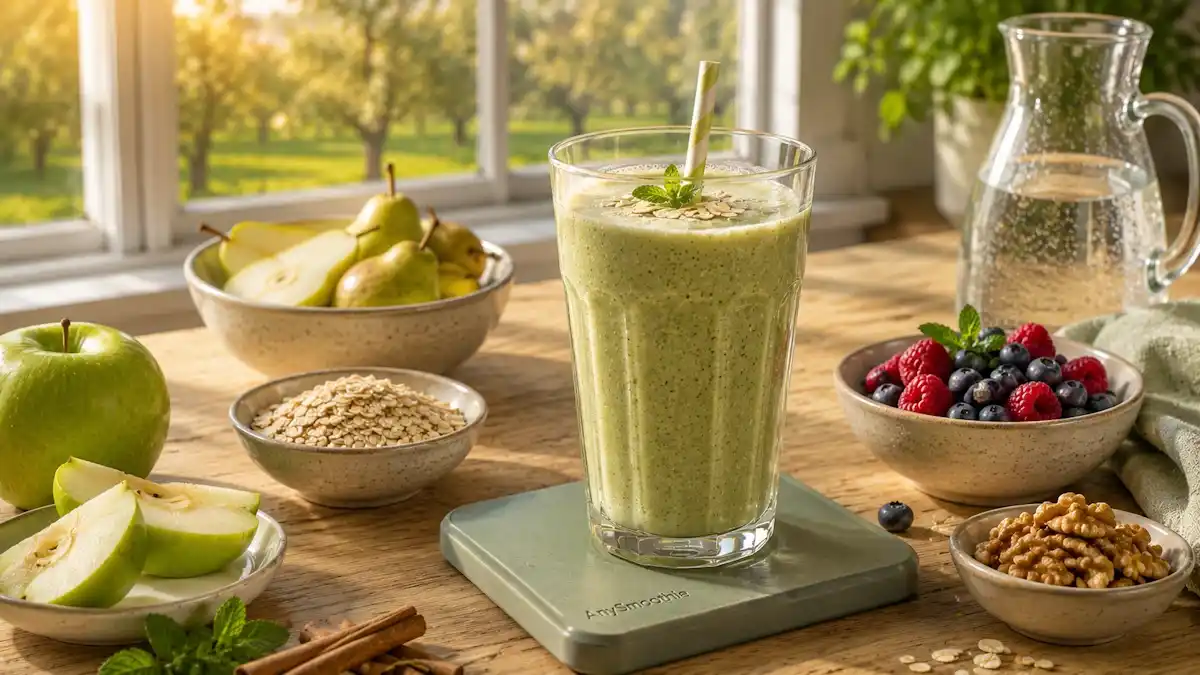
Apples bring more than fiber. They also carry polyphenols, plant compounds that help shape the gut environment in useful ways. When your gut microbes have the right mix of fuel, the whole system tends to feel steadier.
Microbiome balance means the microbes in your gut have enough variety and support to do their job well. That usually comes down to fiber, plant compounds, and less sugar overload. In the pages below, the focus stays practical, with ingredient ideas and three smoothie builds that fit real life.
How apple polyphenols support microbiome balance
Apple polyphenols do more than add color and flavor. Many of them reach the large intestine, where gut microbes can break them down and use them. A review on apple varieties and human gut microbiota found that apples are rich in fiber and polyphenols, which helps explain why they make such a strong smoothie base.
That matters because the gut is a busy ecosystem. When microbes have useful fuel, they can produce short-chain fatty acids, or SCFAs. These are small compounds made when microbes break down fiber and some plant compounds. They help shape a gut setting that supports regular microbial activity.
What makes apple polyphenols different from regular fruit sugar
The value in apples is not only the sweetness. Polyphenols sit in the skin and flesh, and they act very differently from sugar. Sugar gives quick energy, while polyphenols interact with microbes and the gut environment.
A whole apple usually gives you more of that benefit than juice. If the fruit is well washed, keeping the peel on can raise the polyphenol load even more. That makes a smoothie feel more grounded and less like a sweet drink with a thin nutritional profile.
Why gut microbes like variety, fiber, and plant compounds
Your gut microbes like options. Fiber feeds one group, plant compounds feed another, and that mix supports a more varied ecosystem over time. Apples bring pectin, berries add more polyphenols, and seeds add a different kind of fiber.
If you want more ideas built around that same pattern, smoothies for gut microbiome support show how fiber, resistant starch, and fruit can work together. Variety matters here. A smoothie with only fruit is different from one with fruit, greens, and seeds.
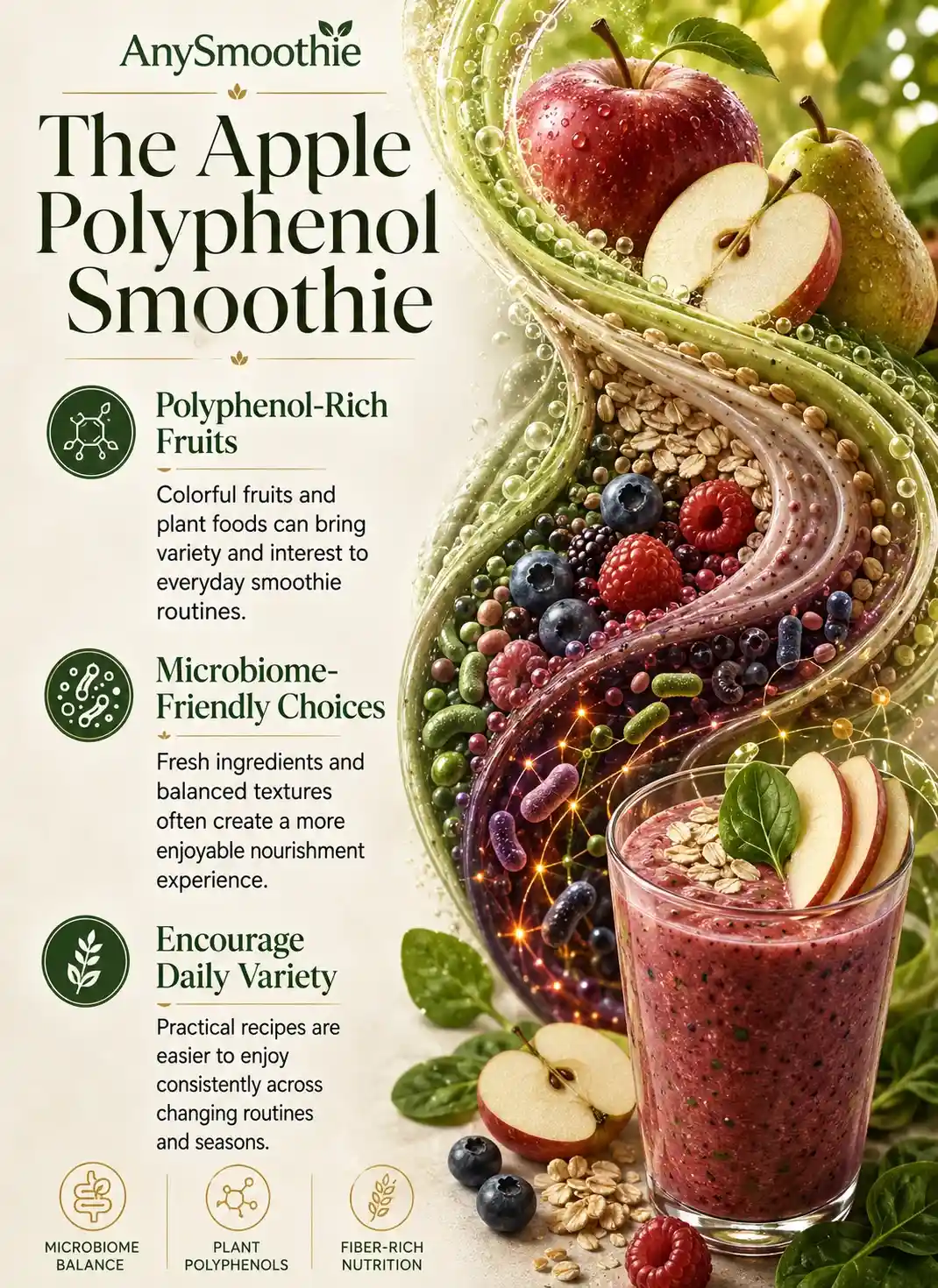
The best ingredients for apple polyphenol smoothies
A smart smoothie keeps the focus on balance, not on loading the blender with sweet fruit and random add-ins. One apple can do a lot when you pair it with fiber, a creamy base, and a little spice.
| Ingredient | Key compounds | Gut-support role | Flavor | Best use |
|---|---|---|---|---|
| Apple | Polyphenols, pectin | Adds fiber and plant fuel | Sweet-tart | Main fruit |
| Chia | Soluble fiber, fats | Thickens and slows the drink | Mild | 1 tablespoon blended in |
| Ground flax | Fiber, lignans | Adds plant variety | Nutty | Best when ground |
| Kefir | Live cultures, protein | Adds fermented depth | Tangy | Creamy base |
| Berries | Anthocyanins, fiber | Boosts color and polyphenols | Bright and tart | Flavor layer |
That mix gives you a better base than stacking several sweet fruits.
Apple varieties, fiber sources, and polyphenol-rich add-ins
Different apples bring slightly different flavor and color. Tart apples work well when you want a brighter smoothie, while sweeter apples make the blend softer. Red-skinned apples can add more color, and the peel often carries a good share of the plant compounds.
Fiber sources matter just as much. Chia thickens the drink, flax adds a nutty note, and oats give it a smoother body. If a creamy, tangy base sounds good, probiotic-powered smoothie recipes show how kefir and yogurt fit without making the drink heavy.
Greens like spinach or kale round things out without taking over the flavor. Ginger and cinnamon help too, because they add aroma that makes the smoothie taste fuller.
How to keep smoothies low sugar and still taste good
Start with one apple, not three fruits at once. Then add fiber, protein, or a little fat so the drink feels satisfying.
Unsweetened bases help a lot. Plain yogurt, kefir, or unsweetened milk keeps the flavor clean. Cinnamon, ginger, and vanilla also help the smoothie taste richer without extra sugar.
3 Apple polyphenol smoothies for microbiome balance
Each of these blends takes about 10 minutes and keeps the ingredient list simple.
How to make your smoothie work better for your gut
A smoothie helps most when you drink it as part of a fiber-rich day, not as a replacement for every meal. Chewing still matters too, because it starts digestion and helps your body handle the drink more smoothly.
Rotation is useful here. Switch apples, berries, greens, and seeds across the week so your gut gets a wider range of plant compounds. Research on polyphenol supplementation and gut microbiota also points to shifts in helpful bacteria, which is one more reason variety matters.
Hydration helps as well. If a smoothie is thick, add more liquid instead of more sweet fruit. That keeps the texture easy to drink and the sugar load more steady.
Conclusion
Apple polyphenol smoothies give you an easy way to combine fiber, plant compounds, and good flavor in one glass. They work best when you keep the recipe simple, use the peel when you can, and pair apples with seeds, greens, or fermented dairy.
The small habits matter most. Choose variety, keep sugar in check, and build smoothies you’ll actually make again. Consistency and ingredient quality are what turn a good blend into a useful daily habit.

Medical Disclaimer: AnySmoothie content is for educational purposes only and is not a substitute for professional medical advice. Consult a healthcare provider for personalized guidance. See our full Disclaimer & Terms of Use. AI Transparency: AnySmoothie may use AI to support content development. All content undergoes human editorial review for accuracy, clarity, and editorial quality. See our full AI Transparency.