
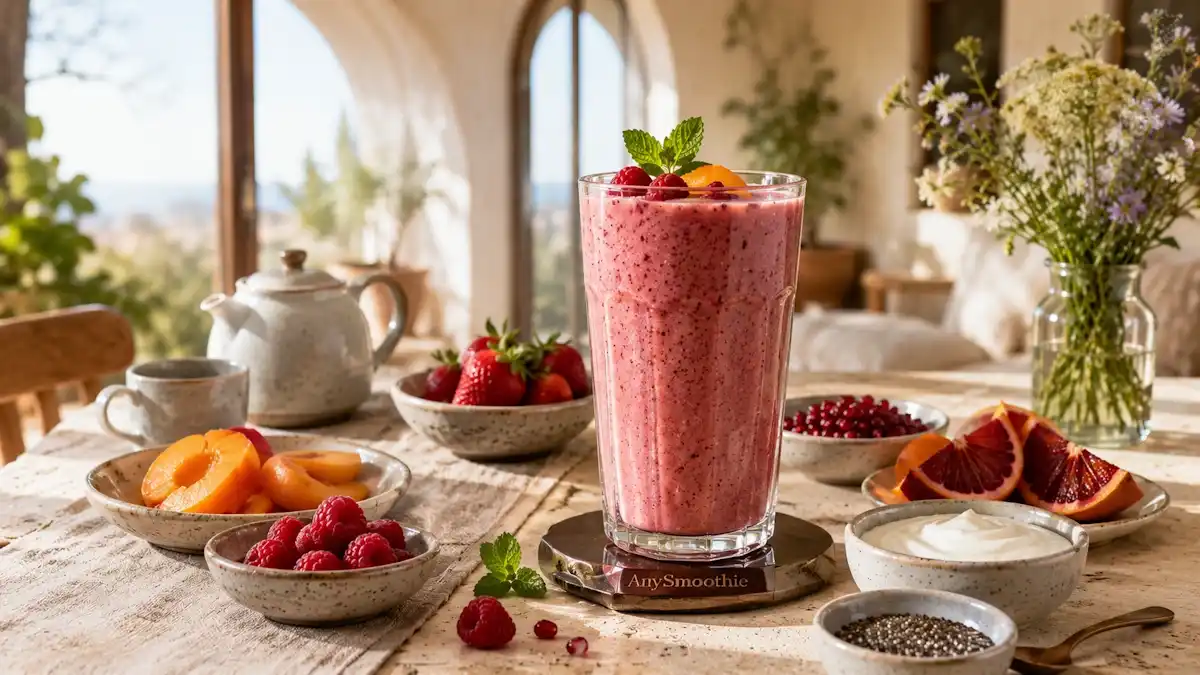
Endometriosis can make breakfast feel like a negotiation. Some days, your body wants something light. Other days, it wants food that sticks with you.
Inflammation, digestion issues, fatigue, and hormone-related symptoms can all shape what feels good to eat. Endometriosis nutrition smoothies can make it easier to add nutrient-dense ingredients without much prep, and Cleveland Clinic’s endometriosis diet guide gives a helpful starting point for food choices. The best blends support steady energy, healthy digestion, and a calmer inflammatory response through smart ingredients.
What makes a smoothie endometriosis-friendly?
A good smoothie is built, not dumped together. It needs a base, protein, some fat, and fiber from fruit or greens. That mix slows digestion and helps keep blood sugar steadier, so the smoothie works like a meal instead of a sugar rush.
A smoothie helps most when it leaves you satisfied an hour later, not reaching for another snack.
Choose ingredients that help steady blood sugar
Protein, fiber, and healthy fats help slow how fast the body absorbs carbohydrate. That matters because sharp spikes and dips can leave you tired, hungry, or shaky. A smoothie with berries, flax, yogurt, nut butter, or protein powder tends to feel more even through the morning.
When blood sugar stays steadier, energy often feels more predictable too. That can matter on days when pain or fatigue already tax the body.
Use foods that support an anti-inflammatory eating pattern
Color matters here. Berries, leafy greens, seeds, ginger, and nuts bring plant compounds that fit well in an anti-inflammatory style of eating. A recent review on nutrition and endometriosis also points to the interest in plant-forward patterns and foods rich in healthy fats.
That doesn’t mean one smoothie will change symptoms on its own. It does mean each blend can support the body with foods that are easier to work with than a pastry or a sugary drink.
Watch for ingredients that may not work well for every person
Endometriosis often overlaps with bloating, bowel changes, or food sensitivities. Dairy bothers some people. Raw cruciferous greens can feel rough for others. High-FODMAP fruits, strong sweeteners, or too much fiber at once can also backfire.
The best test is simple. Start with small changes, notice how you feel, and keep what your body handles well. Smoothies should fit your digestion, not fight it.
The best smoothie ingredients for endometriosis support
The easiest way to build a better smoothie is to give every ingredient a job. Fruit can add fiber and antioxidants. Greens can add micronutrients without much taste. Seeds, yogurt, nut butters, and protein powders make the blend more filling.
A simple food-first framework is also laid out in the SLUCare endometriosis diet booklet, which makes it easier to spot ingredients that work well in everyday meals.
Fruits and vegetables that add color, fiber, and antioxidants
Berries are a smart base because they bring fiber and polyphenols with a lower sugar load than many tropical fruits. Cherries can add tart flavor and a rich color. Banana works when you want a creamier texture and a little more carbohydrate.
Spinach blends in easily and usually tastes mild. Cucumber adds hydration and a fresh edge. Zucchini gives body without much flavor. Avocado adds creaminess plus fat, which helps the smoothie feel more like food.
Protein, fats, and seeds that help make smoothies more filling
Protein powder, Greek yogurt, or dairy-free yogurt can give a smoothie more staying power, if they suit your digestion. Chia seeds and flaxseed add fiber and omega-3 fats. Hemp seeds bring more protein and a soft texture. Nut butters and avocado make the blend thicker and slower to digest.
These ingredients help the smoothie sit better in the stomach. They also make it easier to avoid a mid-morning crash.
Spices and add-ins that can boost flavor without extra sugar
Ginger adds warmth and a bright bite. Cinnamon brings sweetness without sugar. Turmeric adds earthiness and pairs well with fruit or coconut. Cacao gives a richer taste that can tone down bitterness from greens.
Unsweetened coconut can help with texture and flavor. Used well, these add-ins make smoothies feel complete instead of overly sweet.
3 Endometriosis nutrition smoothies
These three blends aim for different needs, one for daily balance, one for a lighter start, and one for a more filling afternoon option.
| Smoothie | Main ingredients | Key nutrients | Flavor profile | Best time to drink |
|---|---|---|---|---|
| Berry flax | Mixed berries, spinach, ground flax, protein powder, unsweetened almond milk | Fiber, protein, omega-3 fats, antioxidants | Bright, creamy, lightly sweet | Morning or after movement |
| Green ginger | Spinach, cucumber, ginger, avocado, banana, dairy-free yogurt | Hydration, potassium, healthy fats, gentle fiber | Fresh, mild, cooling | Light breakfast |
| Cocoa cherry | Tart cherries, cacao, nut butter, protein powder, yogurt or alt milk | Protein, polyphenols, fats, magnesium | Rich, chocolatey, filling | Afternoon snack |
A quick recipe match can save time when you don’t want to think about ratios.
Berry Flax Smoothie for Fiber and Daily Antioxidants
Ingredients
- 1 cup mixed berries
- 1 cup unsweetened almond milk
- 1 scoop vanilla protein powder
- 1 tablespoon ground flaxseed
- 1 handful spinach
- Ice, optional
Blend until smooth. Add ice if you want it colder and thicker.
This one works well when you want a balanced start without a heavy feel. Berries bring color and fiber, while flax and protein help the smoothie hold you longer. The flavor stays simple, so it’s easy to repeat during the week.
Estimated Nutrition per Serving
Estimated with mixed berries, unsweetened almond milk, one typical scoop vanilla protein powder, ground flaxseed, and spinach.
- Calories: ~350 kcal
- Protein: ~31 g
- Carbohydrates: ~38 g
- Fat: ~11 g
- Fiber: ~13 g
- Sugars: ~18 g
Green Ginger Smoothie for Digestion and Light Mornings
Ingredients
- 1 cup cucumber
- 1 cup spinach
- 1 small banana
- 1/2 avocado
- 1 teaspoon fresh ginger
- 3/4 cup dairy-free yogurt or kefir, if tolerated
- Water or unsweetened milk, as needed
Blend until completely smooth.
This smoothie tastes clean and fresh. The ginger adds a gentle kick, while avocado gives it enough body to feel complete. It works well on mornings when your appetite is low but you still want nourishment.
Estimated Nutrition per Serving
Estimated with cucumber, spinach, one small banana, half an avocado, fresh ginger, and plain low-fat kefir.
- Calories: ~410 kcal
- Protein: ~13 g
- Carbohydrates: ~51 g
- Fat: ~19 g
- Fiber: ~13 g
- Sugars: ~27 g
With cucumber, banana, avocado, and kefir all contributing moisture and body, extra liquid may not be necessary at first. Blend those ingredients before adding water so the lighter-morning version does not accidentally become oversized or too thin.
Cocoa Cherry Smoothie for a More Satisfying Afternoon Option
Ingredients
- 1 cup tart cherries
- 1 cup milk or alternative milk
- 1 scoop protein powder
- 1 tablespoon nut butter
- 1 tablespoon unsweetened cacao powder
- Ice, optional
Blend until creamy. Add a few ice cubes for a thicker, more milkshake-like texture.
This is the richest of the three. Tart cherries and cacao give it a deeper taste, while nut butter and protein make it feel like a real snack. It fits well when you need something steady between meals.
Estimated Nutrition per Serving
Estimated with unsweetened tart cherries, unsweetened soy milk, one typical scoop protein powder, almond butter, and unsweetened cacao.
- Calories: ~475 kcal
- Protein: ~40 g
- Carbohydrates: ~49 g
- Fat: ~18 g
- Fiber: ~9 g
- Sugars: ~25 g
Tart cherries can make unsweetened cacao taste sharper than expected. Blend the cherries and milk first, then add the cacao and nut butter; if the cherries are particularly tart, a slightly riper fruit batch usually gives a rounder result without needing added sweetener.
Conclusion
The best smoothie is the one that fits your body, your budget, and your routine. Start with protein, fiber, healthy fats, and gentle ingredients, then adjust based on how your digestion and symptoms respond.
That simple structure gives you a practical way to build support into the day. Smoothies won’t fix endometriosis, but they can be a useful daily tool for overall wellness when they match what your body handles well.
🛡️ Safety Notes & Dietary Interactions
- Blood Sugar Stability and Energy Rhythm Support: Endometriosis-friendly smoothies often work best when protein, fiber, and healthy fats are present together. Ingredients such as berries, flax, yogurt, protein powder, nut butters, and avocado help slow digestion and may support steadier energy patterns compared to fruit-heavy blends that digest rapidly and leave hunger returning sooner.
- Anti-Inflammatory Nutrition and Polyphenol Diversity: Berries, leafy greens, cherries, ginger, flax, and colorful plant foods contribute polyphenols and other bioactive compounds that fit well within a plant-forward anti-inflammatory eating pattern. Rotating these ingredients regularly may help broaden nutrient diversity while keeping smoothies practical and enjoyable to consume.
- Digestive Tolerance and Individual Food Sensitivity Awareness: Endometriosis often overlaps with digestive symptoms, making personal tolerance an important consideration. Some individuals may prefer limiting certain dairy products, high-FODMAP fruits, raw cruciferous vegetables, or excessive fiber intake. The article encourages gradual experimentation rather than making multiple dietary changes simultaneously.
- Omega-3 Support and Nutrient Partitioning Balance: Flax, chia, hemp seeds, avocado, and nut butters provide healthy fats that help improve satiety and create a slower digestive profile. Pairing these fats with protein and fiber may support more balanced nutrient delivery and help the smoothie function as a satisfying meal rather than a quick snack.
FAQ
Why are protein, fiber, and healthy fats considered so important in endometriosis nutrition smoothies?
The article emphasizes that smoothies built around these three elements tend to feel more balanced and satisfying. Protein supports fullness, fiber slows digestion, and healthy fats improve texture while helping the smoothie feel more substantial. Together, they may contribute to steadier energy patterns and reduce the rapid hunger swings often associated with highly sweetened drinks.
Why are berries used so often in endometriosis-friendly smoothie recipes?
Berries provide fiber, vibrant color, and polyphenol-rich plant compounds while generally containing less sugar than many tropical fruits. They also blend well with protein powders, yogurt, flax, chia, and leafy greens. This makes them a practical foundation for smoothies designed to support steady energy and fit within a nutrient-dense eating pattern.
How can someone adjust a smoothie if digestion feels sensitive?
The article recommends starting with simple recipes and paying attention to personal responses. If certain ingredients seem difficult to tolerate, reducing fiber, changing fruit choices, adjusting dairy intake, or simplifying the ingredient list may help. Small changes made gradually are often easier to evaluate than completely redesigning the smoothie every day.
Why are ginger, cinnamon, turmeric, and cacao included in these recipes?
These ingredients add flavor complexity without relying on added sugars. Ginger provides a fresh, warming note, cinnamon contributes natural sweetness perception, turmeric adds earthy depth, and cacao creates a richer taste profile. They help smoothies feel more interesting while maintaining a whole-food approach to flavor building.
What is the biggest takeaway from the article’s smoothie approach?
The article repeatedly highlights personalization and consistency. No single smoothie works for everyone, and the most effective recipe is usually the one that fits an individual’s digestion, budget, schedule, and taste preferences. Building smoothies around protein, fiber, healthy fats, and well-tolerated ingredients creates a flexible framework that can be adjusted over time.

Medical Disclaimer: AnySmoothie content is for educational purposes only and is not a substitute for professional medical advice. Consult a healthcare provider for personalized guidance. See our full Disclaimer & Terms of Use. AI Transparency: AnySmoothie may use AI to support content development. All content undergoes human editorial review for accuracy, clarity, and editorial quality. See our full AI Transparency.