
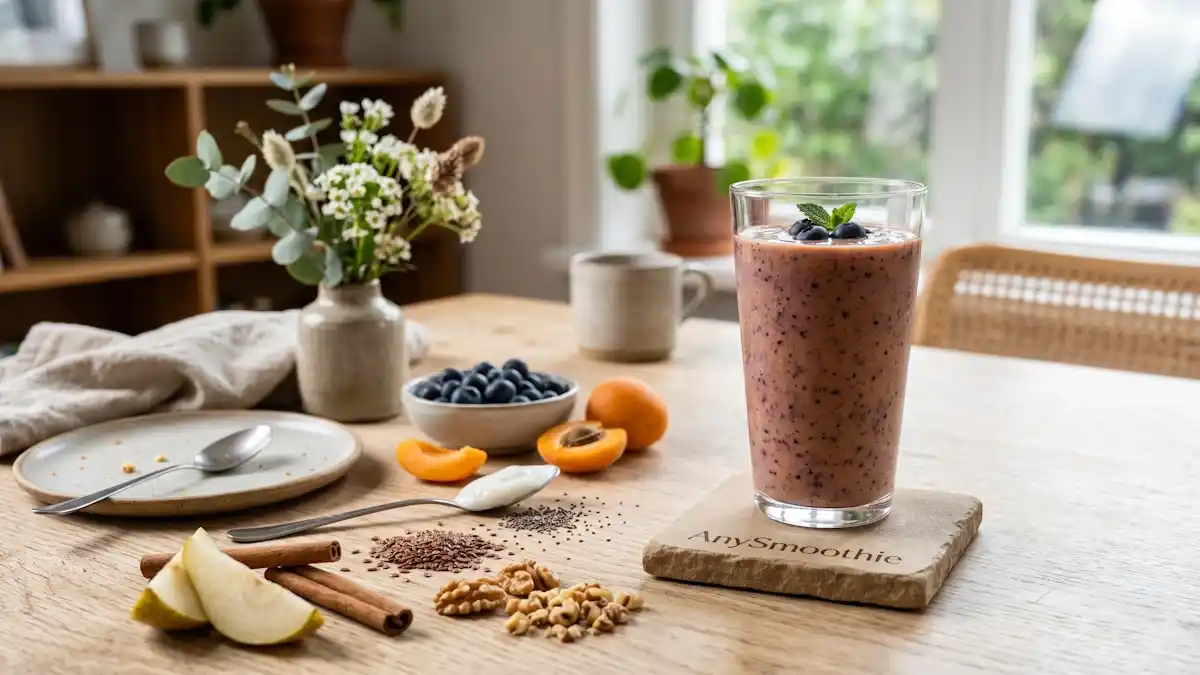
Smoothies can make mornings easier, but a fruit-heavy blend can leave you hungry fast. For balanced smoothies for Hashimoto nutrition routines, the goal is steadier energy, simpler meal prep, and less guesswork.
The best blends use protein, fiber, healthy fat, and smart carbs in one glass. That mix helps the smoothie act more like a meal and less like a sweet snack. A few small choices can change how it feels in your body, which matters when you want breakfast to work with your day, not against it.
What Makes a Smoothie Balanced for Hashimoto Support?
A balanced smoothie starts with structure. Protein slows the rise and fall of blood sugar, fiber adds bulk and supports digestion, and fat slows how fast the blend leaves your stomach. Carbs still belong in the mix, but they work best when they come from fruit, leafy greens, or other nutrient-dense ingredients. or more on Hashimoto’s thyroiditis, see the National Institute of Diabetes and Digestive and Kidney Diseases.
That formula matters more than trendy add-ins. A smoothie with maca, collagen, or exotic powders still falls short if it has no protein or too much sugar.
A fruit-heavy smoothie can taste great and still leave you ready for a snack an hour later.
The 3 Parts Every Smoothie Should Have
Protein gives the smoothie staying power. Greek yogurt, cottage cheese, kefir, hemp hearts, and protein powder all work well if they fit your needs. Fiber comes from chia, flax, berries, spinach, or avocado. Fat can come from nut butter, avocado, chia, or flax. When all three show up together, the smoothie feels complete instead of thin and sugary.
Ingredients to Keep in Check
Too much fruit is the first common mistake. Juice bases, sweetened yogurt, honey, and syrup can push the sugar load up fast. Skipping protein does the same thing in a different way, because the drink digests too quickly.
Some people with Hashimoto also pay attention to raw cruciferous greens or gut-irritating add-ins, depending on personal tolerance. That does not mean those foods are off-limits for everyone. It means your smoothie should fit your body, not a template.
How to Build Smoothies That Fit Your Morning Rhythm
A smoothie works best when it has a job. It can be a fast breakfast, a post-workout meal, or a backup on days when cooking feels unrealistic. If your blend is lighter, pair it with eggs, nuts, or a fiber-rich side so the meal holds longer.
A green smoothie can fit this pattern well when it keeps protein and fat in the mix.
Choose Ingredients That Support Steady Energy
Frozen berries are one of the easiest fruit choices because they add flavor without overloading the glass. Spinach, cucumber, zucchini, avocado, chia, and unsweetened yogurt help the texture stay thick and the carb load stay moderate. That combination creates a smoother energy curve than fruit juice or sherbet-style blends. If you want a simple reference on balanced eating, the American Heart Association has a useful overview.
Match Your Smoothie to the Time of Day
Morning smoothies often work best when they are simple and filling. After exercise, you may want more protein and a little more fruit. Later in the day, a richer blend can help if you need longer satiety. Some people do better with a lighter smoothie early and a more substantial one when hunger runs higher.
Here is a quick comparison of a few smoothie styles.
| Smoothie style | Main protein source | Main fiber source | Best time to use | Why it works |
|---|---|---|---|---|
| Berry yogurt blend | Greek yogurt | Chia and berries | Morning breakfast | Creamy, filling, and easy to repeat |
| Green avocado blend | Protein powder or kefir | Spinach and avocado | Light lunch or early day | Lower sugar, smooth texture, steady fuel |
| Cacao nut butter blend | Protein powder | Flax and berries | Post-workout or afternoon | Rich flavor with a balanced macro mix |
| Kefir banana blend | Kefir | Flax and half banana | Busy mornings | Fast to blend and easy on the palate |
The pattern is simple. Pick one main protein, one fiber source, and one fat source. Fruit supports the flavor, but it does not carry the whole drink.
3 Balanced Hashimoto Nutrition Smoothie Recipes
These three options keep the formula steady while changing the flavor.
Smart Swaps and Prep Habits That Make Smoothies Easier to Keep Up
Smoothies get easier when you stop starting from scratch every morning. Freeze fruit in portioned bags, wash greens ahead of time, and keep protein ready in the fridge or pantry. Add liquid first, then soft ingredients, then frozen items. That order helps the blender move better and gives you a smoother finish.
What to Prep Ahead so Mornings Run Smoother
Make a few freezer packs with berries, spinach, chia, and sliced avocado. You can also pre-portion protein powder or Greek yogurt in small containers. If you need a dairy-free option, use unsweetened coconut yogurt, almond milk, or a clean protein blend that fits your routine.
How to Adjust a Smoothie When Your Body Wants Something Different
Make it fuller by adding more protein, nut butter, or chia. Make it lighter by using more ice, cucumber, or spinach. If you want less sweetness, cut the fruit and add lemon or cocoa. If you want more flavor, use cinnamon, vanilla, or a small amount of ginger. Personal tolerance matters, so test one change at a time.
Conclusion
Balanced smoothies can fit neatly into a Hashimoto nutrition routine when they are built with protein, fiber, fat, and thoughtful carbs. That mix supports steadier energy and makes breakfast easier to repeat.
Keep the recipes simple. Test what feels good in your body, and focus on blends you can make again tomorrow. Repeatable wins matter more than perfect ingredients.
🛡️ Safety Notes & Dietary Interactions
- Protein-First Structure and Satiety Signaling Dynamics: A balanced smoothie for Hashimoto nutrition routines works best when protein forms the foundation rather than an afterthought. Ingredients like Greek yogurt, kefir, cottage cheese, hemp hearts, or protein powder may help support steadier satiety communication and a more stable energy curve than fruit-dominant blends alone.
- Fiber Density and Glucose Stability Support: Chia, flax, berries, spinach, avocado, cucumber, and zucchini contribute fiber that slows digestion and helps moderate the pace of carbohydrate absorption. This balanced structure may support steadier energy patterns and reduce the rapid hunger rebound often associated with low-protein, high-sugar smoothie recipes.
- Healthy Fat Integration and Nutrient Partitioning Balance: Avocado, nut butters, chia, and flax help create a slower digestive profile while improving texture and meal satisfaction. Combining healthy fats with protein and fiber may support more even nutrient delivery and help the smoothie function as a complete meal rather than a quick snack.
- Personal Tolerance and Ingredient Flexibility Considerations: The article emphasizes that no smoothie formula works perfectly for everyone. Some individuals may choose to monitor their response to specific ingredients such as raw cruciferous greens or highly fibrous additions. Building the smoothie around personal tolerance and repeatability often creates a more sustainable long-term routine.
FAQ
What makes a smoothie feel more balanced for a Hashimoto nutrition routine?
The article repeatedly emphasizes four core components: protein, fiber, healthy fats, and thoughtful carbohydrate sources. Protein provides staying power, fiber supports digestion and satiety, fats slow digestion, and nutrient-dense carbohydrates contribute flavor and energy. When all four are present, the smoothie tends to feel more like a complete meal and less like a sweet beverage.
Why can fruit-heavy smoothies leave you hungry so quickly?
Fruit provides valuable nutrients and flavor, but when it dominates the smoothie without enough protein, fiber, or fat, digestion often happens more quickly. This may create a short-lived burst of energy followed by increased hunger later. Adding ingredients like kefir, chia, flax, avocado, or protein powder helps create a steadier and more satisfying structure.
Why are berries used so often in balanced smoothie recipes?
Frozen berries provide flavor, color, fiber, and polyphenols while keeping overall sweetness relatively moderate compared to many tropical fruits or juice concentrates. They also create a thicker texture and pair well with protein-rich ingredients such as Greek yogurt, kefir, cottage cheese, and protein powders, making them easy to use in repeatable breakfast routines.
How can someone adjust a smoothie when energy needs change during the day?
The article suggests matching the smoothie to its purpose. A post-workout blend may benefit from additional protein and fruit, while a lighter morning option may rely more heavily on greens and moderate carbohydrates. Increasing protein, nut butter, chia, or avocado can make the smoothie more filling, while cucumber, spinach, and ice can create a lighter texture.
Why does the article focus so much on preparation and consistency?
A smoothie routine only works if it is practical enough to repeat regularly. Preparing freezer packs, washing greens in advance, portioning ingredients, and keeping recipes simple reduces decision fatigue and morning stress. The article’s main message is that a balanced smoothie used consistently tends to provide more value than chasing complicated recipes with constantly changing ingredients.

Medical Disclaimer: AnySmoothie content is for educational purposes only and is not a substitute for professional medical advice. Consult a healthcare provider for personalized guidance. See our full Disclaimer & Terms of Use. AI Transparency: AnySmoothie may use AI to support content development. All content undergoes human editorial review for accuracy, clarity, and editorial quality. See our full AI Transparency.