
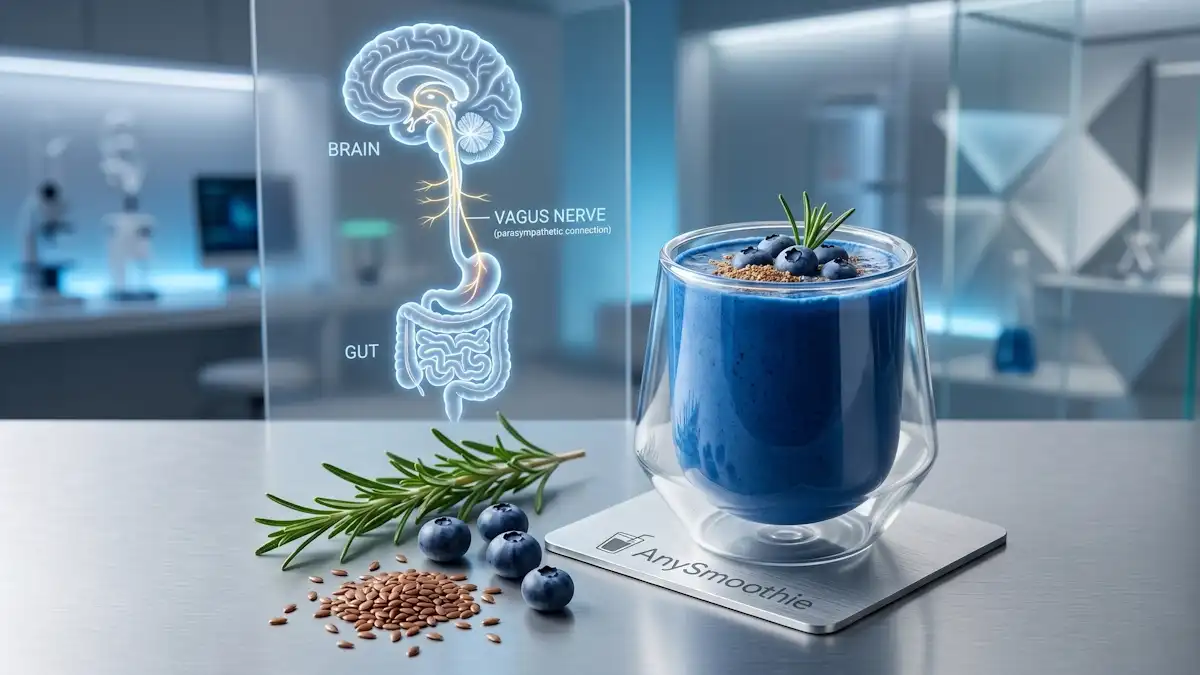
Your vagus nerve runs from your brainstem to your gut. It helps shift your body into rest-and-digest mode. When it works well, you feel calm and steady.
This nerve links closely to your gut through metabolites and signals. Gut microbes create compounds that reach vagus nerve endings. These support autonomic balance. Smoothies for vagus nerve optimization use gut-friendly ingredients to back these pathways. They deliver fibers, fats, and polyphenols right where needed.
The gut-brain axis handles much of this talk. No big medical promises here. Just simple ways food supports natural signals. You’ll see the science on metabolites and lipids. Then get three recipes. Plus tips for best results. Ready to blend some calm?
The Vagal Connection: How Gut Metabolites Signal the Autonomic System
Gut bacteria turn fibers into metabolites. These talk to the vagus nerve. They bind receptors on nerve endings in the gut wall. This supports parasympathetic activity, the calm side of your autonomic system.
Three key nutrients stand out: partially hydrolyzed guar gum (PHGG), omega-3 fatty acids like DHA and EPA, and anthocyanins from berries. Each aids vagal signaling in its way. PHGG shines as a top choice. It fuels production of vagal-signaling metabolites like short-chain fatty acids.
Here’s a quick comparison:
| Nutrient | Mechanism of Vagal Signaling | Primary Physiological System Supported | Best Smoothie Pairing | Impact on HRV |
|---|---|---|---|---|
| PHGG | SCFA production | Gut barrier | Berries and yogurt | Boosts via metabolite signaling |
| Omega-3s (DHA/EPA) | Afferent sensitivity | Inflammation control | Seeds and greens | Improves parasympathetic balance |
| Anthocyanins | Antioxidant neural protection | Vascular health | Berries and spinach | Supports variability through reduced oxidative stress |
PHGG leads because it directly feeds bacteria that make SCFAs. For more on PHGG and SCFAs, check this study on bacterial profiles. Omega-3s help too. They tweak nerve sensitivity. Research links them to HRV gains. Anthocyanins protect pathways. All fit smoothies perfectly.
Postbiotic Power: Short-Chain Fatty Acids as Neural Messengers
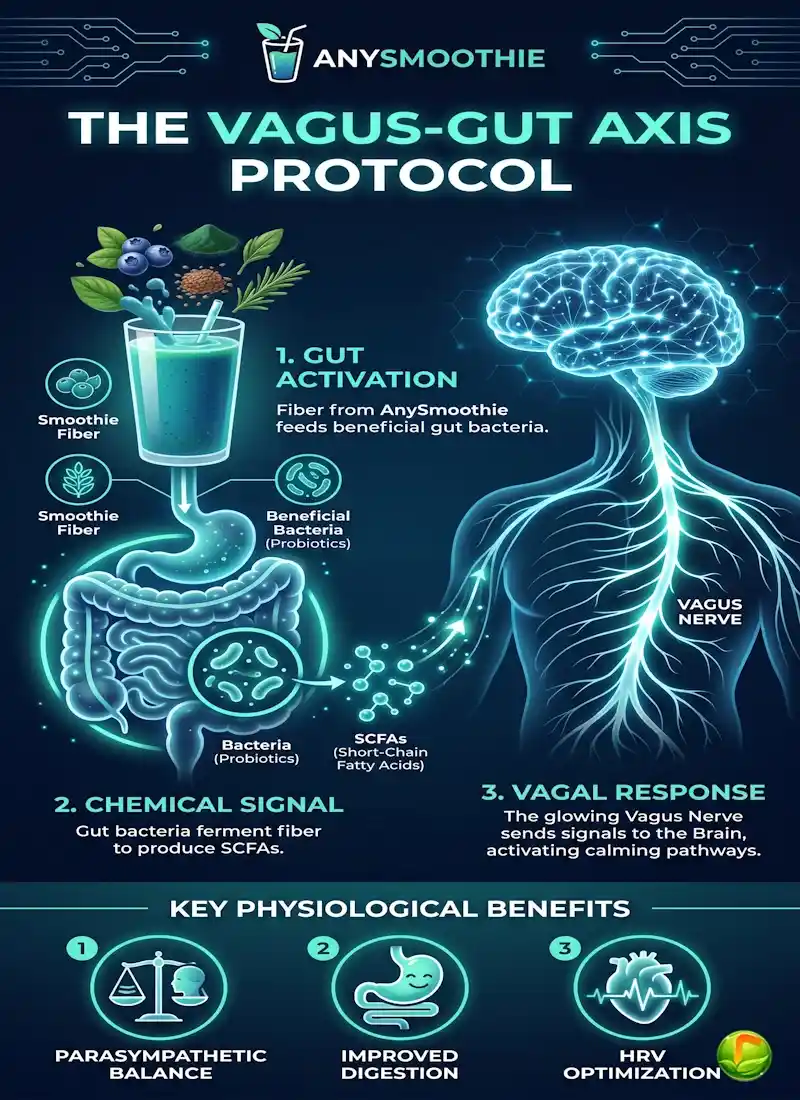
Fibers like PHGG feed good gut bacteria. Bacteria ferment them into SCFAs, such as butyrate and acetate. These SCFAs reach vagus nerve endings.
SCFAs bind to receptors on gut cells. This sends signals up the nerve. The signals support parasympathetic tone. Think calm digestion and steady heart rhythms.
Smoothies with prebiotics make this easy. Add PHGG or inulin. Bacteria thrive. SCFAs flow. Pathways stay active. No wonder fibers pair well with berries for extra gut support.
Activating the Brake: Using Dietary Lipids to Trigger Vagal Afferents
Healthy fats in food hit vagus nerve fibers directly. Gut cells sense lipids. They release signals that activate afferent nerves. These carry info to the brain. The result? A natural relaxation response.
Avocados, seeds, and nut butters work great in smoothies. They provide steady lipids. Gut sensors pick them up fast. Vagal afferents fire. This backs the brake on stress responses.
Keep portions moderate. Blend with greens for balance. Fats trigger without overwhelming. Your gut thanks you with clear signals.
CCK Release: The Biochemical Pathway to Parasympathetic Tone
Fats and proteins prompt gut cells to release cholecystokinin, or CCK. CCK binds to receptors on vagal afferents. This boosts satiety signals. It also supports parasympathetic activation.
Lipid-rich smoothies kick this off. Nut butters or avocado do the job. CCK rises. Nerves respond. For details on CCK and vagus links, see this study on lipid nutrition.
Pair with yogurt for protein synergy. Pathways hum along.
3 Vagal-Flow Gut-Stimulation Smoothie Recipes
These recipes target gut-vagus paths. They mix PHGG, berries, omegas, and fibers. Each uses 3-5 ingredients. Blend in 2 minutes. One serving each, about 300 calories.
Start with a base like kefir or almond milk. Add ice for chill. Sip slow to let signals build.
Microbiome-Bridge: Prebiotic Fiber and Polyphenol Blend
Ingredients
- 1 tsp PHGG (partially hydrolyzed guar gum)
- 1 cup blueberries
- 1/2 cup plain unsweetened kefir
- 1 cup baby spinach
- 1/2 cup cold water, as needed
- 1/2 cup ice, optional
Blend all until smooth. PHGG is a soluble prebiotic fiber that can be fermented by gut bacteria. Blueberries add anthocyanins. Kefir provides a fermented dairy base. Spinach brings extra fiber and micronutrients.
Estimated Nutrition per Serving
- Calories: ~190 kcal
- Protein: ~8 g
- Carbohydrates: ~34 g
- Fat: ~4 g
- Fiber: ~7 g
- Sugars: ~21 g
Omega Calm: Fatty Acid and Greens Fusion
Ingredients
- 1 tbsp ground flaxseed
- 1/2 avocado
- 1 cup kale
- 1 cup unsweetened almond milk
- 1/2 cup ice, optional
Pulse to creamy. Flax provides alpha-linolenic acid (ALA), a plant omega-3 fatty acid and precursor to EPA and DHA. Avocado adds unsaturated fat, while kale contributes fiber and polyphenols.
Estimated Nutrition per Serving
- Calories: ~245 kcal
- Protein: ~7 g
- Carbohydrates: ~17 g
- Fat: ~19 g
- Fiber: ~11 g
- Sugars: ~3 g
I’d use ground flax rather than whole seeds here. It blends into the avocado much more cleanly and avoids leaving intact seeds at the bottom of the glass.
Tone-Up Twist: Berry and Nut Vagal Booster
Ingredients
- 1 cup mixed berries
- 1 tbsp walnuts
- 1/2 cup plain yogurt
- 1/2 medium banana
- 1/4 cup cold water, as needed
- 1/2 cup ice, optional
Whirl together. Berries provide polyphenols, walnuts add ALA and unsaturated fats, yogurt provides protein and a fermented base, and banana eases blending.
Estimated Nutrition per Serving
- Calories: ~290 kcal
- Protein: ~11 g
- Carbohydrates: ~44 g
- Fat: ~10 g
- Fiber: ~9 g
- Sugars: ~27 g
If I were making this as a quick breakfast, I’d use frozen berries and skip most of the ice. You get a thicker texture without diluting the berry and walnut flavor.
Optimizing the Reflex: Timing Your Blend for Heart Rate Variability
Drink smoothies in the morning. They prime gut signals all day. Or sip post-meal. This steadies HRV, a sign of vagal tone.
Consistency matters. Daily blends build metabolite levels. Track HRV with a simple app. Notice shifts over weeks.
Cold-Exposure Synergy: Enhancing Vagal Tone Through Temperature and Nutrients
Chill your smoothie. Cold hits temperature-sensitive afferents. This amps vagal signals alongside nutrients.
Try this: Blend with ice, sip after a cold shower. Mild chill plus SCFAs doubles the effect. Keep exposure short, 1-2 minutes. Pathways fire stronger.
Conclusion
Gut metabolites and lipids back vagus nerve pathways. Smoothies deliver them simply. Recipes like Microbiome-Bridge fuel SCFAs. Timing and chill boost results.
Blend one today. Notice your steady feel. Gut-vagus support starts with each sip. You hold the calm.
⚠️ Safety Notes for Vagus Nerve Support Smoothies
Fiber Adaptation and Bloating: While PHGG is generally well-tolerated, introducing high-fiber prebiotics too quickly can cause temporary gas or bloating. Start with 1/2 teaspoon and gradually increase to a full teaspoon over one week to allow your microbiome to adapt.
Lipid Intake and Gallbladder: Ingredients that trigger CCK release (like healthy fats) cause the gallbladder to contract. If you have a history of gallstones or gallbladder disease, consult your doctor before significantly increasing fat intake in your smoothies.
Cold Exposure and Vagal Shock: Combining cold smoothies with cold showers can significantly stimulate the vagus nerve. If you have heart arrhythmias or a history of fainting (vasovagal syncope), avoid extreme temperature combinations and keep your smoothies at room temperature.
PHGG and Medication Absorption: PHGG is a viscous fiber that can slow the absorption of certain medications. To ensure full efficacy, take any oral prescriptions at least 2 hours apart from your fiber-rich smoothie.
Omega-3 Source and Blood Thinners: High doses of Omega-3s from flax or walnuts have a mild anti-platelet effect. If you are taking anticoagulants (like Warfarin or Aspirin), monitor your levels and discuss your dietary changes with a healthcare provider.
FAQ
How does PHGG support the production of vagal-signaling metabolites?
Partially Hydrolyzed Guar Gum (PHGG) acts as a high-affinity prebiotic substrate that gut microbiota ferment into short-chain fatty acids (SCFAs), specifically butyrate and acetate. Biochemically, these SCFAs bind to G-protein coupled receptors on the vagal afferent endings within the intestinal mucosa. This interaction supports the physiological systems of autonomic balance by signaling the brainstem to modulate parasympathetic tone, optimizing the natural pathways of the rest-and-digest response.
What is the role of Cholecystokinin (CCK) in triggering the vagal brake?
Cholecystokinin (CCK) is a peptide hormone released by enteroendocrine cells in response to dietary lipids and proteins found in smoothies, such as avocado or nut butters. CCK acts as a biochemical trigger that binds to specific receptors on the vagus nerve’s sensory fibers. Supporting this CCK release supports the physiological systems involved in satiety and relaxation, activating the “vagal brake” to dampen sympathetic overactivity and maintain systemic metabolic efficiency.
How do Omega-3 fatty acids modulate vagal afferent sensitivity?
Omega-3 fatty acids, particularly DHA and EPA, are incorporated into the phospholipid bilayers of neuronal membranes, including those of the vagus nerve. Biochemically, this supports the structural integrity and fluid dynamics of the nerve endings, optimizing the natural pathways of signal transduction. By modulating membrane-bound ion channels, these lipids support the physiological systems responsible for afferent sensitivity, which is a key factor in improving Heart Rate Variability (HRV) and autonomic resilience.
Why does temperature-sensitive signaling enhance the vagal reflex in smoothies?
Consuming chilled smoothies interacts with the transient receptor potential (TRP) channels in the oral and esophageal mucosa, which are linked to vagal pathways. This thermal stimulus, when combined with metabolite-rich ingredients like anthocyanins, supports the physiological systems of the dive reflex and cephalic phase response. This biochemical and physical synergy optimizes the natural pathways of parasympathetic activation, providing a stronger “priming” effect for the autonomic nervous system.
How do anthocyanins from berries provide neural protection for the gut-brain axis?
Anthocyanins are potent polyphenols that support the physiological systems involved in protecting the blood-brain barrier and the enteric nervous system from oxidative stress. Biochemically, they modulate signaling pathways that reduce the neuroinflammatory load on the vagus nerve, ensuring that the “biochemical mechanics” of gut-to-brain communication remain clear. Optimizing these pathways through daily smoothie intake ensures that the structural components of the neural link are maintained for long-term autonomic stability.

Medical Disclaimer: AnySmoothie content is for educational purposes only and is not a substitute for professional medical advice. Consult a healthcare provider for personalized guidance. See our full Disclaimer & Terms of Use. AI Transparency: AnySmoothie may use AI to support content development. All content undergoes human editorial review for accuracy, clarity, and editorial quality. See our full AI Transparency.