
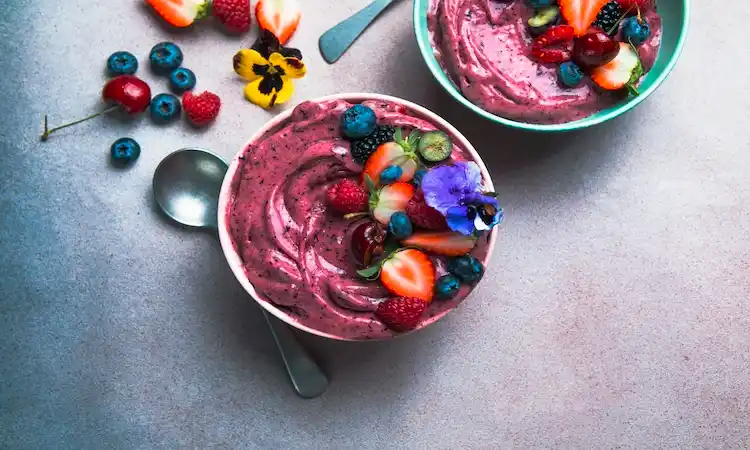
Ice seems like the obvious answer when a smoothie bowl looks too loose. Then it melts. Your bright fruit flavor gets watered down, the color turns dull, and the bowl goes from creamy to slushy in minutes. Worse, ice can make the blend feel cold-hard instead of soft and scoopable.
A thick smoothie bowl doesn’t come from colder ingredients, it comes from the right balance of frozen fruit, minimal liquid, and a few smart thickeners that act like scaffolding. The goal is a spoonable, soft-serve texture that holds toppings on top, not a drink with granola sinking to the bottom.
If you’re learning how to make smoothie bowls at home (or you’re tired of “pretty but runny” bowls), this guide will help you get a thick base without ice cubes, without stress, and without guessing.
Weight Loss Programs
Diet & Weight Loss

Diet & Weight Loss
Diet & Weight Loss
Diet & Weight Loss
Start with the right base ratio so it blends thick, not watery
Most watery bowls come from one mistake: too much liquid too soon. Thickness is mostly a ratio problem, not a recipe problem. Start thick, then loosen only if your blender needs help.
Here’s a simple starting point for 1 large smoothie bowl:
- 2 to 2.5 cups frozen fruit (this is your “ice,” but with flavor)
- 1/4 to 1/2 cup liquid (start small)
- 1/2 cup thick add-ins (yogurt, oats, etc.)
If you remember one rule, make it this: you can always add liquid, but you can’t easily take it out. Once you’ve poured in too much milk or juice, you’re stuck chasing thickness with more ingredients, which can throw off the taste.
Your texture target: the mixture should mound on a spoon, move slowly when you tilt the blender jar, and look like soft-serve. When you pour it into a bowl, it should settle gently, not spread fast like soup.
If you want a broader refresher on the basic method, see Budget Bytes’ guide to making smoothie bowls, then come back to fine-tune thickness with the no-ice approach below.
Choose frozen fruit that makes a creamy, thick blend
Frozen fruit matters more than ice because it chills and thickens while keeping flavor strong. Ice is just frozen water, so it dilutes as soon as blending warms it up.
For thick smoothie bowls, these frozen fruits tend to blend creamy and dense:
- Frozen mango
- Frozen cherries
- Frozen peaches
- Frozen pineapple
- Frozen mixed berries
Berries are delicious, but they can feel thinner because they break into tiny pieces and carry more liquid around seeds. The fix is simple: pair berries with something that adds body (Greek yogurt, oats, chia, avocado, or a spoon of nut butter).
A practical tip that changes everything: use fruit straight from the freezer, don’t thaw it. Thawing creates extra free liquid before you even start, which is a common reason smoothie bowls get watery.
If you want more context on why frozen produce beats ice for thickness, this overview on making a smoothie thicker without ice explains the same principle in plain terms.
Use the smallest amount of liquid that still lets the blender move
Liquid is necessary, but it’s also the fastest way to ruin thickness. Different liquids behave differently:
Milk (dairy or soy) gives a creamy mouthfeel and stays fairly thick.
Oat milk can blend creamy, but some brands are thinner, so start small.
Coconut milk (from a carton) is usually thin, canned coconut milk is much richer.
Kefir adds tang and protein, but it’s thinner than Greek yogurt, so use less.
Cold brew works for mocha bowls, but it loosens texture quickly.
Juice adds sweetness, but thins fast, especially with berries.
A method that saves bowls: start with 1/4 cup liquid, blend, then add 1 tablespoon at a time only if the blender stalls. The top reason smoothie bowls get watery is pouring liquid like you’re making a drinkable smoothie.
If your blender struggles, don’t panic and dump in more milk. Stop, scrape the sides, use a tamper if you have one, and add liquid in tiny steps.
For another no-ice perspective and ratio guidance, Wholly Tasteful’s thick smoothie bowl tips are helpful, especially if you’re aiming for that “never watery” result.
Thicken smoothie bowls naturally with real foods (no ice, no weird powders needed)
Once your base ratio is right, real-food thickeners are what make a bowl feel stable. They help in two ways: they bind free liquid, and they add creaminess so the bowl stays thick long enough to enjoy toppings.
Below are practical, small amounts per bowl. You don’t need to use them all. Pick one from each category based on what you have and what you like.
Creamy thickeners that also add protein and staying power
These ingredients give a “no melt” smoothie bowl feel because they add structure, not just thickness. They also make the bowl more filling.
Greek yogurt (1/3 to 1/2 cup): The classic thickener. It tightens texture fast and adds tang that balances sweet fruit.
Skyr (1/3 to 1/2 cup): Similar effect to Greek yogurt, often even thicker.
Cottage cheese (1/3 to 1/2 cup): Sounds odd until you try it. It blends smooth in a decent blender and adds lots of protein with mild flavor.
Silken tofu (1/3 to 1/2 cup): Neutral, creamy, and great in berry or chocolate bowls.
Kefir (2 to 4 tablespoons): Use less because it’s thinner, treat it like a liquid-plus-protein boost.
Dairy-free options that still thicken well: coconut yogurt (richer), soy yogurt (usually higher protein), or even blended white beans (2 to 3 tablespoons) for a mild, creamy body that hides behind fruit.
If you want more general ideas for thickening (including what to do before and after blending), Laura Fuentes’ smoothie thickening guide lays out several options that also work for smoothie bowls.
Fiber thickeners that set up fast in the blender
These are the “quiet heroes” when you’re figuring out how to thicken smoothie bowls naturally. They bind moisture and keep the base from loosening as it sits.
Chia seeds (1 to 2 teaspoons): Blend, then let the mixture sit 2 minutes. Chia gels quickly and noticeably tightens texture.
Ground flax (1 tablespoon): Adds body and a light nutty flavor. Use ground, not whole, for a smoother feel.
Oats or oat flour (2 to 3 tablespoons): One of the best ingredients for thick smoothie bowls because it adds bulk without making the bowl taste “protein-y.”
Psyllium (tiny pinch, optional): Works extremely well, but it’s easy to overdo. Too much can turn the bowl gummy fast.
If you’ve tried whole rolled oats and didn’t love the taste, you’re not alone. Whole oats can read “raw” in a smoothie bowl. Quick oats or oat flour blend smoother and taste more neutral.
Banana-free ways to get that thick, creamy mouthfeel
Banana is popular because it’s sweet and creamy when frozen, but you don’t need it for great texture. If you’re after smoothie bowl texture without banana, focus on frozen fruit that blends dense and add one creamy thickener.
Reliable banana-free options (with amounts that won’t overpower the bowl):
Frozen mango plus yogurt: Mango brings natural thickness and sweetness. Pair with Greek yogurt or soy yogurt for a scoopable base.
Frozen avocado (1/4 to 1/2): Adds richness and a smooth mouthfeel. Works best with cocoa, chocolate protein, or cherries.
Steamed and frozen cauliflower (1/2 to 1 cup): Mild and easy to hide, it adds body without much flavor.
Frozen zucchini coins (1/2 to 1 cup): Similar to cauliflower, great in berry or tropical bowls.
Nut butter (1 tablespoon): Thickens fast and tastes great with berries or chocolate.
Tahini (1 to 2 teaspoons): Adds creaminess with a slightly savory edge, great with cherries, cocoa, or dates.
Flavor pairing trick: cocoa hides veggies, mango boosts sweetness in green or veggie-heavy bowls, and peanut butter plays especially well with berries.
If you’re specifically avoiding banana and want more ideas, these no-banana thick smoothie tips include ingredient swaps that translate well to bowls.
Fix a runny smoothie bowl fast, and keep it thick long enough for toppings
Even with good intentions, a bowl can turn loose. Maybe you eyeballed the liquid, maybe your fruit wasn’t fully frozen, or maybe you blended too long and warmed it up. The good news is you can usually fix it without starting over.
The other half of the battle is keeping it thick once it’s poured. A perfect base can still melt into a puddle if your bowl is warm, your kitchen is hot, or you keep blending “just in case.”
How to fix a runny smoothie bowl in the moment
Use this rescue order. It fixes texture while protecting flavor.
- Add more frozen fruit first (1/2 cup at a time). This thickens without changing the taste much if you stay in the same fruit family.
- Add 1 tablespoon oats or 1 teaspoon chia. Blend again, then let it sit 2 minutes if you used chia.
- Add a spoon of yogurt (Greek, skyr, or soy yogurt) to tighten and add creaminess.
- Blend only until smooth. Stop as soon as the texture looks like soft-serve.
If it’s still thin, you’ve probably warmed the mixture. Pour it back into the blender jar and freeze the jar or the blend for 10 to 15 minutes, then re-blend briefly.
Skip ice cubes here too. Ice fixes thickness for about thirty seconds, then it melts and you’re back to watery, just colder and less flavorful.
Blending and serving habits that prevent melting and watery bowls
A thick base can turn runny from heat and friction. Your blender is basically a tiny engine, and engines make warmth.
A few habits make a big difference:
Chill your bowl in the freezer for 5 minutes while you blend. Cold ceramic buys you time.
Use a tamper if your blender has one, it helps move thick blends without adding extra liquid.
Pulse first, then blend on low, and increase only as needed.
Scrape the sides once or twice so frozen chunks don’t force you to add liquid.
Stop as soon as it’s smooth. Over-blending warms it, and warmth loosens texture.
Serve right away. Smoothie bowls aren’t meant to sit around like soup.
To keep toppings from sinking, spread the base thickly first, then add dry toppings (granola, coconut, seeds), then add juicy fruit last. Dry toppings create a light barrier, so strawberries and kiwi don’t leak straight into the base.
For more blender-specific technique advice (especially if you use a high-powered blender), these smoothie bowl mistake-avoidance tips are a useful checklist.
A simple thick smoothie bowl base recipe you can repeat: Choose 1 frozen fruit (2 to 2.5 cups), 1 thickener (1/3 to 1/2 cup yogurt or 2 to 3 tablespoons oat flour), and a small liquid (start with 1/4 cup). Blend thick, then adjust one tablespoon at a time.
Conclusion
Thick smoothie bowls without ice come down to three rules: use frozen fruit instead of ice, keep liquid low, and add a real-food thickener that gives the bowl structure. Once you hit that soft-serve texture, toppings stay on top and every bite tastes like fruit, not watered-down slush.
Try two bowls this week: one banana-free combo (mango plus yogurt, or berries plus avocado and cocoa) and one high-protein combo (Greek yogurt or cottage cheese with cherries). Keep the ratios from this smoothie guide, then adjust one ingredient at a time until your smoothie bowl stays thick through the last spoonful.

The AnySmoothie team is all about smarter smoothie recipes made with whole-food ingredients. Everything we share centers on balanced nutrition, steady energy, and low-glycemic choices, so you can sip a smoothie that keeps you full, feels good, and helps you avoid sugar crashes.
- Disclaimer: This content is for educational use only. These smoothie recipes and nutrition details aren’t a substitute for medical advice from a licensed health professional. Please read our full Medical Disclaimer here.
Dietary Supplements
Dietary Supplements
Dietary Supplements
Dietary Supplements

Dietary Supplements