
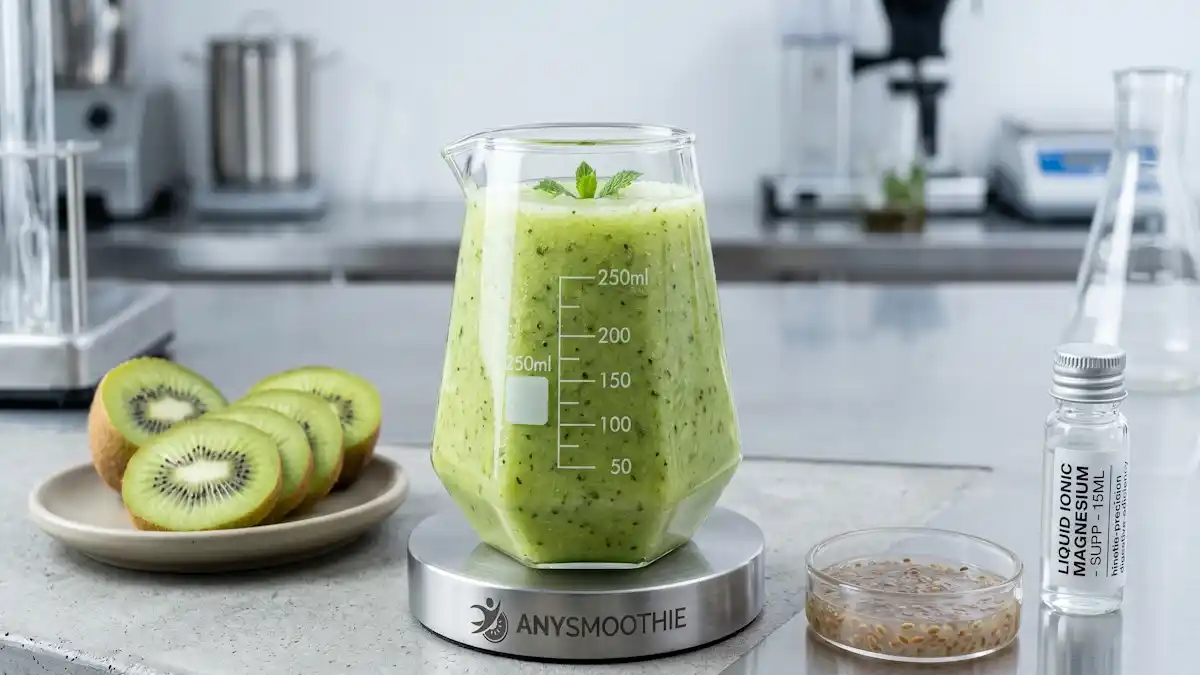
This formulation protocol outlines a series of yogurt-free liquid matrices engineered to support gastrointestinal transit and optimize the physiological systems governing nutrient assimilation. By deliberately excluding dairy fractions and structural thickeners, these blends minimize osmotic stress and mechanical overload within the digestive tract. The integration of targeted botanical substrates provides a bioavailable influx of organic enzymes and hydrostatic fluids, serving as an efficient strategy for gastrointestinal clearance and smooth metabolic assimilation.
This technical manual established a precise framework to calibrate fiber viscosity and fluid dynamics without relying on fermented dairy bases. You will discover the exact mechanics of isolating exogenous enzymes—such as bromelain and papain—and the structural layering sequences required to support luminal motility, maintain optimal rheological consistency, and prevent osmotic fluid shifts that disrupt intestinal homeostasis.
What makes a smoothie good for digestion, even without yogurt
A digestion-friendly smoothie isn’t about trendy powders or huge amounts of fiber. It works better when it gives your gut a soft landing, with enough fiber to keep things moving, enough fluid to help that fiber do its job, and ingredients that stay gentle on the stomach. That means less added sugar, not too much fat, and a temperature that isn’t icy cold, since very cold drinks can feel harsh for some people. Some smoothies also include transit facilitators that support different parts of digestion in different ways.
| Transit Facilitator | Physiological Mechanism | Kinetic Speed | Best Smoothie Pairing | Target GI Segment |
|---|---|---|---|---|
| Actinidin (from Green Kiwifruit) | Accelerating gastric emptying via protein pre-digestion, it helps clear macromolecular blockages and optimizes upper GI transit velocity | Acute | Kiwi, banana, spinach, and a light liquid base | Stomach |
| Mucilages (from Flax/Chia Seeds) | Forming a viscoelastic gel to reduce friction and modulate shear stress | Cumulative | Berries, oats, and plant milk | Lower colon |
| Ionic Magnesium | Drawing water into the lumen via osmotic gradients to soften the bolus | Acute to cumulative, depending on dose and form | Banana, cacao, and nut milk | Lower colon |
A thick smoothie can still be easy to digest if the ingredients are balanced well. Green kiwi is a strong example, because actinidin can help break down protein and keep upper GI transit moving. Flax and chia work more slowly, since their gel-forming fiber changes texture and can support bowel regularity over time. Magnesium fits a different role, since it pulls water into the bowel and can soften stool when the dose and form are right.
Two big mistakes cause most “healthy smoothies” to feel not so healthy:
- Too much fruit sugar at once, especially from juice, can pull water into the gut and leave you feeling gassy or urgent.
- Too much fiber too fast (like a big scoop of seeds plus raw greens plus oats) can create bloating, even though fiber is helpful long-term.
If digestion has been touchy lately, start simple, then build.
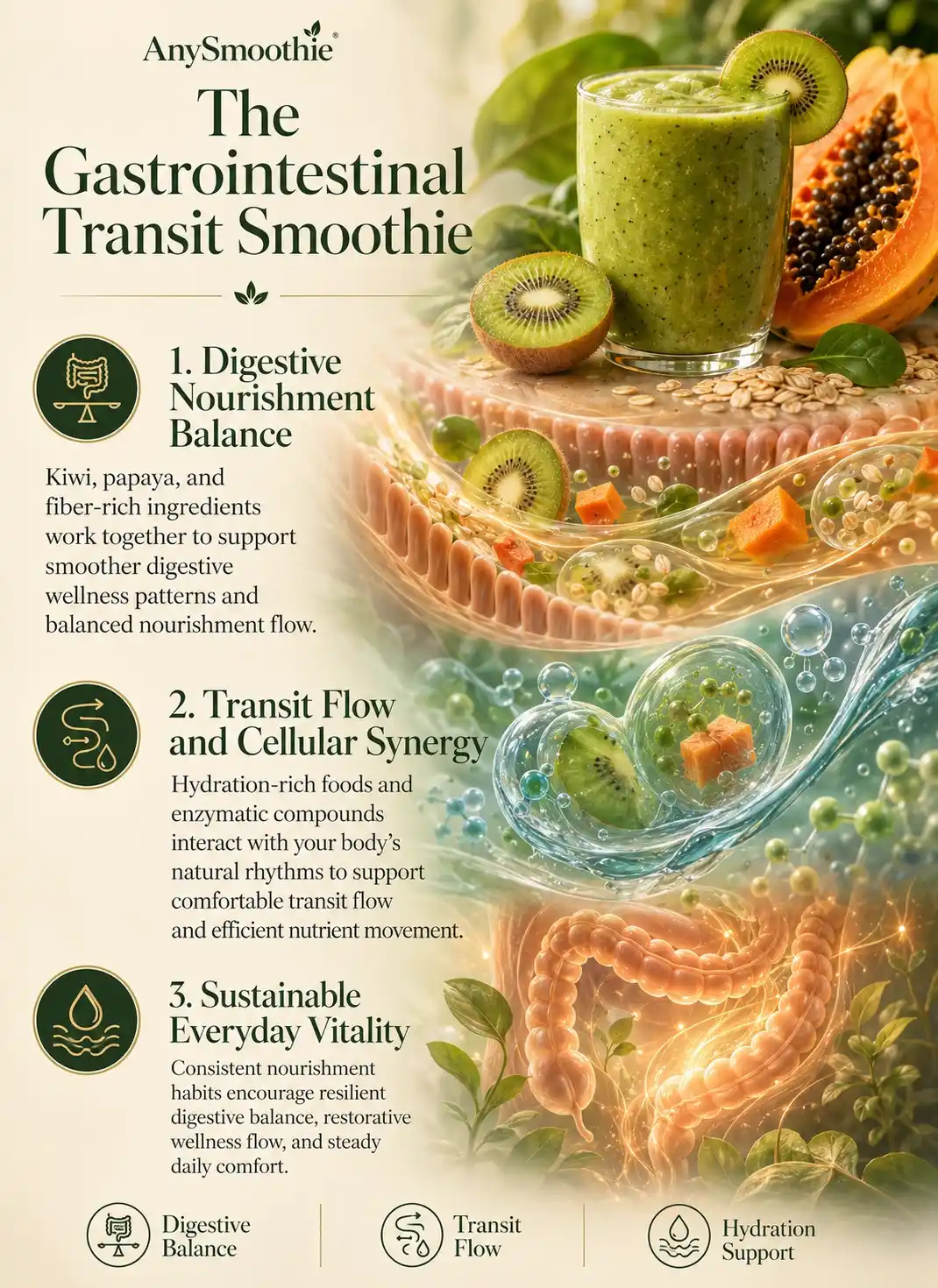
The 3 building blocks: fiber, fluid, and a little healthy fat
Fiber helps support regularity and feeds helpful gut bacteria. For smoothies, “gentle fiber” usually works best: ripe banana, kiwi, oats, chia, ground flax, spinach, and avocado. If you’re prone to gas, begin with smaller amounts (like 1 teaspoon of chia) and move up slowly.
Fluid keeps the smoothie easy to blend and easier to digest. Good options include coconut water, unsweetened plant milk (almond, oat, soy), or cooled herbal tea. If your smoothie is thick like pudding, you might feel full, but you can also feel heavy. A drinkable texture is often kinder to the stomach.
Healthy fat makes a yogurt-free smoothie feel creamy and satisfying. A small amount goes a long way: avocado, nut butter, chia, flax, or a spoon of coconut cream. Fat can slow digestion a bit, which is helpful when you want steady energy, but too much can feel heavy. Keep it modest and adjust based on how you feel.
Enzyme and herb helpers for a calmer belly
Some fruits are known for natural enzymes that help break down food. Pineapple (bromelain) and papaya (papain) are the classics, and they’re easy to blend into smoothies. If you want a simple overview of enzyme-containing foods, EatingWell’s guide to foods naturally high in digestive enzymes is a helpful read.
Herbs and spices can also make a smoothie feel “lighter” in your stomach:
- Ginger can help with nausea and that sloshy, unsettled feeling. Cleveland Clinic also highlights ginger in a smoothie context in its ginger spice smoothie recipe.
- Mint can feel cooling and soothing, especially when bloating is the main issue.
- Parsley has a fresh, clean flavor that pairs well with pineapple and citrus.
Practical tip: start small with ginger and herbs (like 1/4 teaspoon grated ginger or a few mint leaves), then adjust. It’s easier to add more than to fix an overly spicy smoothie.
5 easy smoothie recipes for digestion without yogurt (with simple swaps)
Each recipe below is yogurt-free, quick to blend, and designed to feel good after you drink it. If you’re sensitive, use a smaller serving first (think 8 to 10 ounces), then see how you do.
Make it creamy and gut friendly: yogurt-free tips that actually work
Once you learn a few texture tricks, you can turn almost any fruit and liquid combo into a smoothie that feels gentle, not watery, and not heavy.
How to get a thick, creamy smoothie without yogurt
The easiest options are simple whole foods, not thickeners with a long ingredient list.
Best yogurt-free “creamy makers”
- Frozen banana: thickens fast and adds sweetness. Great when you want dessert vibes.
- Avocado: neutral, creamy, and less sweet. Great when you want a calmer flavor.
- Nut or seed butter: adds richness and staying power, but keep it to 1 tablespoon if digestion is sensitive.
- Coconut cream: tiny amount, big impact. Use 1 tablespoon, not half a can.
- Oats: mild thickness and gentle fiber. Blend with liquid first for the smoothest result.
- Soaked chia: thickens like pudding. It’s great, but start small if seeds make you gassy.
Quick ratio guideline: start with 3/4 cup liquid for a single serving, then add thickness with frozen fruit or a small amount of oats, seeds, or avocado. If it’s too thick, add liquid in small splashes so you don’t end up with smoothie soup.
Common digestion mistakes (and easy fixes)
A smoothie can be healthy and still not sit right. These are the most common issues, plus fixes that don’t require starting over.
Too much fruit juice
- Fix: use plant milk or coconut water instead, or use whole fruit plus water for fiber.
Adding too much fiber too fast
- Fix: start with 1 teaspoon chia or flax, or 1 tablespoon oats, then increase over a week or two.
Making it super icy
- Fix: use cool liquids and frozen fruit for thickness. Save big ice loads for days when your stomach feels sturdy.
Loading up on raw cruciferous greens
- Fix: rotate greens. Spinach is often easier than raw kale for beginners, and smaller amounts go a long way.
Changing five things at once
- Fix: if you’re testing what triggers bloating, change one ingredient at a time. Your stomach can’t “give feedback” if everything shifts at once.
Conclusion
A smoothie for digestion without yogurt doesn’t need to be complicated. Start with a gentle liquid (coconut water, plant milk, or cooled tea), add fiber slowly (oats, chia, kiwi, spinach), and use banana or avocado for creaminess. If you want extra support, try pineapple, papaya, ginger, or mint, and keep the serving size reasonable while you test what works.
Pick one recipe to try this week, then tweak just one ingredient next time. Your gut is opinionated, and that feedback can help you build a smoothie you actually look forward to.
🛡️ Safety Notes & Contraindications
Proteolytic Tissue Erosion in Active Peptic Ulcers: CRITICAL: High-flux consumption of raw un-denatured enzymes (bromelain and papain) can actively degrade exposed proteic structures. If you present with active peptic ulcers, severe gastritis, or localized esophageal erosions, this enzymatic protocol can cause direct mucosal irritation.
Sorbitol Accumulation and Severe FODMAP Dysbiosis (SIBO): The Prune Apple Gut Smoothie isolates dense structural layers of sorbitolo and fermentable oligosaccharides. In individuals managing active Small Intestinal Bacterial Overgrowth (SIBO), this prebiotic influx is highly substrate-reactive, triggering immediate hydrogen or methane gas production, painful meteorism, and hyper-motility.
Enzymatic Protein Cleavage (The Oral Burning Phenomenon): Consuming actinidin-dense (kiwi) or bromelain-dense (pineapple) liquid matrixes too slowly allows these enzymes to begin superficial digestion of the oral mucins and salivary glycoproteins. This can present as a transient tingling or raw sensation on the tongue. Rinse your mouth with plain water post-consumption.
Oxalate Density and Nephrolithiasis Saturation: Utilizing a whole packed cup of raw baby spinach daily within a dairy-free matrix removes the calcium factor required to complex oxalates in the gut. Individuals with a clinical history of calcium-oxalate kidney stones must substitute spinach with low-oxalate alternatives (cucumber or romaine) to prevent hyperoxaluria.
Phytic Acid Mineral Chelation in Un-Soaked Oats: Raw, un-blanched rolled oats contain significant pools of acido fitico. Phytates act as powerful anti-nutrients, chelating divalent cations like Zinc ($Zn^{2+}$) and Iron ($Fe^{2+}$). Phenotypes presenting with iron-deficiency anemia must pre-soak their oats for at least 15 minutes before high-velocity blending to activate native phytases.
FAQ
How do “Exogenous Thiol Endopeptidases” like bromelain and papain support baseline digestion within a yogurt-free matrix?
Bromelain (from pineapple) and papain (from papaya) are highly stable proteolytic enzymes that catalyze the hydrolysis of internal peptide bonds across a broad spectrum of dietary proteins. Biochemically, because they maintain operational stability across a wide pH range ($\text{pH}\ 4.5\text{–}8.0$), they do not denature rapidly during gastric transition. Supporting this physiological system through raw tropical fruit infusions provides non-dairy enzymatic support that reduces the digestive workload of the stomach, helping to prevent the sloshy, heavy sensation often triggered by thick, un-emulsified shakes.
Why does a yogurt-free, “Low-Osmotic Hydrostatic Matrix” protect the gut from sudden fluid shifts?
Flooding the upper GI tract with concentrated simple fruit juices or rapid-acting sugars creates a hyper-osmotic chime bolus. Biochemically, this osmotic imbalance pulls water out of the vascular system and into the intestinal lumen, which can cause sudden bloating, gas, or urgent transit. Supporting this physiological system by using low-sugar whole fruits (like kiwi or papaya) alongside balanced fluids (like coconut water or unsweetened plant milks) optimizes the natural pathways of “hydrostatic balance,” ensuring smooth fluid movement without irritating sensitive mucosal linings.
What is the role of “Viscous Fiber Gelation” in regulating brush border nutrient transport?
Soluble fibers, such as the mucilage polysaccharides in soaked chia seeds, ground flax, and oats, hydrate spontaneously to form a cross-linked, slippery viscoelastic hydrogel. Biochemically, this gel matrix encapsulates dietary starches and temporarily shields the intestinal microvilli from an overwhelming nutrient rush. Supporting this physiological system through precise fiber mapping optimizes the natural pathways of “glycemic pacing” and provides gentle physical bulk to support normal, predictable peristaltic contractions.
How do “Volatile Carminative Carriers” like gingerol and menthol soothe the enteric nervous system?
Active botanical compounds like gingerols (from ginger) and menthol (from mint) act as natural carminative agents within the digestive tract. Biochemically, these compounds interface with calcium channels on the smooth muscle walls of the GI tract, modulating tone and promoting a localized anti-spasmodic effect. Supporting this physiological system by adding small, metered amounts of freshly grated ginger or bruised mint leaves facilitates the biochemical mechanics of “luminal clearance,” easing that tight, puffy, or unsettled sensation.
Why is cellular “Mitochondrial Priming” dependent on avoiding hyper-frozen blending temperatures?
Ingesting large volumes of highly crystalline water ice or frozen-solid mixtures drops the temperature of the gastric lining abruptly, causing localized vasoconstriction and slowing down enzyme activity. Biochemically, the active transport of nutrients across the epithelial wall requires a constant, high-velocity flux of cellular ATP from the surrounding tissues. Supporting this physiological system by utilizing cool, cellar-temperature liquids and short blending durations facilitates the biochemical mechanics of “metabolic priming,” allowing cells to internalize nutrients without fighting a temperature shock.

Medical Disclaimer: AnySmoothie content is for educational purposes only and is not a substitute for professional medical advice. Consult a healthcare provider for personalized guidance. See our full Disclaimer & Terms of Use. AI Transparency: AnySmoothie may use AI to support content development. All content undergoes human editorial review for accuracy, clarity, and editorial quality. See our full AI Transparency.