
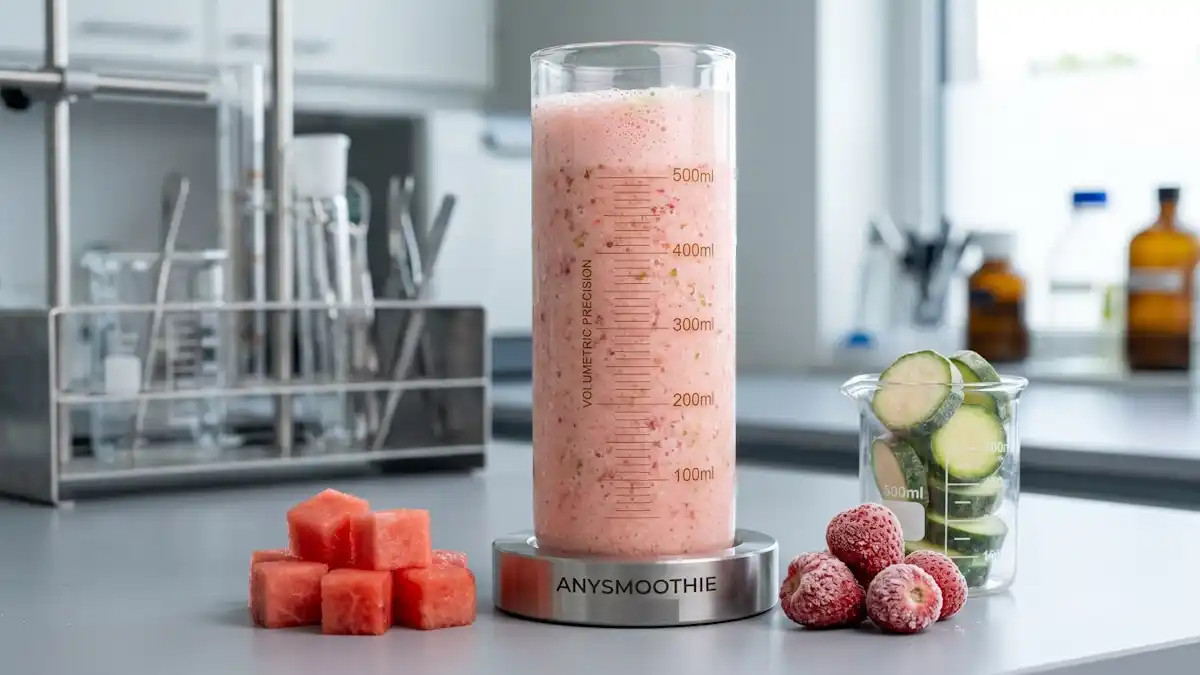
“Lowest calorie smoothie recipes” sounds strict, but in real life it just means big flavor with a small calorie bill. Think smoothies that land roughly in the 50 to 150 calorie range per serving, so they work as a light breakfast, a mid-afternoon snack, or a post-walk refresher when you want something cold and satisfying.
The catch is that calories swing fast. Brands vary, fruit sizes vary, and add-ins (nut butter, oats, sweetened yogurt) can turn a “light smoothie” into a full meal without you noticing.
This guide gives you a simple system plus easy recipes made with normal groceries. You’ll get fruit-forward options, green smoothies that don’t taste bitter, and a couple of protein-lean blends that stay under 150 calories.
What makes a smoothie truly low calorie (without tasting like diet food)?
A low-cal smoothie isn’t about removing everything fun. It’s about building volume first, then adding sweetness and flavor in smart amounts. If your smoothie tastes watery, it usually means it’s missing one of these: enough ice, enough frozen fruit, a pinch of salt, or a strong flavor note (citrus, vanilla, cocoa, coffee).
| Low-Calorie Fluid Base | Physiological Mechanism | Viscosity Yield | Best Smoothie Pairing | Main Rheological Advantage |
|---|---|---|---|---|
| Water / Sparkling Water | Maximizing pure fluid transit and aquaporin flux | Low | Citrus, berries, mint | Keeps calories near zero and lets fruit flavor stay bright |
| Unsweetened Almond Milk | Providing a micro-dispersion of structured lipids to coat T1R/T2R receptors | Medium | Banana, vanilla, cocoa | Excels at mimicking high-fat emulsions without increasing the overall energy bill |
| Cold Brew Coffee | Supplying methylxanthines to accelerate lipid oxidation and adenosine interaction | Low to medium | Cocoa, banana, peanut butter flavors | Adds a smooth, layered taste with a clean, thin pour |
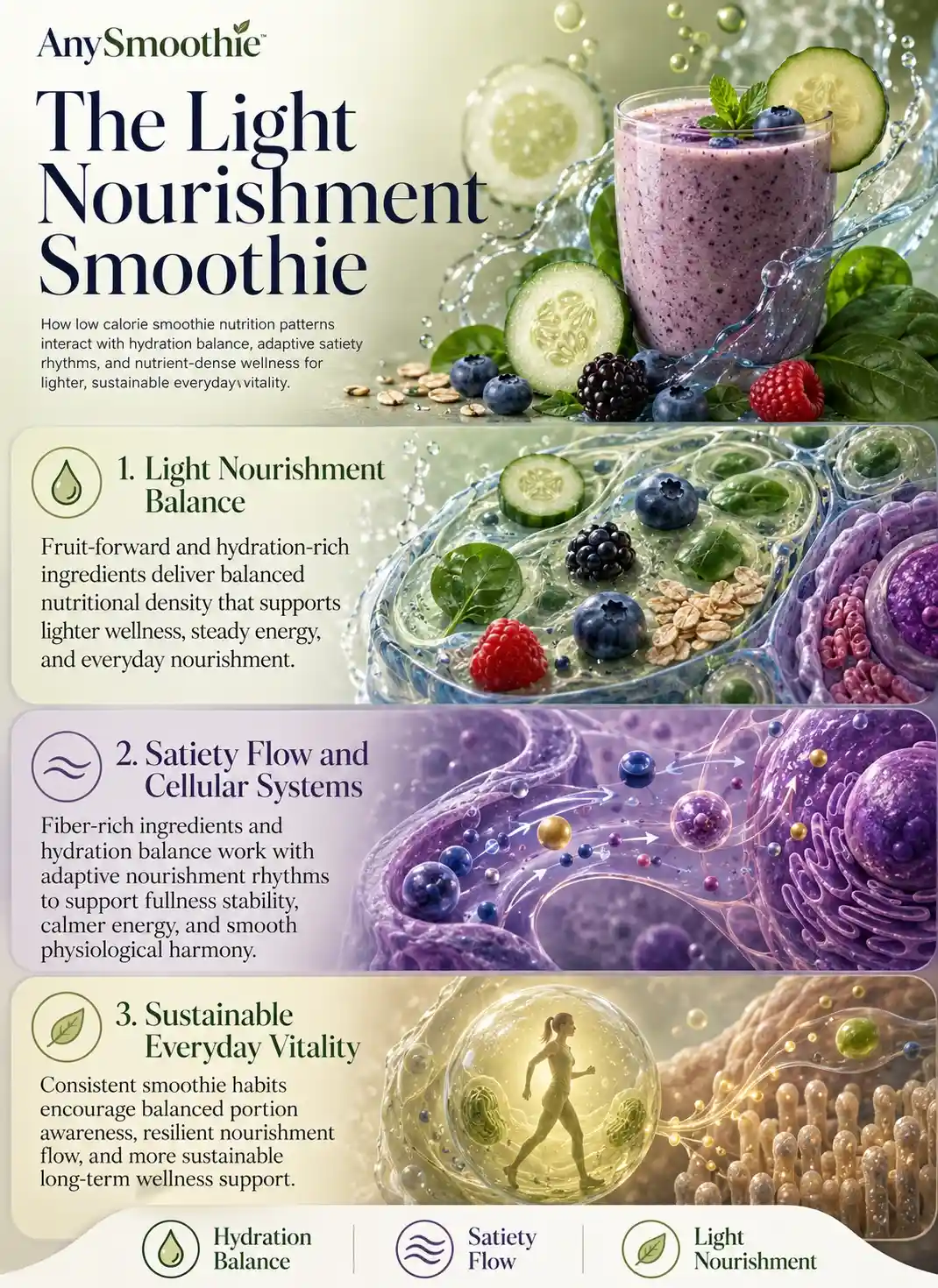
Here’s the basic formula that works almost every time:
- High volume, low calories: ice, water, unsweetened almond milk, or chilled coffee create a big drink without much energy.
- Big flavor from fruit: berries, pineapple, peaches, mango, and cherries bring sweetness and aroma. You don’t need a lot, just the right fruit.
- Smart extras: cinnamon, vanilla extract, lime juice, lemon zest, and unsweetened cocoa add “dessert vibes” without the sugar.
A quick calorie “budget” can keep you honest without turning smoothie-making into homework:
- Fruit portion examples:
1 cup strawberries is often much lighter than 1 large banana. A good trick is using 1/3 to 1/2 banana for creaminess, then letting berries carry the flavor. - Liquid choices:
Water and unsweetened almond milk are usually the easiest low-cal bases. Juices and sweetened milks can add calories fast, even when the smoothie still feels “light.” - Creamy texture without cream:
Frozen fruit, lots of ice, and a little blending patience can give you that milkshake thickness.
If you want more general inspiration beyond this post, EatingWell has a large collection of low-calorie smoothie recipes that can help you spot patterns in what keeps calories down.
Low-calorie base liquids and thickening tricks
Best low-cal liquids
- Water: the simplest, and it lets fruit shine.
- Sparkling water: makes a lighter, slush-style smoothie (best with citrus and berries).
- Cold brew coffee: adds bold flavor with minimal calories.
- Unsweetened almond milk: adds a “milkshake” feel without much heaviness.
- Light coconut milk (diluted): use a small splash, then top with water for a tropical note.
Thicken without stacking calories
- More ice than you think: especially when using fresh fruit.
- Frozen zucchini: mild flavor, adds body. Peel if you’re sensitive to taste.
- Frozen cauliflower rice: surprisingly neutral in small amounts, adds thickness.
- Chia seeds (tiny amount): 1 teaspoon can help texture without blowing your budget.
- Blending technique: blend liquid plus powders first (cocoa, cinnamon), then add frozen items and ice. It gets smoother, faster.
Quick warning: juice, sweetened plant milks, and flavored creamers can turn a “100-cal smoothie” into a 300-cal drink in seconds.
Common smoothie add-ins that quietly spike calories
Some ingredients are healthy, but they’re not “lowest calorie” friendly unless measured. The usual culprits:
- Nut butters: tasty, but easy to over-pour.
Use this instead: powdered peanut butter (PB2-style), or 1 teaspoon of nut butter as a flavor accent. - Regular yogurt: especially flavored or whole milk.
Use this instead: nonfat Greek yogurt, plain. - Honey, maple syrup, agave: easy to add, hard to track.
Use this instead: extra-ripe fruit, cinnamon, vanilla extract, or a zero-cal sweetener if you like it. - Granola, coconut flakes, “healthy” toppings: they add crunch, and lots of calories.
Use this instead: a few frozen berries on top, or a pinch of citrus zest. - Protein powders with added sugar: some are basically dessert mixes.
Use this instead: a lower-sugar powder and a smaller scoop, or nonfat Greek yogurt. - Large amounts of oats: great for meals, not for low-cal smoothies.
Use this instead: 1 teaspoon chia, or just more ice and frozen fruit for thickness.
Lowest calorie smoothie recipes you can make in 5 minutes
Each recipe below is designed to be fast, simple, and satisfying, with estimated calories that generally land between 50 and 150, depending on your brands and exact portions. For more ideas in this style, Health eCooks shares a set of low-calorie smoothie recipes that can be useful when you want variety.
If you want a more “classic breakfast smoothie” feel, BBC Good Food’s two-minute breakfast smoothie shows the standard formula, you can then scale down oats and sweeteners to keep your calories lower.
How to keep smoothies low calorie and still stay full
The problem with smoothies isn’t usually hunger, it’s “calorie creep.” A drizzle of honey here, a spoon of nut butter there, and suddenly your light snack matches a fast-food meal.
Start with a clear goal:
- Snack (50 to 120 calories): mostly water, ice, and fruit, with bright flavors like citrus, mint, or vanilla.
- Light breakfast (120 to 150 calories): add a measured protein source, like nonfat Greek yogurt or a smaller scoop of protein powder.
A simple template you can memorize:
| Smoothie part | What to use | Typical amount |
|---|---|---|
| Base | Water, sparkling water, cold brew, unsweetened almond milk | 3/4 to 1 cup |
| Fruit/veg | Frozen berries, pineapple, peaches, spinach, cucumber, zucchini | 1 to 1 1/2 cups |
| Flavor | Citrus, vanilla, cinnamon, cocoa, mint | 1 to 2 additions |
| Thickness | Ice, frozen zucchini, small chia | 1 to 2 cups ice, or 1 tsp chia |
If you need broader “how to build a healthy smoothie” guidance, Prevention’s roundup of healthy smoothie recipes is helpful for understanding which ingredients make smoothies more filling, then you can adjust portions to keep calories low.
Portion and prep tips that prevent calorie creep
Small habits make a big difference:
Measure the calorie-dense stuff. If you use nut butter, oats, seeds, or coconut, measure with a teaspoon or tablespoon, not a “scoop from the jar.”
Use a smaller cup. A 12-ounce glass makes “one serving” feel real. A huge tumbler can trick you into doubling the recipe.
Make freezer packs. Pre-portion fruit and add-ins into bags. When you’re hungry, you won’t freestyle extra banana or extra mango.
Track the extras. Toppings count. Sweeteners count. “Just a splash” of flavored creamer counts.
Ordering at smoothie shops: ask for no juice base, no sweetener, and light or no nut butter. If they offer “protein,” ask which one and whether it’s sweetened.
Make it filling with low-calorie volume and smart protein
Fullness comes from volume, protein, and a little fiber, not from pouring in fats and sugars.
More volume, same calories
- Add extra ice and blend longer for a thicker shake.
- Choose high-water fruits like berries and melon.
- Use cucumber or zucchini to make it bigger and creamier.
Protein that fits the budget
- Nonfat Greek yogurt is usually the simplest option.
- A measured amount of protein powder works well, but stick to a partial scoop if your powder is higher-calorie.
Fiber, but not too much
- 1 teaspoon chia can help keep you satisfied.
- Psyllium can thicken smoothies, but start very small and drink extra water. Too much fiber at once can feel rough on your stomach.
If you want a smoothie that truly holds you over, aim for a thick texture plus a clear protein choice, then keep fruit portions steady instead of piling on extras.
Conclusion
The best lowest calorie smoothie recipes aren’t “just fruit and water.” They’re built on smart bases, measured add-ins, and bold flavor from citrus, vanilla, cocoa, mint, and coffee. Once you get that formula down, it’s easy to keep smoothies in the 50 to 150 calorie range without feeling like you’re drinking punishment.
Pick one or two recipes from this list and make them a few times. Adjust thickness with ice, adjust brightness with lime or lemon, and adjust sweetness with fruit and vanilla instead of sugar.
Save your favorites, prep a couple freezer packs, and try one new combo this week. Your blender can be your easiest healthy habit.
🛡️ Safety Notes & Contraindications
Thyroid Transport Influx Blockade from Raw Cruciferous Grids: CRITICAL: Utilizing raw frozen cauliflower rice daily to expand the volume of low-calorie smoothies introduces active mirosinasi enzymes. These enzymes hydrolyze glucosinolates into thiocyanates, compounds that competitively inhibit iodine trapping at the thyroid follicular cells. Phenotypes managing hypothyroidism or Hashimoto’s autoimmune thyroiditis must utilize strictly blanched or frozen-steamed cauliflower to safely denature the enzyme.
The Oxalate Nephropathy Hazard in Dairy-Free Fluid Tracks: Stacking berries, spinach, and cocoa powders within completely water-based or dairy-free almond milk vehicles removes the internal calcium buffer required to complex anti-nutrients. In individuals with an underlying history of calcium-oxalate nephrolithiasis (kidney stones), these free oxalates pass directly into systemic circulation, causing hyperoxaluria and structural renal filtering stress.
Acute Gastrointestinal Distress from Psyllium/Fiber Over-Stacking: Adding concentrated psyllium husk or high-dose chia seeds to artificial low-calorie formulas can dramatically alter the osmolarity of the intestinal chimo. If consumed without an adequate hydrostatic fluid vehicle ($>300\text{ml}$ of water), these highly hydrophilic fibers will absorb internal vascular fluids, potentially causing acute mechanical compaction, severe flatulence, or temporary constipation.
Reactive Hypoglycemia Disruption in Sedentary Windows: Consuming low-calorie fruit smoothies that rely on small portions of high-glycemic inputs (like mango or pineapple) without any protein or lipid anchors can still trigger brief, sharp insulin spikes in insulin-resistant phenotypes. The subsequent clearance can cause transient reactive hypoglycemia, resulting in mid-morning lethargy and sudden sugar cravings.
Biogenic Amine Accumulation in Pre-Portioned Freezer Packs: Stacking strawberries, cherries, and spinach inside meal-prepped freezer bags for prolonged periods can subject the botanical tissues to cellular micro-ruptures. Upon blending, this can accelerate the release of biogenic amines (histamine). Phenotypes with diagnosed Histamine Intolerance (HIT) should avoid long-term pre-portioned packs and blend fresh or single-IQF frozen items.
FAQ
How does “Volumetric Headspace Management” activate gastric satiety pathways without a heavy caloric load?
The human stomach senses fullness primarily through physical distension rather than tracking incoming calories. Biochemically, when a high-volume, low-energy fluid matrix expands the gastric wall, it triggers specialized mechanoreceptors. Supporting this physiological system with air-and-ice emulsifications sends immediate neural signals via the vagus nerve to the hypothalamus, down-regulating hunger hormones like ghrelin and inducing a robust satiety cascade without overloading systemic energy pathways.
Why do high-water botanical substrates like strawberries and cucumbers prevent brush border glucose crowding?
Fruits like strawberries and vegetables like cucumber possess a high density of structurally bound water paired with low carbohydrate concentrations. Biochemically, this layout limits the total amount of fructose and glucose interfacing with SGLT1 and GLUT5 transporters along the intestinal brush border membrane. Supporting this physiological system through low-calorie fruit selections facilitates a metered, steady nutrient flux, avoiding the aggressive insulin spikes commonly caused by concentrated fruit juices or overripe tropical fruits.
What is the structural advantage of using “Cryopreserved Zucchini or Cauliflower” as texturizing agents?
Traditional thickeners like bananas, nut butters, or whole milk alter the rheological density of a smoothie but rapidly escalate the overall calorie count. Biochemically, flash-frozen zucchini or cauliflower rice delivers an intricate scaffolding of uncoiled plant pectin and insoluble cellulose fibers wrapped around solid-phase water. Supporting this physiological system during mechanical shear builds a stable colloidal suspension that replicates a high-fat milkshake texture, trapping volatile aromas and extending oral exposure time to naturally satisfy taste receptors.
How do non-nutritive flavor modulators like cocoa, citrus, and cinnamon trick olfactory signaling?
Human flavor perception is a multi-sensory cross-modal process heavily dictated by retro-nasal olfaction. Biochemically, volatile aromatic compounds found in unsweetened cocoa, cinnamon, and vanilla extract or citrus oils alter how the brain perceives sweetness. Supporting this physiological system with these non-nutritive boosters shifts taste receptor thresholds, allowing the central nervous system to interpret a low-sugar, low-energy blend as rich and satisfying without needing refined sugars or syrups.
Why does “Mitochondrial Priming” succeed when processing a low-energy, mineral-buffered matrix?
Flooding hepatocytes with a massive influx of simple sugars forces the liver into an intensive, high-friction metabolic pathway driven by fructokinase, which rapidly drains cellular ATP and stresses the mitochondrial electron transport chain. Biochemically, keeping fruit portions modest and buffering the fluid with essential mineral cofactors (like potassium from spinach or magnesium from seeds) reduces cellular friction. Supporting this physiological system facilitates the biochemical mechanics of clean mitochondrial respiration, allowing cells to maintain stable energy turnover.

Medical Disclaimer: AnySmoothie content is for educational purposes only and is not a substitute for professional medical advice. Consult a healthcare provider for personalized guidance. See our full Disclaimer & Terms of Use. AI Transparency: AnySmoothie may use AI to support content development. All content undergoes human editorial review for accuracy, clarity, and editorial quality. See our full AI Transparency.