
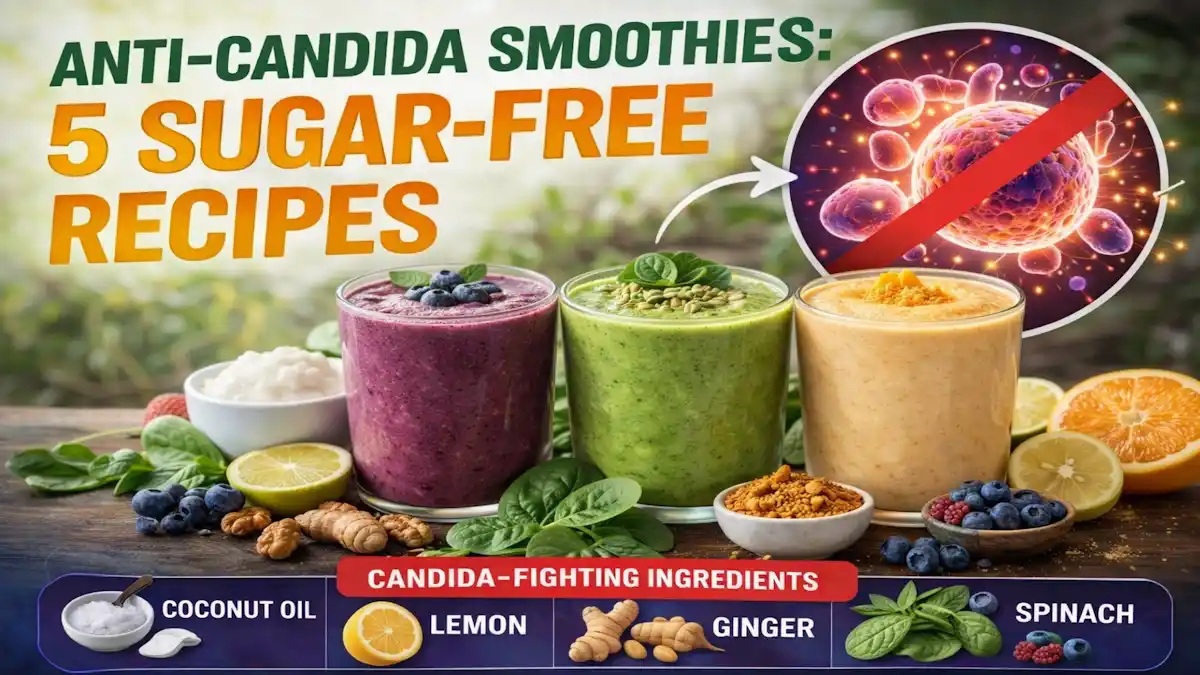
Many smoothie recipes are too high in sugar for a Candida-focused eating plan because they rely on bananas, mango, dates, fruit juice, and sweetened yogurt. That can make a “healthy” smoothie work against your goal if you’re trying to keep sugars low and meals more balanced.
That’s where anti-candida smoothies come in. They’re built to keep sugar in check while adding fiber, healthy fats, protein, and a few carefully chosen ingredients often used in Candida recovery, such as unsweetened coconut, ginger, cinnamon, and probiotic-rich add-ins. Some people also use coconut oil, and a few consider oregano oil, but stronger ingredients need extra care and aren’t right for every blend. Most importantly, smoothies can be a helpful food choice, but they aren’t a cure for yeast overgrowth on their own.
In the rest of this post, you’ll see what to include, what to avoid, and how to sweeten a blend without loading it with sugar. You’ll also get practical tips on low-sugar fruits, probiotic add-ins, and a few sugar-free smoothie recipes that fit a Candida-friendly routine.
What makes a smoothie Candida-friendly in the first place
Weight Loss Programs
Diet & Weight Loss
Diet & Weight Loss
BellyFlush™ – Gut Cleanse and Digestive Detox for Weight Support

Diet & Weight Loss

Diet & Weight Loss
A Candida-friendly smoothie is not just a regular smoothie with the fruit cut back. It works because it keeps sugars low, slows digestion with protein, fat, and fiber, and skips ingredients that can turn one glass into a dessert. Think of it like building a steady meal, not a sugar rush in a blender.
That balance matters. Even nutritious ingredients can push a smoothie in the wrong direction if they pile on fast-digesting carbs. For anti-candida smoothies, the goal is simple: keep the blend satisfying, low in added sugar, and built around whole foods that support steadier energy.
The biggest smoothie mistakes that can work against your goals
The most common mistake is assuming all fruit is fair game because it comes from nature. In practice, ingredients like bananas, mangoes, dates, and fruit juice can load a smoothie with sugar very quickly. Once blended, those sugars are easy to drink fast, which makes it even easier to overdo it.
Bananas and mangoes are classic examples. They make smoothies creamy and sweet, but they also raise the sugar count in a hurry. Dates do the same thing. Just one or two can change the whole drink from low-sugar to candy-like. If you’re trying to make anti-candida smoothies, that matters.
Sweeteners create a second problem. Honey and maple syrup may sound more wholesome than white sugar, but your body still processes them as sugar. The same goes for fruit juice. Juice strips away much of the fiber that helps slow absorption, so the sugar hits faster than whole fruit.
A smoothie can look healthy on the surface and still act like a sweet drink.
Then there are the sneaky add-ins. Sweetened yogurt often contains more sugar than people expect, especially flavored versions like vanilla, strawberry, or coconut. Flavored protein powders can be just as tricky. Many include sugar, syrups, or sweet blends that turn a simple smoothie into something much sweeter than intended. A quick check of the label can save you from that trap.
Another issue is using too much fruit, even when the fruit itself is a better choice. A small handful of berries may fit well in a low-sugar blend. A full cup plus extras can push the total much higher. According to a dietitian’s take on smoothie blood sugar spikes, smoothies are more balanced when they include ingredients that slow digestion, such as protein and fat, rather than relying on fruit alone.
If you want a simple rule, watch out for these common sugar-heavy picks:
- Bananas, mangoes, pineapple, and large servings of grapes
- Fruit juice, even if it’s unsweetened
- Dates, honey, maple syrup, and agave
- Sweetened or flavored yogurt
- Flavored protein powders with added sugar
- Multiple servings of fruit in one smoothie
For many people, the best low-sugar fruits for a Candida diet are small amounts of berries, lemon, or lime. A helpful overview on low-sugar fruit choices for Candida explains why lower-sugar options tend to fit better than tropical fruit or dried fruit.
The building blocks of a better anti-candida smoothie
A better smoothie starts with a meal formula, not a sweet flavor goal. When you build it this way, your drink is more filling, easier to repeat, and less likely to work against your plan. This also makes sugar-free smoothie recipes for yeast overgrowth much easier to create at home.
A simple anti-candida smoothie formula looks like this:
- Start with a liquid base.
- Add greens or low-sugar produce.
- Include a protein source.
- Add a healthy fat.
- Finish with fiber.
- Use probiotic support only if it fits your routine.
Here is what that looks like in real life.
- Choose an unsweetened liquid base, such as almond milk, coconut milk, or water. Skip fruit juice.
- Add greens like spinach, kale, romaine, or cucumber for bulk with very little sugar.
- Use a protein source that keeps the smoothie more satisfying, such as plain Greek yogurt, unsweetened protein powder, hemp hearts, or collagen if it fits your diet.
- Blend in healthy fat from avocado, chia seeds, flaxseeds, coconut butter, or a small amount of coconut oil.
- Add fiber with chia, flax, or psyllium if needed. Fiber helps slow how quickly the smoothie is absorbed.
- If you tolerate it well, use plain kefir or unsweetened yogurt for probiotic smoothies for Candida recovery.
That formula gives you a steady base, and then you can layer in flavor. Ginger, cinnamon, lemon juice, unsweetened cocoa, and fresh mint all add taste without pushing sugar up. These are often used in anti-fungal ingredients for smoothies because they help bring flavor and variety when sweet fruit is limited.
Some people also ask about using coconut oil and oregano oil in smoothies. Coconut oil is easier to work with and commonly added in small amounts for texture and fat. Oregano oil is much stronger. It can irritate the mouth or stomach, and it is not a casual add-in. If you are thinking about stronger supplements, use caution and follow product directions carefully.
For sweetness, keep it light and intentional. If your smoothie tastes too sharp, non-sugar options like stevia or monk fruit are usually a better fit than honey or dates. Stevia vs Monk fruit often comes down to taste. Stevia can have a sharper aftertaste, while monk fruit is often milder. Either way, a tiny amount usually does the job.
The best anti-candida smoothies taste balanced, not candy-sweet.
If you need a quick picture, think of your blender in parts: liquid + greens + protein + fat + fiber + optional low-sugar fruit. That structure keeps the smoothie grounded. It also leaves room for variety, so you don’t get stuck drinking the same green blend every day.
Best ingredients to use in sugar-free anti-candida smoothies
The best anti-candida smoothies are usually the simplest. You want ingredients that add flavor, texture, and staying power without piling on sugar. That means building from low-sugar produce first, then rounding things out with fat, protein, and a few careful add-ins.
This is where many sugar-free smoothie recipes for yeast overgrowth either work beautifully or go sideways. A smart blend should taste fresh and satisfying, not like a dessert with a health label.
Low-sugar fruits and vegetables that add flavor without too much sugar
If you’re trying to keep smoothies Candida-friendly, vegetables often do more of the heavy lifting than fruit. They add bulk, freshness, and color without turning your glass into a sugar bomb. In many cases, they also make the smoothie more versatile, because you can shift the flavor with herbs, citrus, or spices.
A few standouts work especially well:
- Avocado gives you creaminess and a mild, buttery taste with very little sugar.
- Cucumber makes a smoothie cold, clean, and light.
- Zucchini blends into a thick texture without a strong flavor.
- Lemon and lime add brightness, which matters when you’re skipping sweet fruit.
Those ingredients form the base of many anti-candida smoothies because they let you build flavor without relying on bananas or juice. Avocado is especially useful. It acts like the “glue” in the blender, making everything taste smoother and more complete.
For people looking for the best low-sugar fruits for Candida diet plans, the answer is usually small and selective. Lemon, lime, and avocado are often easier fits than sweeter fruit. Some people also use a small amount of green apple or berries, but that depends on how strict their plan is and how they feel after drinking them.
A simple way to think about it is this:
- On a stricter phase, many people go fully fruit-free and stick with avocado, cucumber, zucchini, greens, lemon, and lime.
- On a more flexible phase, a few slices of green apple or a small handful of berries may work better than tropical fruit.
That “small amount” part matters. A few raspberries can brighten a smoothie. A full cup changes the whole carb load. According to Livestrong’s Candida diet guide, lower-sugar choices generally fit better than high-sugar fruit during a Candida-focused eating plan.
If you want extra reassurance, broad low-sugar fruit lists also tend to put berries, lemons, and avocados near the safer end of the scale. This overview of low-carb and low-sugar fruits lines up well with the kinds of produce people often use in lower-sugar smoothies.
During stricter phases, a fruit-free smoothie isn’t “missing something.” It may be exactly the point.
Healthy fats and protein that make smoothies more filling
A smoothie that leaves you hungry an hour later usually needs more fat, protein, or both. This is one of the easiest upgrades you can make. It also matters if you’re trying to keep carbs from hitting too fast.
Fat and protein help slow digestion, so the carbs in your smoothie land more gently. That doesn’t make a sugary smoothie low-sugar, of course, but it does make a balanced smoothie more satisfying and steadier than fruit alone.
For a strong base, start with one of these:
- Unsweetened coconut milk for a lighter texture
- Coconut cream for a richer, more filling blend
- Plain kefir, if you tolerate it
- Unsweetened yogurt, if it fits your plan and doesn’t contain added sugar
Then layer in one or two extras that add body and staying power. Good options include chia seeds, hemp seeds, ground flaxseed, nut butters with no added sugar, collagen, or an unsweetened protein powder.
Each one does something a little different. Chia and flax help thicken the drink while adding fiber. Hemp seeds blend smoothly and add a mild nutty taste. Nut butters can make a smoothie feel more like a meal, but check labels carefully because many brands sneak in sugar. Collagen is easy to hide in almost any flavor profile, while unsweetened protein powder can make a bigger difference in fullness if breakfast is your goal.
If dairy works for you, plain kefir or unsweetened yogurt can be useful in probiotic smoothies for Candida recovery. Still, tolerance varies a lot. Some people feel great with plain cultured dairy, while others prefer coconut-based options or skip them entirely.
A practical formula looks like this:
- Pick one liquid, such as unsweetened coconut milk.
- Add one main fat, such as avocado or coconut cream.
- Include one protein source, such as collagen, kefir, yogurt, hemp seeds, or unsweetened protein powder.
- Finish with one fiber-rich seed, such as chia or flax.
That structure keeps anti-candida smoothies from turning watery, flat, or snack-like. Instead, they drink more like a real meal.
Anti-fungal and gut-supportive add-ins to use carefully
Once the base is solid, small add-ins can do a lot of work. This is where anti-fungal ingredients for smoothies often come in, but restraint matters. Stronger is not always better, especially in a blender.
Gentler options are usually easiest to start with. Cinnamon, ginger, and turmeric all add warmth and depth without sugar. Fresh herbs, such as mint, parsley, or basil, can make a green smoothie taste cleaner and more interesting. Unsweetened coconut adds texture and a mild sweetness without added sugar, while probiotic foods like plain kefir or unsweetened yogurt may fit if you tolerate them.
Some people also like a small amount of coconut oil. Used carefully, it can make the smoothie richer and more filling. Start small, because too much can feel greasy or upset your stomach. In most cases, a little goes much further than you think.
The bigger caution is oregano oil. It is very strong, and it is not a casual smoothie ingredient. If you’ve seen advice about using coconut oil and oregano oil in smoothies, treat the two very differently. Coconut oil is a food. Oregano oil is a concentrated oil that can irritate the mouth, throat, or stomach if used too freely.
A safe, practical approach looks like this:
- Use pantry spices first, such as cinnamon, ginger, or turmeric.
- Add fresh herbs when you want brightness instead of sweetness.
- Keep coconut oil to a small amount, especially at first.
- Only consider oregano oil if you’ve been advised to use it, you’ve tolerated it before, and you follow product directions exactly.
Some Candida-focused food guides list ginger, turmeric, oregano, and coconut among commonly used foods in a lower-sugar routine. For a general reference, The Candida Diet’s antifungal foods guide covers several of these ingredients and how people commonly work them into meals.
In other words, think of add-ins as seasoning, not the foundation. A pinch can improve the whole smoothie. Too much can ruin it fast.
Stevia vs monk fruit, which sweetener makes more sense
If your smoothie still tastes too sharp after adding avocado, coconut, or cinnamon, a non-sugar sweetener may help. For most readers, the real choice is stevia vs Monk fruit, and each has pros and cons.
Stevia is usually the stronger option. You need very little, often just a drop or a pinch. The downside is taste. Some people notice a bitter or licorice-like aftertaste, especially in very simple smoothies.
Monk fruit often tastes softer and closer to sugar, so many people find it easier to like. Still, it can vary a lot by brand. Some products labeled monk fruit are mostly something else.
That’s the key problem with both sweeteners: blends. Many products mix stevia or monk fruit with erythritol, dextrose, maltodextrin, or other added sweeteners. If you’re trying to keep anti-candida smoothies simple, read the ingredient list, not just the front label.
A few quick rules make this easier:
- Start with the tiniest amount possible.
- Taste before adding more.
- Look for products with very short ingredient lists.
- Skip blends that add sugar alcohols or hidden fillers if those don’t agree with you.
For some people, the best answer is no sweetener at all. That sounds harsh at first, but your taste buds often adjust. After a week or two, lemon, coconut, cinnamon, and berries can taste plenty flavorful on their own. If your goal is to move away from sweet tastes, going without may make more sense than trying to mimic sugar every morning.
Stevia can work best when you want a strong sweetness with almost no product. Monk fruit often wins on taste. But if you’re building your smoothie well from the start, you may not need either one very often.
5 sugar-free anti-candida smoothies you can make at home
If you want anti-candida smoothies that feel satisfying, the trick is simple: build them around texture, acid, spice, and healthy fat, not sweetness. That way, the drink still tastes complete, even without banana, juice, or sweetened yogurt.
The five recipes below keep sugar low and flavor high. Each one is easy to blend at home, and each has a different personality, from cool and green to rich and cocoa-forward. If you want more inspiration for green blends, this low-sugar green Candida smoothie recipe shows a similar direction.
Creamy green coconut smoothie and avocado cinnamon smoothie
The creamy green coconut smoothie tastes fresh and mellow, with a cool, silky finish. Spinach keeps it mild, cucumber adds a clean snap, and avocado gives it that thick spoon-coating texture that makes a smoothie feel like a real meal.
To make one, blend:
- 1 cup unsweetened coconut milk
- 1 handful spinach
- 1/2 cucumber, chopped
- 1/2 avocado
- 1 tablespoon chia seeds
- 1 to 2 teaspoons fresh lime juice
- 1 cup ice
Let the chia sit for a minute after blending if you want it a bit thicker. The flavor lands somewhere between creamy and crisp, with lime lifting the whole glass so it doesn’t taste flat.
Next, the avocado cinnamon smoothie goes in a warmer, softer direction. It tastes smooth, lightly spiced, and almost custard-like, but without turning sugary. If you miss sweeter breakfast smoothies, this one often scratches that itch without going off track.
Blend together:
- 1/2 to 1 avocado
- 1 cup unsweetened almond milk or unsweetened coconut milk
- 1/2 teaspoon cinnamon
- 1 tablespoon ground flax
- 1/4 teaspoon vanilla extract
- Ice, as needed
- A tiny amount of stevia or monk fruit, only if needed
Cinnamon gives it warmth, while flax adds body and makes the drink feel more filling. If you’re weighing stevia vs monk fruit for Candida-safe blends, monk fruit often tastes softer here, while stevia can come across a little sharper.
Lemon ginger probiotic smoothie
This smoothie is bright, tangy, and a little zippy. The lemon and ginger wake it up fast, while cucumber and spinach keep it light. Hemp seeds round it out, so it doesn’t drink like green juice.
Blend:
- 1/2 cup unsweetened coconut yogurt or plain kefir, if tolerated
- 1/2 cucumber, chopped
- 1 handful spinach
- 1 to 2 teaspoons fresh lemon juice
- 1/2 to 1 teaspoon fresh ginger, grated
- 1 tablespoon hemp seeds
- 1/2 to 3/4 cup cold water or ice
This is one of those probiotic smoothies for Candida recovery that may work well for some people as part of a broader food plan. Still, tolerance varies a lot. Some people do fine with plain kefir or unsweetened yogurt, while others feel better with coconut-based options or no probiotic add-in at all.
If probiotic foods don’t sit well with you, keep the same recipe and swap the yogurt or kefir for more coconut milk or water.
The final texture should be light but not watery. Think refreshing, not thin. Ginger gives it a gentle bite, and lemon keeps the creamy base from feeling heavy.
Cucumber herb smoothie and cacao spice smoothie
The cucumber herb smoothie is the most refreshing of the group. It tastes cool, green, and clean, almost like spa water turned into lunch. That might sound plain, but avocado makes it smooth enough to feel substantial.
Blend:
- 1 cucumber, chopped
- 2 to 3 tablespoons fresh parsley or mint
- 1/2 avocado
- 1 to 2 teaspoons lime juice
- 3/4 cup water, unsweetened coconut milk, or a small splash of unsweetened very low-sugar coconut water
- Ice, as needed
Mint makes it brighter and more refreshing. Parsley tastes more earthy and savory. Either way, lime pulls the flavors together and keeps the smoothie lively.
The last recipe, the cacao spice smoothie, is for days when you want something deeper and richer without turning to a dessert-style drink. It should taste smooth, dark, and gently spiced, more like chilled cacao cream than a milkshake.
Blend:
- 1 cup unsweetened almond milk or unsweetened coconut milk
- 1 tablespoon unsweetened cacao powder
- 1/2 teaspoon cinnamon
- 1/2 cup zucchini or 1/2 avocado
- Ice, as needed
- Optional monk fruit, used sparingly
Zucchini keeps the flavor neutral and the texture velvety. Avocado makes it richer and more dense. Cinnamon softens cacao’s bitterness, so the result feels balanced, not harsh. If you want sugar-free smoothie recipes for yeast overgrowth that don’t rely on fruit at all, this is one of the easiest to repeat.
For stricter anti-candida smoothies, skip extra sweetener at first and taste the blend cold. Cold temperature, fat, and spice often make a smoothie seem more satisfying than you expect.
How to customize anti-candida smoothies without raising the sugar
Once you have a solid base, customizing anti-candida smoothies gets much easier. The key is to swap for texture, protein, and creaminess, not sweetness. That way, you can adjust for allergies, food preferences, or breakfast goals without turning a low-sugar blend into a hidden dessert.
Simple swaps for dairy-free, nut-free, and higher-protein needs
A good smoothie formula should bend without breaking. If one ingredient doesn’t work for you, swap it for something that fills the same role.
Here are the easiest changes to make:
- For a dairy-free smoothie, replace plain yogurt or kefir with unsweetened coconut yogurt or more unsweetened coconut milk.
- For a nut-free version, skip almond milk and nut butter, then use hemp milk, coconut milk, sunflower seed butter, tahini, hemp hearts, chia, or pumpkin seeds.
- For a higher-protein blend, add plain, unsweetened protein powder, collagen peptides, hemp hearts, or extra Greek yogurt if dairy works for you.
Seed-based swaps are often the smoothest fix. Hemp hearts blend well and keep the texture soft, while chia and flax add thickness. Pumpkin seeds work too, although they can make the flavor slightly earthier.
If you want a simple cheat sheet, use this:
| If you’re avoiding | Use instead |
|---|---|
| Dairy yogurt | Unsweetened coconut yogurt |
| Almond milk | Unsweetened coconut milk or hemp milk |
| Nut butter | Sunflower seed butter or tahini |
| Flavored protein powder | Plain, unsweetened protein powder |
| Greek yogurt for protein | Collagen, hemp hearts, or egg white protein |
The main thing is to read labels closely. Many dairy-free yogurts and protein powders look healthy but contain added sugar. When in doubt, choose the plainest option you can find. If you want an example of a fruit-free blend built around spice instead of sugar, this turmeric and ginger sugar-free smoothie shows how simple the ingredient list can be.
The safest swap is usually the least exciting-looking one on the shelf, plain, unsweetened, and short on ingredients.
How to make smoothies taste better when you skip fruit
Fruit-free doesn’t have to taste flat. In fact, anti-candida smoothies often taste better when you treat them like a recipe, not a random mix of “healthy” ingredients.
Start with flavor layers. Cinnamon adds warmth. Ginger gives a fresh bite. Vanilla softens sharp greens and makes a smoothie feel rounder. Mint makes it taste cleaner, while lemon or lime brightens everything, the same way a squeeze of citrus wakes up a simple dish.
Cacao is another smart move. It adds depth and masks bitterness from greens or seeds, especially in richer blends with avocado or coconut milk. If a smoothie tastes harsh, it usually needs one of three things: acid, spice, or fat.
Texture matters just as much as flavor. A watery smoothie will almost always taste less satisfying. To fix that, use:
- Avocado for creaminess without much sugar
- Ice for a colder, thicker texture
- Zucchini or cucumber for body with a mild taste
- Chia or flax for a more filling blend
Think of it like seasoning soup. You wouldn’t expect plain broth and spinach to taste amazing without salt, herbs, or a little richness. Smoothies work the same way. A pinch of cinnamon, a splash of vanilla, and a squeeze of lime can do more than a handful of fruit ever could.
For flavor ideas, a low-sugar green smoothie example can help you see how greens, fiber, and a few focused add-ins come together without relying on sweet fruit.
A quick prep routine for busy mornings
Morning smoothies are easiest to stick with when most of the work is already done. A little prep turns anti-candida smoothies from a project into a two-minute habit.
The fastest routine is to make freezer packs. Add spinach, cucumber or zucchini, avocado chunks, and seeds to small bags or containers. Then keep your liquid base, such as unsweetened coconut milk or almond-free seed milk, in the fridge. In the morning, dump, pour, and blend.
A simple system looks like this:
- Prep 3 to 5 freezer packs with greens and low-sugar produce.
- Measure chia, flax, hemp hearts, cinnamon, or ginger into small jars.
- Keep unsweetened bases stocked, such as coconut milk, coconut yogurt, or plain protein powder.
- Add lemon or lime juice fresh right before blending, so the taste stays bright.
This works because it removes decision fatigue. You don’t have to build from scratch every day. You just choose your base, grab a pack, and finish with one or two flavor add-ins.
One caution matters here. If you’re making probiotic smoothies for Candida recovery with kefir, yogurt, or coconut yogurt, don’t let the fully blended smoothie sit too long. It’s better to blend and drink it fairly soon, especially if it will be warm for part of the morning. The probiotic ingredient is best added fresh, not held for hours in a bottle.
If you want a model for a low-sugar prep-friendly blend, this Candida-friendly smoothie bowl recipe gives another useful example of keeping ingredients simple and controlled.
Common questions about anti-candida smoothies
Even well-built anti-candida smoothies raise a few practical questions. That’s normal, because the details matter. A small change, like adding berries or extra coconut oil, can shift a smoothie from a steady meal to something your stomach does not love.
The good news is that most of these questions have a simple answer: context matters. Your phase of the plan, your tolerance, and the rest of your meals all count.
Can you use berries on a Candida diet
Sometimes, yes, but it depends on how strict your plan is. Many people include small amounts of berries once they move past the most restrictive phase, because berries are usually among the best low-sugar fruits for Candida diet plans. Still, stricter phases often cut fruit completely, even lower-sugar options.
That does not make berries “good” or “bad.” It just means timing matters. A tablespoon or two of raspberries or blueberries may fit a more flexible smoothie, while a full cup can push sugar up fast. In other words, berries are more like a garnish than a base.
If you want a simple way to think about it, use this rule:
- In a strict phase, skip berries and lean on lemon, lime, cucumber, avocado, and greens.
- In a step-down phase, test a small portion and see how you feel.
- In a maintenance-style phase, berries may fit better when the smoothie also includes protein, fiber, and fat.
A practical guide on fruit choices for the Candida diet makes the same general point, lower-sugar fruit may fit for some people, but stricter stages often avoid it at first.
If berries go into your smoothie, keep them small and intentional, not automatic.
Is coconut oil helpful in smoothies
For many people, yes. A small amount of coconut oil can add creaminess, healthy fat, and staying power. It can also make fruit-free smoothies taste more rounded, which helps when you’re trying to avoid sweet flavors.
Still, more is not better. Too much coconut oil can make a smoothie feel greasy, heavy, or hard on digestion. If your stomach gets loose or uneasy after drinking it, the amount may simply be too high. That’s why most people do better starting with a small spoonful rather than pouring it in freely.
This is especially helpful to remember when people talk about using coconut oil and oregano oil in smoothies as if they belong in the same category. They don’t. Coconut oil is a food ingredient. Oregano oil is much stronger and needs far more caution.
If you want to try coconut oil in sugar-free smoothie recipes for yeast overgrowth, keep it simple:
- Start with a small amount.
- Blend it into a smoothie that already has fiber or protein.
- Pay attention to how your digestion feels afterward.
A general overview on coconut oil for yeast infections explains why people often reach for it, but in everyday smoothies, the key is still moderation.
Are anti-candida smoothies enough on their own
No. Smoothies can help, but they are only one piece of the puzzle. Think of them like one solid brick in a wall, not the whole house.
A good smoothie can support your routine because it keeps sugar lower and makes it easier to eat greens, protein, and healthy fats. But it does not replace the bigger picture, which usually includes your full eating pattern, sleep, stress, movement, and how consistent you are across the day. That matters even more with probiotic smoothies for Candida recovery or blends with anti-fungal ingredients for smoothies, because add-ins are not a shortcut if the rest of your routine is working against you.
In real life, anti-candida smoothies work best when they fit into a broader plan like this:
- Lower added sugar across meals
- Enough protein and fiber during the day
- Fewer ultra-processed foods
- Better meal timing and consistency
- Basic lifestyle habits, such as sleep and stress support
Some smoothie-focused Candida recipe collections, such as these Candida-friendly juice and smoothie recipes, can be useful for ideas. Still, recipes are tools, not a full strategy.
So yes, smoothies can be useful. They just work best when the rest of your plate, and your day, make sense too.
Conclusion
The best anti-candida smoothies aren’t the sweetest or the most packed with add-ins. They’re the ones that stay low in sugar, feel balanced with fat, fiber, and protein, and fit your routine without much effort.
So keep it simple. Use ingredients you tolerate well, stay careful with stronger extras, and build your blend around a steady base instead of chasing sweetness.
Start with one or two recipes that sound easy to repeat, then adjust the texture, flavor, or probiotic add-ins as needed. Over time, that simple approach makes anti-candida smoothies easier to stick with, and that’s what gives them real value.
Anti-Candida Smoothies FAQ
Can I use fruit in anti-candida smoothies?
During the initial phase of a Candida diet, it is best to stick to low-sugar fruits like lemons, limes, and small amounts of green apples or berries (if tolerated). Avoid high-sugar fruits like bananas, mangoes, and grapes, as they can feed the yeast overgrowth.
What are the best anti-fungal ingredients to add to a smoothie?
To help fight Candida from within, incorporate natural anti-fungals like organic coconut oil (rich in caprylic acid), raw ginger, cinnamon, and a drop of food-grade oregano oil. These ingredients help inhibit yeast growth while adding flavor without sugar.
What is the best liquid base for a Candida-safe smoothie?
The best bases are unsweetened nut milks (like almond or macadamia), full-fat canned coconut milk (without added thickeners), or plain filtered water. Avoid dairy milk and sweetened plant milks, as the lactose and added sugars can compromise the diet.

The AnySmoothie team is all about smarter smoothie recipes made with whole-food ingredients. Everything we share centers on balanced nutrition, steady energy, and low-glycemic choices, so you can sip a smoothie that keeps you full, feels good, and helps you avoid sugar crashes.
- Disclaimer: This content is for educational use only. These smoothie recipes and nutrition details aren’t a substitute for medical advice from a licensed health professional. Please read our full Medical Disclaimer here.
Dietary Supplements

Dietary Supplements

Dietary Supplements
Dietary Supplements

Dietary Supplements