
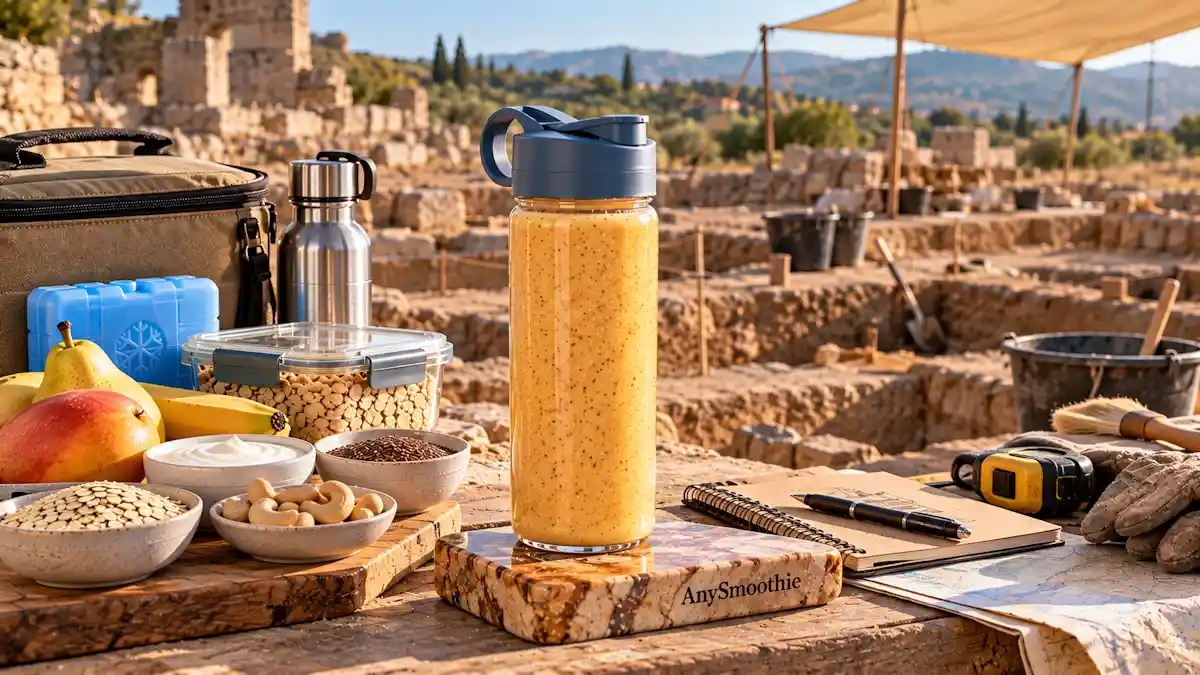
Your breakfast may happen before sunrise, with hours of heat, dust, and excavation ahead. Uneven breaks and limited kitchen access make portable food useful, especially when you need something ready before leaving camp.
Smoothies for archaeologists can combine carbohydrates, protein, fats, and fluids in one bottle. However, the right portion depends on your appetite, workload, and other meals, so a drink that suits a finds-processing morning may need a snack alongside it during heavy digging.
Start with a balanced recipe, then plan how you’ll keep it cold.
Build a Fieldwork Smoothie That Holds Up Until Lunch
A practical smoothie needs more than fruit and ice. Build around familiar foods, with enough substance for breakfast and a consistency you can drink comfortably.
Pair fruit with a protein source
Begin with roughly one cup of fruit or one medium banana. Add milk, plain Greek yogurt, or unsweetened soy milk for protein, then adjust the liquid to suit your bottle.
Digestion breaks carbohydrates into simple sugars, including glucose, which cells use to produce ATP for normal muscle activity. Meanwhile, dietary protein supplies amino acids for tissue maintenance. These nutrients support normal physiological systems without making a smoothie a guarantee against tiredness.
Check plant-based milk labels because protein content varies. Almond and oat beverages often supply less protein than soy milk, so they aren’t always interchangeable breakfast ingredients.
Adjust the portion to the day’s work
For a more substantial breakfast, add a tablespoon of nut butter or a quarter cup of rolled oats. Nut butter contributes fat, while oats supply carbohydrates and fiber.
Blend oats thoroughly, and add more liquid if the drink thickens. A dense smoothie can become difficult to sip through a narrow opening.
On demanding days, pack additional food rather than relying on one large drink. Also, confirm refrigeration before choosing ingredients: USDA’s cold-holding guidance sets 40°F or below as the target for cold perishable food.
3 Smoothies for Archaeologists on Fieldwork Days
Each recipe makes one serving. Use a blender at home or camp, and wash fresh produce before preparing it.
Banana, peanut butter, and oat smoothie
Ingredients
- 1 medium banana
- ¾ cup milk
- ¼ cup plain Greek yogurt
- ¼ cup rolled oats
- 1 tablespoon peanut butter
- A pinch of cinnamon, optional
Steps
Combine the banana, milk, Greek yogurt, rolled oats, and peanut butter. Add a pinch of cinnamon if you like.
Blend until the oats are finely broken down. Then add a tablespoon or two of water if needed.
This is the most substantial option of the three, suited to a morning with digging or equipment carrying. Because oats thicken as they sit, check the texture before packing.
Estimated Nutrition per Serving
- Calories: ~400 kcal
- Protein: ~27 g
- Carbohydrates: ~56 g
- Fat: ~14 g
- Fiber: ~6 g
- Sugars: ~27 g
I’d check the texture again just before leaving camp because the oats can noticeably thicken during storage.
Blueberry, soy, and chia smoothie
Ingredients
- 1 cup frozen blueberries
- 1 cup unsweetened soy milk
- 2 tablespoons rolled oats
- 1 teaspoon chia seeds
Steps
Add the soy milk, blueberries, rolled oats, and chia seeds to the blender.
Blend thoroughly, pause briefly, then blend again to break down the seeds and oats. Add water to loosen the mixture.
This dairy-free option fits readers who prefer soy. Its fiber-containing ingredients may feel filling, so test your tolerance before a long field day.
Estimated Nutrition per Serving
- Calories: ~260 kcal
- Protein: ~11 g
- Carbohydrates: ~40 g
- Fat: ~7 g
- Fiber: ~7 g
- Sugars: ~17 g
Mango, yogurt, and lime smoothie
Ingredients
- 1 cup frozen mango
- ½ cup plain Greek yogurt
- ½ cup cold water
- 1 teaspoon lime juice
Steps
Add the cold water and Greek yogurt first, followed by the frozen mango and lime juice.
Blend until smooth, then add another splash of water for a thinner drink. Transfer immediately to your chilled bottle.
The mango supplies carbohydrates, while yogurt adds protein.
Choose this recipe when you want a less dense breakfast, perhaps before recording or sorting finds. Pair it with other food if the serving doesn’t match your appetite.
Estimated Nutrition per Serving
- Calories: ~165 kcal
- Protein: ~12 g
- Carbohydrates: ~30 g
- Fat: ~1 g
- Fiber: ~3 g
- Sugars: ~23 g
Here’s how the recipes compare for packing and portion planning.
| Smoothie | Key ingredients | What it contributes | Best fieldwork fit | Prep or storage note |
|---|---|---|---|---|
| Banana and peanut butter | Banana, milk, oats, peanut butter | Carbohydrates, protein, fat | More substantial breakfast | Oats thicken during storage |
| Blueberry and soy | Blueberries, soy milk, chia | Carbohydrates, protein, fiber | Dairy-free breakfast | Blend seeds thoroughly; keep cold |
| Mango and lime | Mango, Greek yogurt, lime | Carbohydrates, protein, fluids | Less dense breakfast | Adjust water; refrigerate promptly |
Choose according to appetite and available ingredients. All three still need reliable cold storage.
Pack Smoothies Safely for the Dig Site
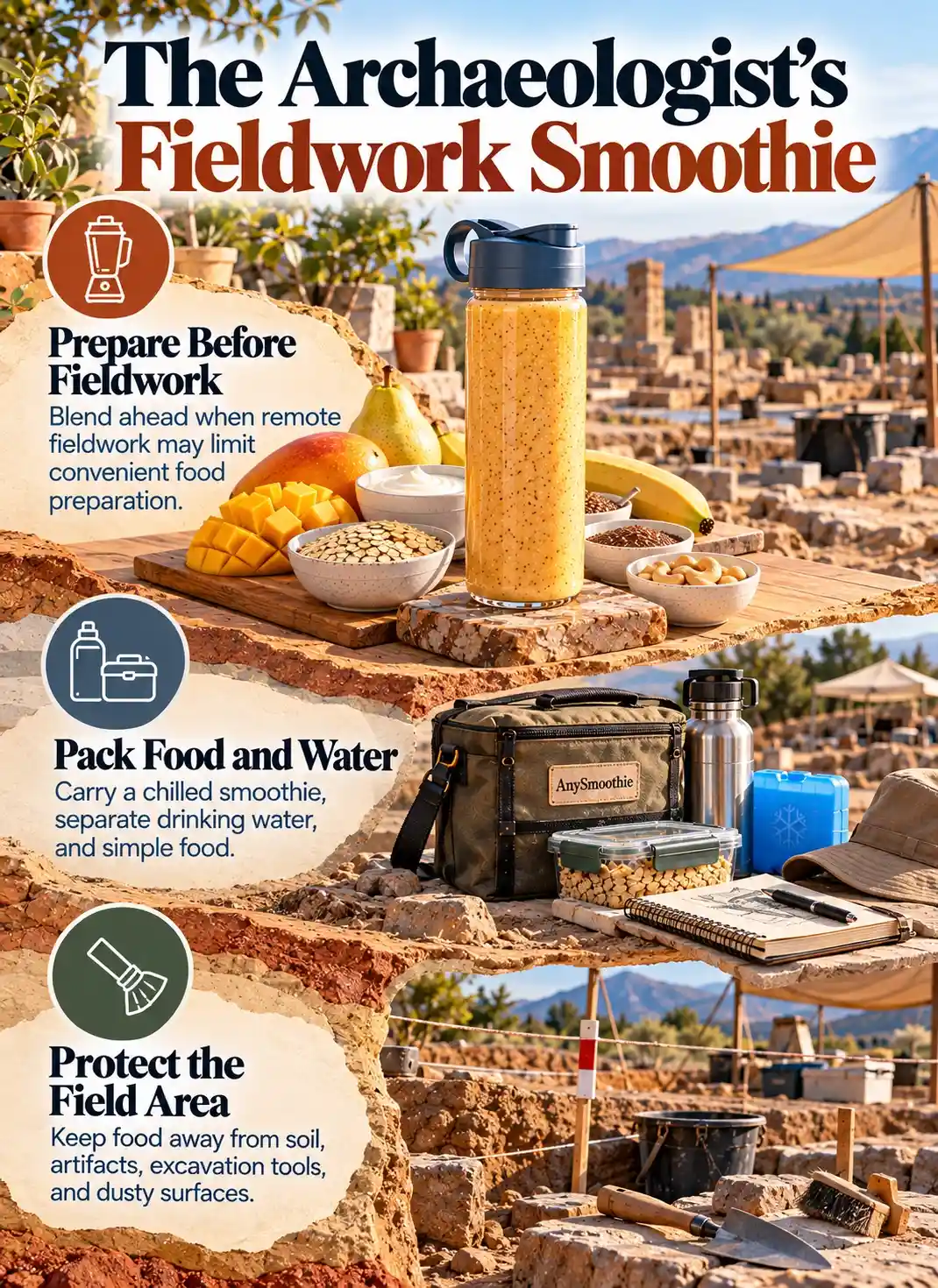
A good recipe won’t compensate for a warm bottle. Dairy, opened plant-based milk, and blended perishable ingredients need temperature control throughout transport and storage.
Chill the drink before departure
Blend at home or camp, then refrigerate promptly. Pour the cold smoothie into a clean, pre-chilled insulated bottle with a secure lid.
Next, pack it in a cooler with ice or frozen gel packs. Insulation slows warming, but it doesn’t establish a safe temperature by itself. Use a cooler thermometer to check conditions.
Keep the bottle out of direct sun and return it to the cooler between drinks. Carry separate drinking water, too, because breakfast fluid doesn’t replace access to water during fieldwork.
If hydration has already slipped earlier in the day, see our smoothies when you forgot to hydrate for another practical approach to keeping fluids in the routine.
Make a backup plan for unreliable cooling
Follow USDA’s food safety basics: discard perishable food after more than two hours without safe cold holding. That limit drops to one hour when temperatures exceed 90°F.
If chilling isn’t reliable, pack an unopened shelf-stable milk carton and whole fruit to consume separately, or choose another breakfast.
An unopened shelf-stable carton doesn’t make a blended smoothie safe to carry unrefrigerated.
Once opened, follow the package’s refrigeration instructions. Don’t leave a prepared smoothie in a vehicle while you work, and don’t use smell or appearance to decide whether it’s safe.
Conclusion: Make Breakfast Fit the Field Day
Choose fruit, add a protein source, and include oats or nut butter when you want a more substantial serving. Then treat safe cold storage as part of preparation, rather than an afterthought.
Test a recipe before a demanding field day so you know how its texture and portion suit you. Adjust it to your taste and schedule, and pack another breakfast when reliable cooling isn’t available.
🛡️ Safety Notes & Dietary Interactions
- Cold-chain safety: Milk, yogurt, soy milk, and blended fruit are perishable. Keep smoothies at 40°F or below using a cooler, ice packs, and ideally a thermometer during extended fieldwork.
- Heat exposure: Dig sites can become hot, and a parked vehicle is unsuitable for smoothie storage. Keep the bottle shaded and return it to the cooler between drinks.
- Allergen awareness: The recipes include dairy, soy, peanut butter, and chia. Check labels and cross-contact warnings carefully, particularly when preparing food at shared camp kitchens.
- Fieldwork hydration: A smoothie contributes fluid but does not replace drinking water during demanding outdoor work. Carry separate water and additional food when the day’s workload extends beyond breakfast.
FAQs
Which smoothie is best for a demanding excavation morning?
The banana, peanut butter, and oat smoothie is the most substantial option, with approximately 27 grams of protein and 400 calories according to the article’s estimates. Its combination of oats, peanut butter, yogurt, milk, and banana suits a morning involving digging or equipment carrying, provided the portion feels comfortable.
How can I keep a smoothie cold at an archaeological dig?
Chill the smoothie before departure and transfer it to a clean, pre-chilled insulated bottle. Carry that bottle inside a cooler with ice or frozen gel packs, keeping it out of direct sunlight. A cooler thermometer can help verify conditions, since insulation alone does not establish that the smoothie remains safely cold.
What should I do if reliable refrigeration isn’t available?
Don’t rely on a blended smoothie for fieldwork if you cannot maintain safe cold holding. The article suggests using an unopened shelf-stable milk carton and whole fruit instead, or choosing another breakfast. Once shelf-stable milk is opened, follow its package refrigeration instructions rather than treating it as permanently shelf-stable.
Why might the blueberry-soy smoothie feel filling despite being dairy-free?
The blueberry-soy smoothie contains oats and chia seeds in addition to soy milk and blueberries. These fiber-containing ingredients can contribute to fullness and also thicken the drink. The article recommends testing your tolerance before a long field day and adding water if the smoothie becomes too dense.
Should I rely on one smoothie for the entire fieldwork morning?
No. The article specifically recommends packing additional food on demanding days rather than relying on one large drink. Digging, equipment carrying, and other fieldwork can vary considerably in workload. Bring separate drinking water and additional food when needed, and let appetite and the day’s actual demands guide your portions.

Medical Disclaimer: AnySmoothie content is for educational purposes only and is not a substitute for professional medical advice. Consult a healthcare provider for personalized guidance. See our full Disclaimer & Terms of Use. AI Transparency: AnySmoothie may use AI to support content development. All content undergoes human editorial review for accuracy, clarity, and editorial quality. See our full AI Transparency.