
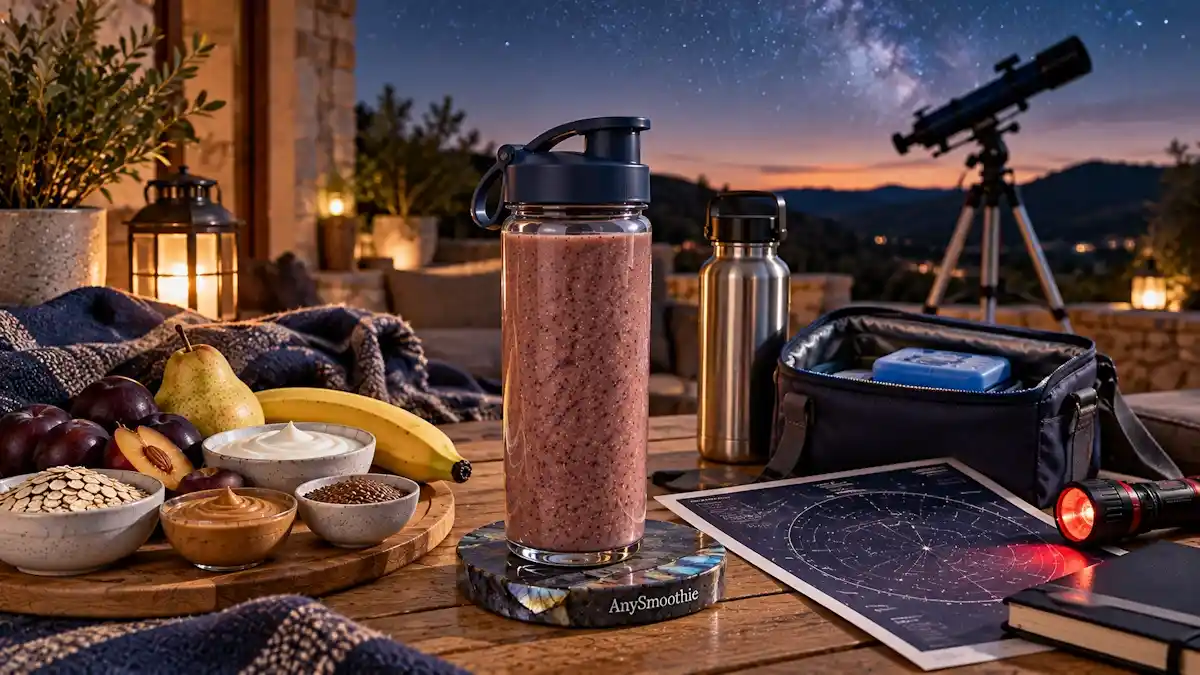
A long night under the stars is easier to settle into when your snack fits in one bottle. Smoothies for amateur astronomy nights can be filling and easy to sip, with simple preparation before you leave home.
Food doesn’t improve your eyesight or replace good observing habits, but it can supply normal nourishment while you’re outdoors. Start with these three caffeine-free recipes, then match your choice and packing method to the evening’s schedule.
How to Choose and Pack a Stargazing Smoothie
Choose according to appetite and timing. A thick drink may suit your pre-observing snack, while a thinner blend is easier to sip outdoors.
Match the Recipe to Your Evening
The berry-oat version suits a larger appetite. Choose tropical fruit for a smoother sip, or the green blend if you enjoy citrus.
For dietary substitutions, check protein content rather than assuming all yogurts are equivalent. USDA’s FoodData Central provides nutrient information for individual foods; packaged-product labels help you compare brands.
These estimated prep times assume your ingredients are ready.
| Smoothie | Main ingredients | Flavor and texture | Prep time | Packing note |
|---|---|---|---|---|
| Berry-oat | Berries, oats, yogurt | Fruity, thick | About 5 minutes | Thin before bottling |
| Tropical yogurt | Mango or pineapple, yogurt | Tart-sweet, smooth | About 5 minutes | Leave room to shake |
| Green citrus | Spinach, orange, banana | Citrusy, creamy | About 7 minutes | Blend orange thoroughly |
Bottle design matters too: thick blends need a wider drinking opening.
Make It Ahead Without a Mess
Blend at home and refrigerate promptly. Use a leakproof bottle, then carry it in an insulated bag with an ice pack. Keep perishable smoothies at 40°F or below.
Don’t leave them unrefrigerated for more than two hours, or one hour when temperatures exceed 90°F. A cold-feeling bottle isn’t a reliable temperature check.
Check labels for allergies, including milk, soy, and nuts. Choose ingredients that blend smoothly; fibrous citrus pieces can clog narrow openings.
Oats and chia thicken during storage, so check consistency before departure. Finally, rinse the blender promptly and wash it according to its instructions before residue dries.
3 Smoothies for Amateur Astronomy Nights
Each recipe makes one serving. During digestion, carbohydrates release simple sugars, while proteins break down into amino acids. These nutrients support normal physiological systems, including energy use and tissue maintenance.
Berry-Oat Smoothie for a Filling Start
Ingredients
- 1/2 cup berries
- 1/2 medium banana
- 2 tablespoons rolled oats
- 1/3 cup plain nonfat yogurt
- 1/2 cup 2% milk
Steps
Blend the oats with the milk first, then add the berries, banana, and yogurt. Blend until smooth. Add a splash more milk if needed.
Fruit and oats provide carbohydrates and fiber, while yogurt contributes protein. Fiber largely resists digestion in the small intestine. This thicker option works well before observing begins, especially when you prefer eating before handling equipment.
Estimated Nutrition per Serving
- Calories: ~230
- Protein: ~10 g
- Carbohydrates: ~39 g
- Fat: ~4 g
- Fiber: ~5 g
- Sugars: ~24 g
Prepare this smoothie before heading out, while the telescope and observing gear are still being packed. Having the bottle ready makes it easier to focus on getting everything set up once you arrive.
Tropical Yogurt Smoothie for a Light Sip
Ingredients
- 3/4 cup mango
- 1/3 cup plain nonfat yogurt
- 1/3 cup 2% milk
- 1 teaspoon chia seeds
Steps
Blend the mango, yogurt, milk, and chia seeds until smooth, then check the consistency before bottling. Add a small splash of milk if needed.
The fruit supplies carbohydrates, and yogurt adds protein. Chia seeds contribute fiber and fat. Digestion breaks fats into components, including fatty acids, that the body uses for energy and normal cell functions.
Estimated Nutrition per Serving
- Calories: ~185
- Protein: ~7 g
- Carbohydrates: ~30 g
- Fat: ~5 g
- Fiber: ~5 g
- Sugars: ~23 g
Green Smoothie with Citrus and Spinach
Ingredients
- 1 cup loosely packed spinach
- 1 small peeled orange
- 1/2 medium banana
- 1/3 cup plain nonfat yogurt
- 1/4 cup water
Steps
Blend the spinach, orange, and water first. Add the banana and yogurt, then blend thoroughly. Remove orange seeds beforehand.
Banana softens the spinach flavor, while citrus adds tartness. Spinach supplies folate, which participates in normal cell processes, and orange supplies vitamin C. These nutrients support ordinary physiology; they don’t improve night vision.
Estimated Nutrition per Serving
- Calories: ~145
- Protein: ~6 g
- Carbohydrates: ~30 g
- Fat: ~1 g
- Fiber: ~5 g
- Sugars: ~19 g
Enjoy a Snack Without Disrupting Your Stargazing
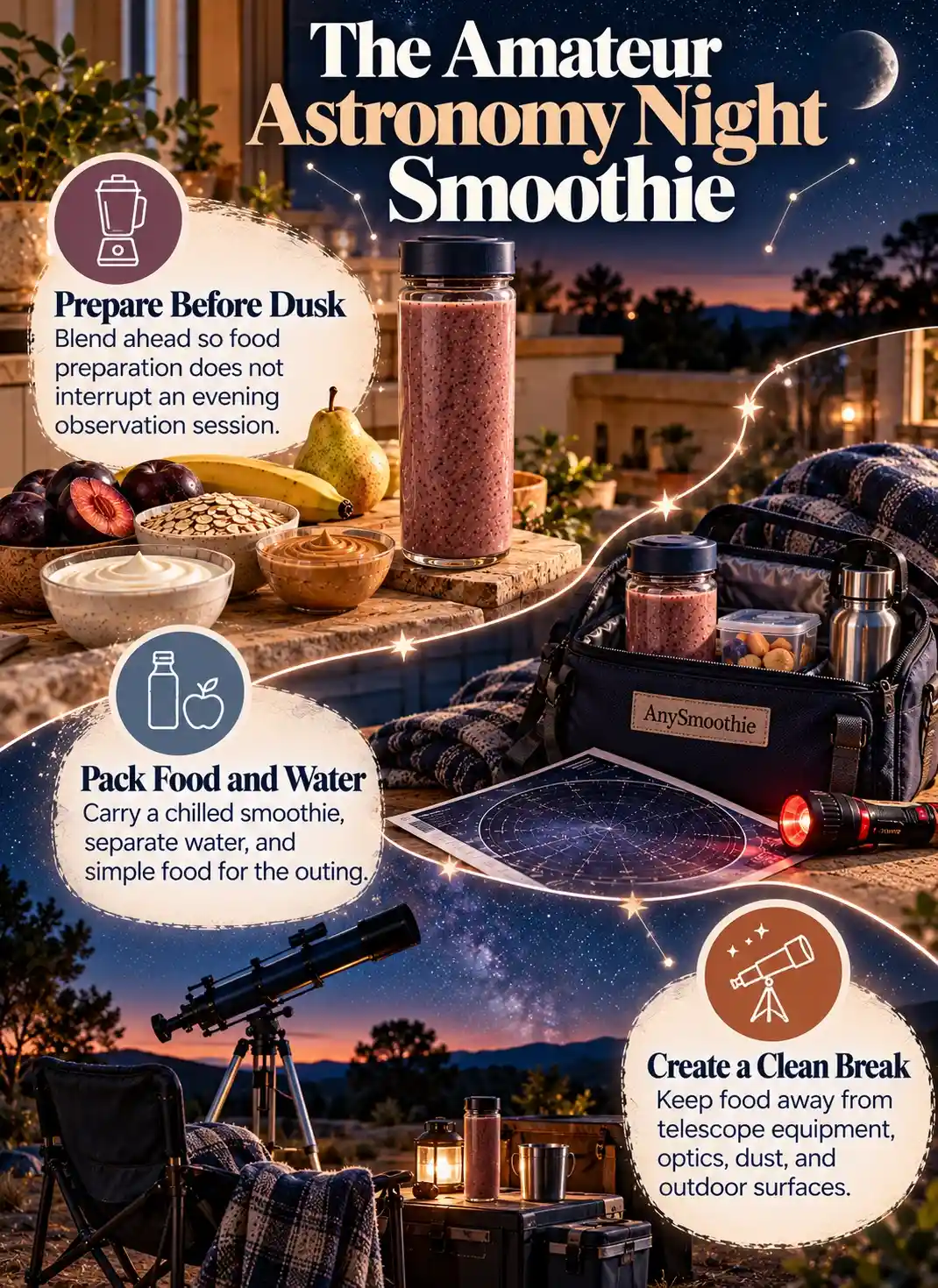
Pour your smoothie into its bottle before dark whenever possible. Trying to transfer a thick drink beside a telescope invites spills. Keep the bottle upright in your bag and away from eyepieces, charts, and electrical connections.
Choose a cap you can open with cold hands or gloves. A tethered lid also reduces the chance of dropping it into grass. If you’re sharing equipment, finish your sip and wipe your hands before touching focus knobs or lenses.
Bright phone screens and white flashlights interfere with dark adaptation. Set up any observing app before the session, dim its display, and keep the screen covered when you aren’t using it. At organized observing sites, follow the host’s lighting rules, including guidance for red lights.
Prepare your bottle before darkness falls so you don’t need extra light to find a lid, wipe a spill, or pour.
Follow local rules about food, parking, and access. Pack out fruit scraps, napkins, and every container. Even small spills deserve cleanup, especially around shared equipment or places where food attracts wildlife.
A smoothie contributes fluid and nutrients that support normal physiological systems. However, bring drinking water separately and dress for the expected temperature. If you overlooked fluids earlier in the day, see our smoothies when you forgot to hydrate. Food doesn’t replace warm clothing, weather checks, or safe footing around tripod legs.
Conclusion: Pack a Snack That Fits Your Night
A suitable smoothie makes an astronomy outing more convenient because you can prepare and bottle it at home. Choose one recipe, then adjust its sweetness, thickness, and ingredients to your taste and dietary needs.
Keep safe packing part of the plan: chill the drink, carry an ice pack, and use a secure bottle. After observing, leave the spot clean for the next visitor.

Medical Disclaimer: AnySmoothie content is for educational purposes only and is not a substitute for professional medical advice. Consult a healthcare provider for personalized guidance. See our full Disclaimer & Terms of Use. AI Transparency: AnySmoothie may use AI to support content development. All content undergoes human editorial review for accuracy, clarity, and editorial quality. See our full AI Transparency.