
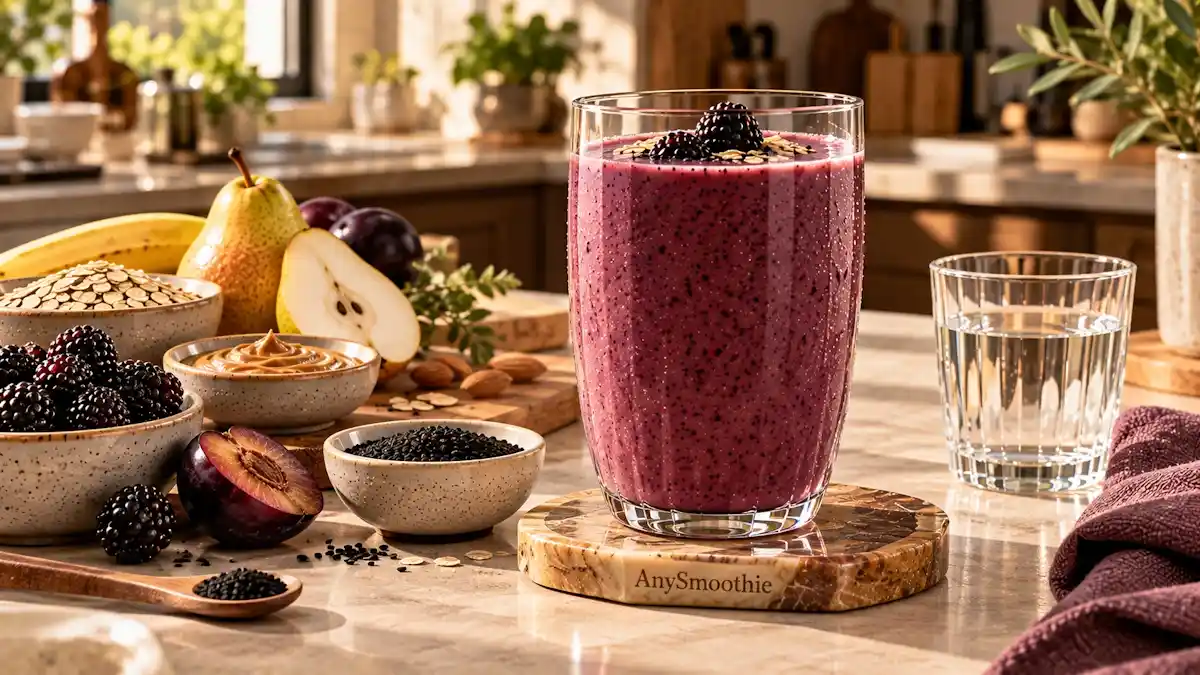
A familiar smoothie can taste new with a pinch of a tiny, peppery seed. If you want variety without rebuilding your morning routine, black seed smoothies are an easy place to start. Black seed is a food ingredient, not a treatment, so keep expectations grounded.
A little goes a long way, especially when you grind it. Start with its flavor, then choose a blend you’ll enjoy drinking.
What Black Seed Adds to an Everyday Smoothie
Black seed comes from Nigella sativa, a plant also called black cumin. The seeds taste peppery and slightly bitter, so they contrast well with sweet fruit. They’re sold whole, ground, and as oil.
Black seed contains thymoquinone, a naturally occurring compound described in a review of black cumin’s composition. Its presence doesn’t mean a smoothie delivers a particular health result. The amount you consume depends on the product and how much you add.
Choose whole seeds, ground seed, or oil for the flavor you want
Whole seeds may leave small, crunchy flecks, even after blending. Ground seed spreads its flavor more evenly and is easiest to measure for the recipes below. You can grind whole seeds shortly before use if you prefer that texture and aroma.
Start with 1/8 teaspoon of ground seed in one glass, then taste. If you’re considering oil, check that the bottle is labeled for food use and follow its directions. Edible oil blends differently from ground seed and can have a strong taste. Don’t use a dose from a supplement study as a recipe measurement.
Keep wellness claims grounded and use black seed thoughtfully
Studies often examine black seed extracts, oils, or supplements under conditions unlike an everyday smoothie. A review of clinical trials involving black seed doesn’t establish what a pinch of seed in breakfast will do.
Instead, consider the whole glass. Fruit supplies carbohydrates the body can use for energy. Yogurt provides protein, which supplies amino acids for normal tissue maintenance. Oats add fiber that supports normal digestion. Black seed is one flavorful part of that mix.
If you’re pregnant, take medication, have a health condition, or have a seed allergy, ask a qualified health professional before using black seed regularly.
For readers who want to build a more protein-focused smoothie routine, protein-rich smoothies for healthy aging habits can provide another practical comparison.
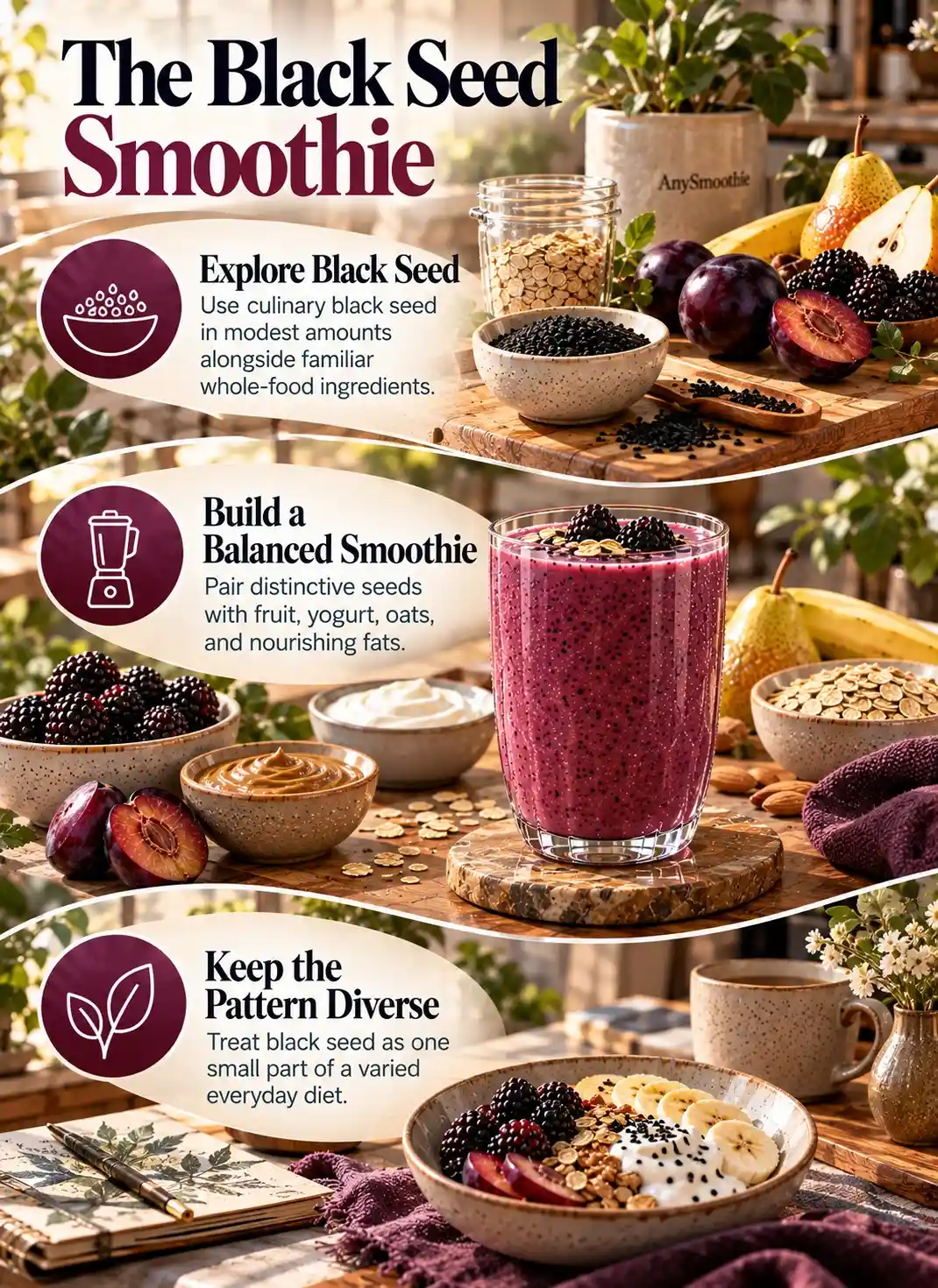
3 Black Seed Smoothies for Everyday Wellness
Each recipe makes one generous glass. Use the ground seed as a starting point, not a flavor target you need to reach.
| Smoothie | Liquid base | Main produce | Protein or fiber source | Flavor profile |
|---|---|---|---|---|
| Banana and date | Milk | Banana, dates | Plain yogurt | Creamy, gently peppery |
| Berry and spinach | Unsweetened soy milk | Berries, spinach | Rolled oats | Tart and fruit-forward |
| Mango and ginger | Water | Mango, ginger | Plain yogurt | Bright and lightly spicy |
The banana blend is the mildest place to begin. Berry and mango give the seed a more noticeable contrast.
Creamy banana and date smoothie
Ingredients
- 1 ripe banana
- 1 pitted date
- 3/4 cup milk or unsweetened alternative
- 1/2 cup plain yogurt
- 1/8 teaspoon ground black seed
Steps
Blend until smooth. If the date doesn’t break down fully, let it soften in the milk for a few minutes first.
Banana and date sweetness round off the seed’s peppery edge. Taste before adding another date.
Estimated Nutrition per Serving
- Calories: ~340
- Protein: ~17 g
- Carbohydrates: ~55 g
- Fat: ~7 g
- Fiber: ~5 g
- Sugars: ~38 g
Berry, spinach, and black seed blend
Ingredients
- 1 cup frozen mixed berries
- 1 handful spinach
- 3/4 cup unsweetened soy milk
- 2 tablespoons rolled oats
- 1/8 teaspoon ground black seed
Steps
Blend the soy milk and spinach first, then add the remaining ingredients. Give the oats a little extra blending time if you prefer a smoother drink.
The berries keep this blend fruit-forward, while the measured seed adds a light peppery note.
Estimated Nutrition per Serving
- Calories: ~210
- Protein: ~11 g
- Carbohydrates: ~31 g
- Fat: ~5 g
- Fiber: ~7 g
- Sugars: ~13 g
If you like the fiber profile of this recipe, high-fiber smoothie recipes would be a natural next article to explore.
Mango and ginger smoothie with black seed
Ingredients
- 1 cup mango chunks
- 1/2 cup plain yogurt
- 1/2 cup water
- 1/4 teaspoon grated fresh ginger
- 1/8 teaspoon ground black seed
Steps
Blend until creamy. Add a splash more water if it’s too thick, or a few ice cubes if you’d like it colder.
Ginger and black seed both have assertive flavors, so taste before adding more of either.
Estimated Nutrition per Serving
- Calories: ~180
- Protein: ~6 g
- Carbohydrates: ~35 g
- Fat: ~3 g
- Fiber: ~3 g
- Sugars: ~30 g
If I were making the mango version regularly, I’d keep the ginger and black seed amounts modest at first because both flavors can quickly dominate the fruit.
Make Black Seed Smoothies Easy to Enjoy Regularly
The simplest way to keep making these blends is to adjust them to what you have. Frozen fruit is convenient, and plain yogurt or an unsweetened alternative lets you control the sweetness. Wash fresh produce before it goes into the blender.
Balance the blend with protein, fiber, and less added sugar
Fruit tastes sweet on its own, especially ripe banana, dates, and mango. Taste your smoothie before adding honey or another sweetener. If it needs more sweetness, try a little more whole fruit first.
For a more filling blend, pair fruit with plain yogurt, unsweetened soy milk, oats, or nut butter according to your dietary needs. Soy milk or yogurt contributes protein; oats add fiber. You can swap dairy yogurt for a suitable alternative, but check its label if protein content matters to you.
Needs vary by person and meal. A smoothie can be one part of breakfast or a snack, but it doesn’t replace a varied eating pattern.
Store ingredients well and adjust the seed to taste
Keep whole or ground seeds and edible oil according to their package directions, away from heat and light. Close containers promptly so the ingredients stay fresh. For the best texture, blend a smoothie when you’re ready to drink it. If you make one ahead, refrigerate it promptly in a covered container and stir it before drinking.
Start with a small culinary amount of black seed. Increase it only if you like the flavor, since more can make a blend bitter. If you notice an unwanted reaction, stop using it. For questions about regular use alongside medications or during pregnancy, seek individual guidance; a scientific review of Nigella sativa safety is no substitute for that conversation.
Conclusion: A Flavorful Addition, Not a Cure
Black seed brings a bold, peppery note to smoothies you already know how to make. The fruit, protein or fiber source, and your overall eating pattern matter more than the pinch of seed.
Try the banana blend for a gentle start, or choose berries or mango for a brighter glass. Adjust it to your taste, and treat black seed as food rather than a wellness cure.

Medical Disclaimer: AnySmoothie content is for educational purposes only and is not a substitute for professional medical advice. Consult a healthcare provider for personalized guidance. See our full Disclaimer & Terms of Use. AI Transparency: AnySmoothie may use AI to support content development. All content undergoes human editorial review for accuracy, clarity, and editorial quality. See our full AI Transparency.