
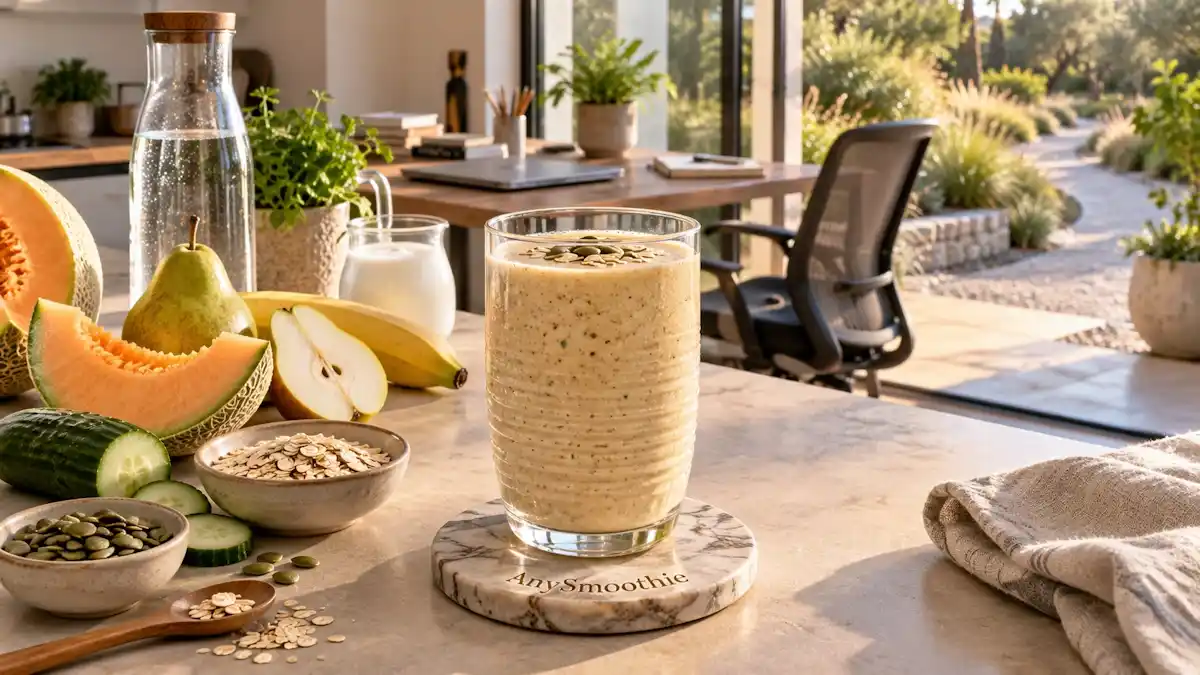
After a long workday, road trip, or study session, it’s easy to reach for whatever snack is closest. Smoothies after a long period of sitting can offer a practical mix of fluids, produce, fiber, and protein when a full meal feels inconvenient.
They don’t undo hours in a chair or replace regular meals, stretching, standing, and walking. Still, the right ingredients can support normal digestion, hydration, and energy metabolism without turning a quick snack into a dessert.
Why Smoothies After Long Sitting Can Be a Smart Choice
Sitting doesn’t create a special nutritional requirement. However, inactive stretches often come with missed meals, too little water, and snack foods high in sodium or added sugar.
A balanced smoothie puts several useful components in one glass. Fruit and vegetables add water and carbohydrates. Protein-rich foods supply amino acids used throughout the body. Seeds, oats, and nut butter add fiber or fats that can slow digestion and make the drink more satisfying.
For a related travel context where long periods of sitting and hydration can overlap, hydration smoothies for frequent travelers is a useful companion article.
Blending keeps much of the fiber
Blending breaks food into smaller pieces, but it doesn’t remove all the fiber found in whole fruit or vegetables. A smoothie made with berries, spinach, oats, or chia still contains fiber that supports normal digestive function.
Drinking calories can feel less filling than chewing a meal, though. Keep portions realistic, skip sweetened juices, and use whole ingredients. The World Health Organization’s healthy diet guidance emphasizes a varied eating pattern built around fruits, vegetables, whole grains, legumes, and appropriate protein sources.
A smoothie works best as food in liquid form, not as a sugary drink with a healthy-sounding label.
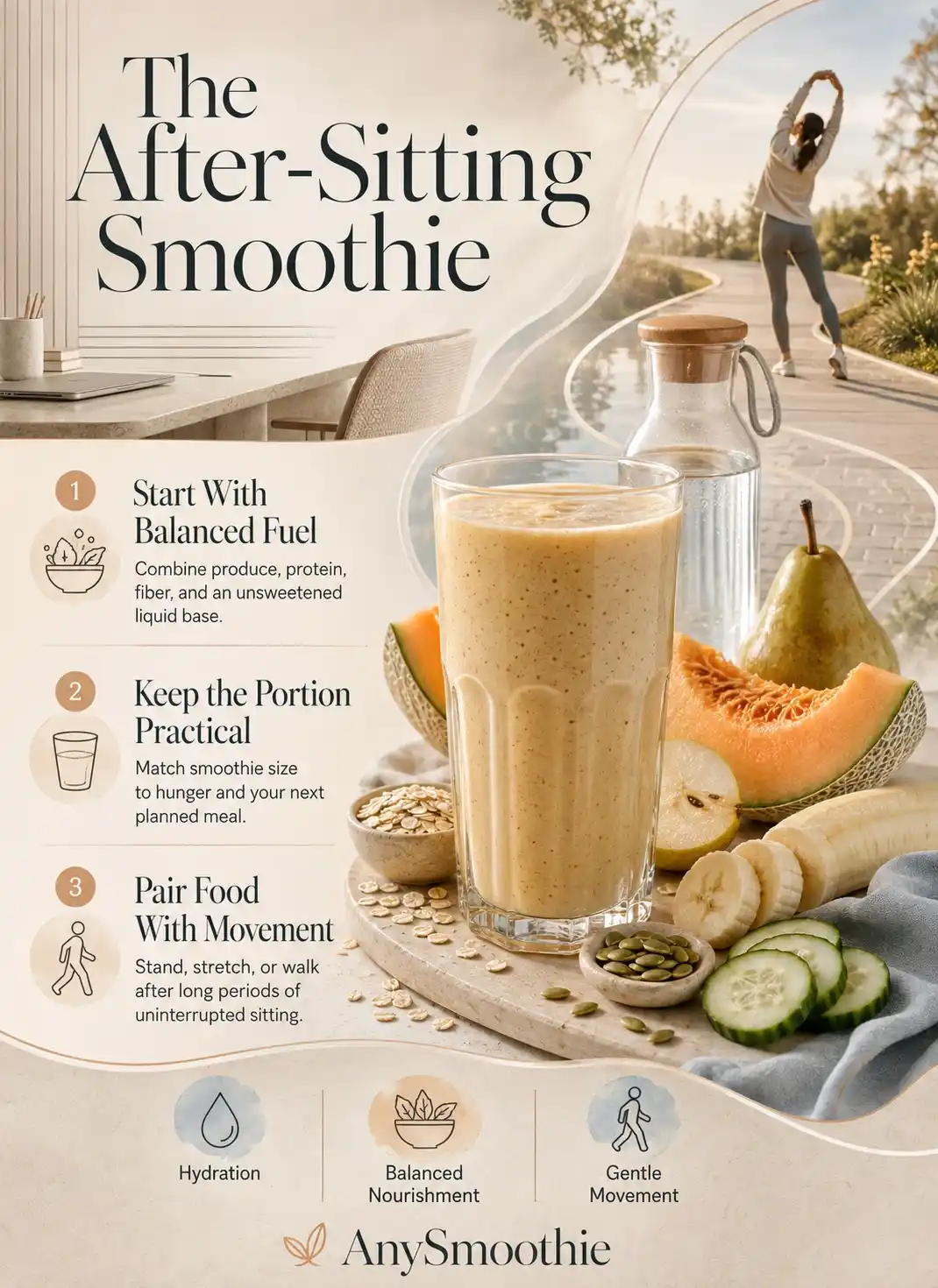
3 Smoothies After a Long Period of Sitting
Each recipe makes about 16 to 18 ounces. Use an unsweetened liquid base, then adjust thickness with ice or extra water.
| Smoothie | Main Ingredients | Protein Source | Best Feature | Approximate Added Sugar |
|---|---|---|---|---|
| Berry Oat Yogurt | Berries, oats, spinach, milk | Greek yogurt | Fiber and protein | 0 g |
| Green Peanut Butter | Banana, kale, peanut butter, soy milk | Soy milk and peanut butter | More staying power | 0 g |
| Tropical Ginger Kefir | Mango, pineapple, carrots, kefir | Plain kefir | Bright, refreshing flavor | 0 g |
Nutrition values vary by brand, serving size, and the amount of fruit used.
Berry Oat Yogurt Smoothie
Ingredients
- 1 cup frozen mixed berries
- 3/4 cup plain Greek yogurt
- 1/2 cup unsweetened milk
- 1/4 cup rolled oats
- 1 packed cup baby spinach
- Ice as needed
Steps
Blend until completely smooth.
The berries provide carbohydrates for normal energy metabolism, while oats and spinach add fiber. Greek yogurt raises the protein content without needing a powdered supplement. This is a solid breakfast option when you need something more substantial than fruit alone.
Estimated Nutrition per Serving
Estimated with plain nonfat Greek yogurt and unsweetened 2% dairy milk.
- Calories: ~365 kcal
- Protein: ~27 g
- Carbohydrates: ~53 g
- Fat: ~7 g
- Fiber: ~10 g
- Sugars: ~25 g
If I wanted this after several hours at a desk, I’d blend it slightly thinner than usual so it feels easy to drink before getting up for a short walk.
Green Peanut Butter Smoothie
Ingredients
- 1 small banana
- 1 cup unsweetened soy milk
- 1 tablespoon natural peanut butter
- 1 cup kale or spinach
- 1 tablespoon ground flaxseed
- Ice as needed
Steps
Blend until creamy and smooth.
Banana gives the drink a creamy texture and mild sweetness. Soy milk and peanut butter provide protein, while flaxseed adds fiber and unsaturated fat. Use half a banana if this smoothie is only a bridge to your next meal.
Estimated Nutrition per Serving
Estimated with unsweetened soy milk, natural peanut butter, ground flaxseed, and one small banana.
- Calories: ~315 kcal
- Protein: ~13 g
- Carbohydrates: ~39 g
- Fat: ~14 g
- Fiber: ~8 g
- Sugars: ~17 g
For a broader vascular-wellness perspective connected to long periods of inactivity, smoothies for varicose vein wellness habits also fits this context well.
Tropical Ginger Kefir Smoothie
Ingredients
- 3/4 cup frozen mango
- 1/2 cup frozen pineapple
- 3/4 cup plain kefir
- 1/2 cup shredded carrot
- 1/2 cup water
- 1 teaspoon fresh grated ginger
- Ice as needed
Steps
Blend until smooth and cold.
Mango and pineapple bring flavor without syrup or juice. Kefir contributes protein, and carrots add body with a mild taste. A varied intake of fruits, vegetables, whole grains, and protein foods fits a balanced eating pattern.
Estimated Nutrition per Serving
Estimated with plain low-fat kefir and no added sweetener.
- Calories: ~250 kcal
- Protein: ~10 g
- Carbohydrates: ~50 g
- Fat: ~3 g
- Fiber: ~6 g
- Sugars: ~36 g
How to Choose and Enjoy a Smoothie After Sitting for Hours
Match the size of your smoothie to your hunger. A 10 to 12-ounce portion works well when dinner is soon. If it replaces breakfast or lunch, choose a larger serving with produce, protein, and fiber.
Drink it slowly and move afterward
Sip rather than chug. A slower pace gives you time to notice fullness, particularly when the smoothie contains fruit, oats, or nut butter.
Then stand up and take a brief walk, stretch your calves, or move around the building. Food and movement play different roles, and both belong in a routine that reduces long, uninterrupted sitting.
For a more movement-focused companion article, support smoothie for hip integrity and movement also fits this context well.
Keep prep and storage practical
Wash fresh produce under running water before blending, and keep yogurt, milk, kefir, and leftovers refrigerated. Drink homemade smoothies soon after blending for the best flavor and texture.
Frozen produce can make preparation easier because it reduces chopping and replaces some of the ice. Houston Methodist’s smoothie guidance also notes that frozen ingredients can save preparation time and work well in make-ahead smoothie bags.
People with food allergies, swallowing concerns, blood sugar conditions, kidney conditions, or other dietary needs should tailor ingredients with a qualified health professional.
A Balanced Glass Fits the Moment
The best smoothie after prolonged sitting is balanced, not overly sweet. Start with produce, add a protein source and fiber, then use water, milk, or another unsweetened base.
Smoothies after a long period of sitting fit best within regular meals and regular movement. Stand up, take a short walk, then enjoy one of these recipes when it matches your hunger and schedule.
🛡️ Safety Notes & Dietary Interactions
- Movement Still Matters: A smoothie cannot counteract prolonged inactivity. After long sitting, prioritize standing, walking, and changing position regularly, particularly during workdays or travel, rather than treating food as a substitute for movement.
- Portion and Fullness: Oats, nut butter, flax, yogurt, and kefir can make these blends quite substantial. Choose a smaller portion when another meal is approaching, and avoid drinking quickly if large liquid meals leave you overly full.
- Blood Sugar and Kidney Needs: Fruit, dairy, soy milk, and potassium-rich produce may need adjustment for people managing blood glucose or kidney-related dietary restrictions. Ingredient amounts should match individual nutrition guidance rather than a generic smoothie template.
- Food Allergies and Tolerance: Dairy, soy, peanuts, and fermented kefir may require substitutions for allergies or digestive intolerance. Check labels carefully, especially for shared-equipment warnings, and use familiar alternatives rather than testing new ingredients when away from home.
FAQs
Do smoothies help reverse the effects of sitting for several hours?
No. Smoothies can provide fluids, produce, protein, fiber, and energy, but they do not reverse the physiological effects of prolonged inactivity. Movement and nutrition serve different purposes. A practical approach is to interrupt sitting with standing or walking, then use a balanced smoothie only when it fits your hunger and normal meal pattern.
Which smoothie is best if dinner is coming soon?
A smaller portion of the tropical ginger kefir smoothie can work well because it is lighter than the oat- or peanut-butter-based options. Keep the serving modest if you expect to eat again soon. The goal is to bridge hunger comfortably rather than consume a full meal-sized smoothie immediately before another balanced meal.
Why include fiber after a long period of sitting?
Fiber is not specifically required because you have been sitting, but ingredients such as berries, oats, greens, flax, and vegetables help make a smoothie more balanced and satisfying. They also support normal digestive function. Increase fiber gradually if your usual intake is low, especially if large amounts tend to cause bloating.
Is it better to drink the smoothie before or after taking a short walk?
Either can work. If you are comfortable moving first, a brief walk or stretch before eating can help break up the inactive period. If you are very hungry, have the smoothie first and move afterward. The important point is that food timing should not replace the separate goal of reducing uninterrupted sitting.
Which recipe is most filling after a long work or travel day?
The green peanut butter smoothie is likely to feel the most substantial because it combines banana, soy milk, peanut butter, flaxseed, and greens. That mixture supplies carbohydrate, protein, fat, and fiber. If you only need a snack, use a smaller banana or reduce the peanut butter so the serving better matches your appetite.

Medical Disclaimer: AnySmoothie content is for educational purposes only and is not a substitute for professional medical advice. Consult a healthcare provider for personalized guidance. See our full Disclaimer & Terms of Use. AI Transparency: AnySmoothie may use AI to support content development. All content undergoes human editorial review for accuracy, clarity, and editorial quality. See our full AI Transparency.