
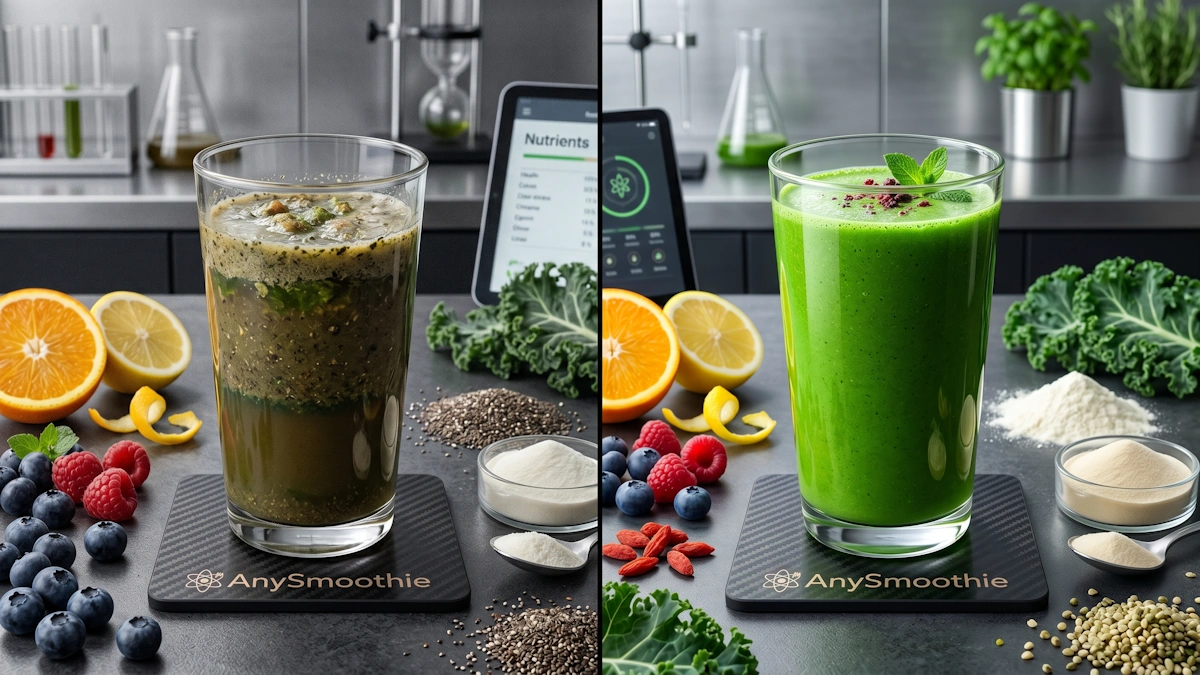
Smoothies look like the perfect healthy shortcut. Toss in some fruit, a scoop of something “good for you,” hit blend, and call it breakfast.
But if you do not think about what not to mix in a smoothie, you can end up with a sugar bomb, a curdled mess, or a drink that leaves your stomach tight and gassy instead of light and happy.
This quick guide walks through the most common mix mistakes and how to fix them with simple swaps you can use in your kitchen today.
Why It Matters What You Do Not Mix In a Smoothie
Not every healthy food plays nicely together in a blender. Certain combos can upset your stomach, spike your blood sugar, or turn your drink into something thick and chalky.
Even small changes, like swapping the liquid base or skipping one extra “boost,” can help you avoid common toxic smoothie combinations and keep your drink smooth, light, and satisfying.
What Not to Mix in a Smoothie: Common Ingredient Combos to Avoid
Some smoothie ingredients just don’t work well together. A few pairings can turn a drink grainy, bitter, or overly thick, even if each item tastes fine on its own. For example, mixing too many acidic fruits with dairy can cause curdling, while strong greens can overpower sweet fruit fast. Heavy add-ins like nut butters or oats can also make a smoothie feel pasty instead of fresh. If you want a smoother blend, keep flavors balanced and watch the texture of each ingredient before you toss it in.
High Sugar Fruit With Sweetened Juice or Flavored Yogurt
Very sweet fruits, like mango, banana, pineapple, and grapes, already pack a lot of natural sugar. When you blend those with fruit juice or flavored yogurt, the sugar stacks up fast.
This can cause quick blood sugar spikes, then an energy crash that hits midmorning. Try using water, unsweetened plant milk, or plain yogurt instead. Balance sweet fruit with lower sugar choices like berries, cucumber, or a handful of spinach.
Dairy With Citrus Fruit That Can Curdle and Upset Your Stomach
Regular milk or some dairy yogurts can curdle when mixed with a lot of lemon, lime, or even certain amounts of pineapple and orange. The result is a grainy texture that tastes off and may sit heavy in your stomach.
Use dairy with mild fruits, such as banana, berries, or peaches. For sharp citrus smoothies, switch to water, coconut water, or unsweetened almond milk instead of regular milk.
Too Much Fiber at Once, Like Raw Kale, Oats, and Seeds Together
Raw kale, oats, chia seeds, and flax seeds are all healthy. The problem comes when you pile them all into one small glass, especially if your usual diet is low in fiber.
That fiber load can cause gas, bloating, or cramps. Pick one or two fiber rich add ins per smoothie, and start with small amounts. Drink water during the day so your body can handle the extra fiber more easily.
Protein Powder With Lots of Fats That Make a Heavy Smoothie
A scoop of protein powder, plus big spoonfuls of peanut butter, chunks of avocado, and coconut can turn a smoothie into a brick in your gut. It may keep you full, but also slow and sluggish.
Use a simple rule: go for either a protein focus or a healthy fat focus, not both at full strength. For a protein drink, pair protein powder with fruit and water or light plant milk. For a fat focused drink, use a small scoop of nut butter or seeds and skip the extra oil or coconut cream. You can find more common smoothie ingredients you should not use in this helpful guide.
Smart Swaps: How to Build a Better Balanced Smoothie
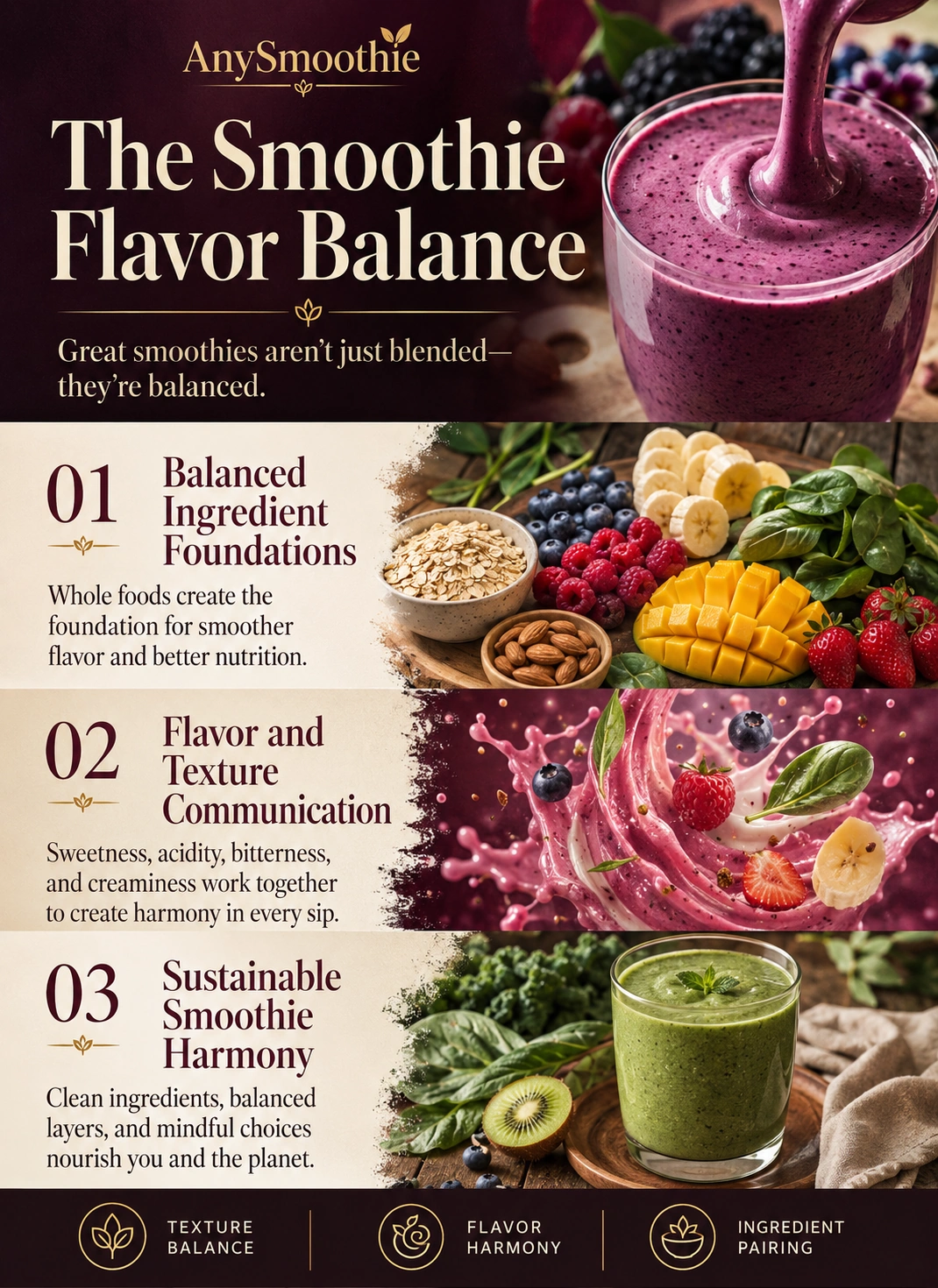
Keep things simple. Choose one main fruit, like banana or berries, and add a second fruit only if you need more flavor. Use plain liquid bases, such as water, unsweetened plant milk, or plain yogurt.
Limit extras to two or three items, for example one fiber add in and one protein source. Blend, taste, and adjust with a splash of liquid or a few ice cubes instead of tossing in more sugar.
Conclusion
When you know what not to mix in a smoothie, it gets easier to avoid sugar overload, heavy textures, and stomach issues. Small changes, like choosing plain yogurt or dropping one extra “superfood,” can make a big difference in how you feel after you drink it.
Next time you head for the blender, try one small swap from this list. Take a look at your favorite smoothie recipe and see if any of these problem combos show up, then tweak it so your glass works better for your taste buds and your body.
⚠️ Essential Safety Notes: What NEVER to Mix
Medications and Grapefruit/Seville Orange: If you are taking specific medications (such as statins, antihypertensives, or anti-anxiety meds), never add grapefruit to your smoothie. It contains furanocoumarins that inhibit the CYP3A4 enzyme in your gut. This prevents the drug from being broken down, leading to potentially toxic levels of the medication in your bloodstream.
Raw Spinach and Kidney Stones: If you have a history of calcium-oxalate kidney stones, avoid blending large amounts of raw spinach daily. The high oxalate content can crystallize in the kidneys. Instead, swap for kale or steamed Swiss chard to maintain your mineral balance safely.
Protein Powders and Renal Insufficiency: If you suffer from chronic kidney disease (CKD), do not add extra protein scoops without medical supervision. The nitrogen byproduct of protein metabolism can place excessive stress on the nephrons (the filtering units of the kidney), accelerating tissue damage.
Un-hydrated Chia Seeds: Never ingest “dry” chia seeds mixed into a very thick smoothie if you have any history of swallowing difficulties (dysphagia). Chia seeds can absorb up to 12 times their weight in water; if they expand in the esophagus, they can create a physical blockage. Always soak them for at least 10 minutes before blending.
High-Glycemic Sugars and Diabetes: Do not mix high-glycemic fruits (dates, grapes, overripe bananas) with fruit juices if you are diabetic or pre-diabetic. This combination creates a massive “glucose spike” that overrides your metabolic flexibility and triggers an insulin surge that promotes fat storage rather than energy use.
FAQ
Why shouldn’t I mix bananas with berries in my smoothie
Recent research in nutritional biochemistry has highlighted the role of Polyphenol Oxidase (PPO), an enzyme abundant in bananas. When berries—rich in beneficial flavanols—are blended with bananas, the PPO rapidly degrades these antioxidants. This doesn’t just mute the vibrant color and taste of the berries; it can significantly reduce the bioavailability of the polyphenols, preventing them from supporting your body’s natural antioxidant pathways.
What causes the “chalky” taste in many protein smoothies
Chalkiness is often the result of tannin-protein complexation. If you mix high-tannin ingredients (like underripe fruit or certain plant extracts) with protein powders, the tannins bind to the proteins and precipitate them. This creates a gritty texture and an astringent taste. To optimize bio-synergy and taste, pair your proteins with “smooth” lipids like avocado or nut butters, which protect the proteins and enhance the liposomal transport of nutrients.
Why is mixing spinach with dairy considered a bio-synergy “mismatch”
Spinach is high in oxalates, which are organic acids that naturally bind to minerals. When mixed with calcium-rich dairy or fortified milks, the oxalates bind to the calcium to form calcium oxalate crystals. This process sequestrates the calcium, making it less bioavailable for your physiological systems, and can sometimes impart a slightly metallic or bitter “off-note” to the flavor profile of the smoothie.
How does acidity affect the texture of my smoothie
Adding highly acidic ingredients (like lemon juice or vinegar) directly to a base containing protein or dairy can cause “isoelectric precipitation”—commonly known as curdling. This happens because the acid changes the electrical charge of the protein molecules, causing them to clump together. For a better taste and silky texture, use pH-neutral bases or add acidic components last, after the proteins have been stabilized by fats or fibers.
What is the “Sludge Effect” and how can I avoid it
The “Sludge Effect” occurs when mucilaginous fibers, such as those in chia or flax seeds, are allowed to sit in a liquid base for too long before consumption. These fibers absorb up to 12 times their weight in water, creating a thick, gelatinous texture that can be unpalatable. To maintain a crisp, fresh taste and optimal viscosity, blend these seeds immediately before drinking or use sprouted versions which have already begun the enzymatic breakdown of these complex fibers.

Medical Disclaimer: AnySmoothie content is for educational purposes only and is not a substitute for professional medical advice. Consult a healthcare provider for personalized guidance. See our full Disclaimer & Terms of Use. AI Transparency: AnySmoothie may use AI to support content development. All content undergoes human editorial review for accuracy, clarity, and editorial quality. See our full AI Transparency.