

Brown adipose tissue gets attention for a simple reason, it burns fuel to make heat. That makes people wonder whether food can support the pathways that keep it active, especially when breakfast needs to do more than taste good.
Smoothies can help when they combine protein, polyphenols, spices, healthy fats, and fiber in one glass. The goal isn’t a miracle drink. It’s a realistic blend that supports stable blood sugar, satiety, and the body’s own thermogenic signaling.
What brown adipose tissue does, and why smoothie ingredients may matter
Brown adipose tissue, or brown fat, is the body’s heat-making fat. It uses energy to generate warmth, which is why it behaves differently from white fat. Cleveland Clinic’s brown fat overview explains the basics in plain language.
A review on brown fat and nutrition also points to food patterns that may interact with thermogenic adipocytes and glucose handling. That doesn’t mean one smoothie will flip a switch. It means meal composition can support the body in useful ways.
Brown fat uses energy to make heat. White fat stores energy for later.
Brown fat versus white fat, in simple terms
White fat is the storage form most people think of first. It holds energy for later use, and it grows easily when intake stays high.
Brown fat is more metabolically active. It contains more mitochondria, which helps it produce heat. That difference is why readers care about food quality, blood sugar balance, and steady energy, not just calories alone.
The smoothie ingredients that fit the science best
The most useful smoothie ingredients are the ones that work together. Protein helps slow digestion. Fiber helps tame the glucose rise. Polyphenol-rich foods, such as berries and cocoa, add more plant compounds without much sugar.
If you want a simple starting point, the simple ingredient smoothie guide on AnySmoothie shows how to keep a blend focused. From there, add unsweetened dairy or plant milk, a fruit base, and one or two support ingredients.
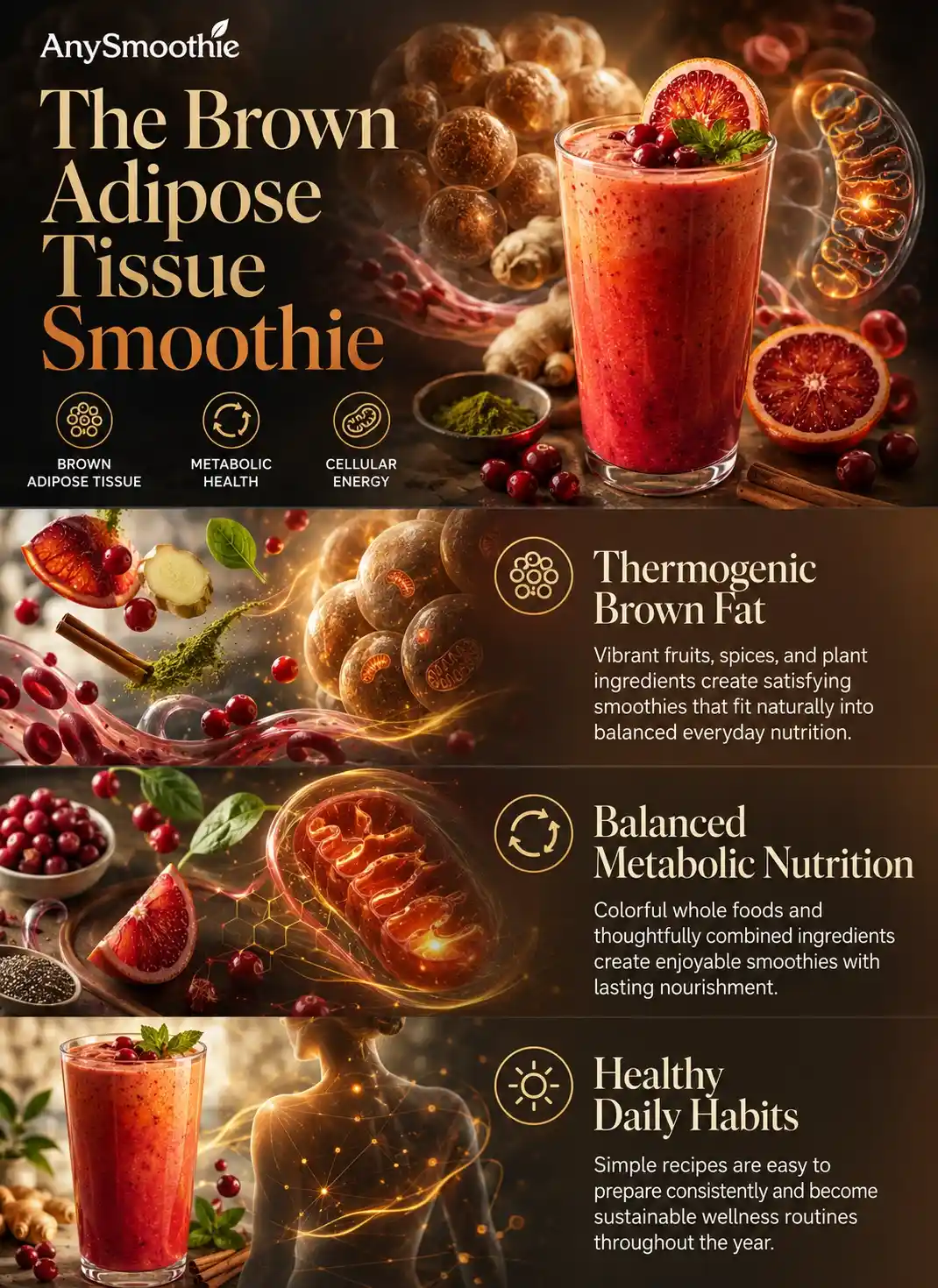
How to build smoothies to support brown adipose tissue
A good formula starts with a protein base, then adds fiber, color, and a small amount of flavor support. That keeps the drink satisfying and lowers the chance of a sugar spike. It also makes the smoothie feel like breakfast, not a sweet snack that fades fast.
A creamy Greek yogurt smoothie recipe is a strong model because it gives body, protein, and a thicker texture. If you prefer dairy-free, soy protein, pea protein, or whey isolate can do similar work.
Aim for around 20 to 30 grams of protein if the smoothie is a meal. Then add berries, chia, flax, avocado, spinach, cacao, or unsweetened nut butter for fiber and polyphenols. Ginger, cinnamon, matcha, green tea, turmeric, and cayenne bring active plant compounds and stronger flavor without much sugar.
A review on brown fat and nutrition points to how diet may interact with thermogenic adipocytes and glucose handling. That fits a simple smoothie strategy, because the drink can support energy balance without turning into a sugar bomb.
Start with a protein base that keeps blood sugar steadier
Greek yogurt, kefir, collagen, soy protein, pea protein, and whey each fit a different texture and taste. Protein slows the pace of digestion, which helps the smoothie feel more balanced.
That balance matters most in the morning, when a sugary blend can leave you hungry again too soon. A thicker protein base also gives you a smoother, more filling finish.
Add fiber and color for polyphenols and slower digestion
Berries, chia, flax, avocado, spinach, cacao, and unsweetened nut butter all help here. Some add fiber. Others add fats or plant compounds that support a steadier metabolic response.
Berries and cacao do a lot with a small volume. Chia and flax add texture while slowing the drink down. Avocado makes the flavor rounder, so you don’t need to bury the smoothie in sweeteners.
Use flavor boosters that may support thermogenic pathways
Ginger, cinnamon, matcha, green tea, turmeric, and cayenne are the ingredients that give a smoothie more edge. They bring heat, aroma, and compounds that fit a thermogenic-support theme.
Use them with restraint. A half teaspoon of cinnamon, a small piece of ginger, or a teaspoon of matcha can change the profile without overpowering the glass.
3 Smoothies to support brown adipose tissue
These three blends use the same core logic, but each one fits a different moment in the day.
| Smoothie name | Key ingredients | Main support focus | Best time to use | Easy swap ideas |
|---|---|---|---|---|
| Morning berry protein | Greek yogurt, mixed berries, chia, cinnamon | Protein, polyphenols, steadier energy | Breakfast | Swap kefir for yogurt, flax for chia |
| Matcha cacao | Matcha or cooled green tea, cacao, milk, protein | Catechins, cocoa compounds, balanced alertness | Early morning | Use soy protein, almond milk, or less cacao |
| Ginger cinnamon green | Spinach, avocado, unsweetened milk, ginger, cinnamon, protein | Lower sugar, fiber, fullness | Later breakfast or afternoon | Swap spinach for kale, avocado for nut butter |
The main takeaway is simple, each smoothie uses protein, fiber, and a flavor layer that supports the same goal from a different angle.
Morning Berry Protein Smoothie for Stable Energy
Ingredients
- 1/2 cup plain Greek yogurt
- 1 cup mixed berries, fresh or frozen
- 1 tablespoon chia seeds
- 1/2 teaspoon ground cinnamon
- 1/2 cup unsweetened almond milk or milk, as needed for blending
Blend for 30–60 seconds until smooth and creamy.
This is the easiest place to start if you want a breakfast smoothie. Greek yogurt or protein powder gives the base, mixed berries add color and polyphenols, and chia or flax adds a slower digesting finish.
A pinch of cinnamon ties it together. The result feels bright and light, but it still holds up for a few hours.
Estimated Nutrition per Serving
Estimated with plain nonfat Greek yogurt, mixed berries, chia seeds, cinnamon, and unsweetened almond milk.
- Calories: ~255 kcal
- Protein: ~17 g
- Carbohydrates: ~35 g
- Fat: ~7 g
- Fiber: ~12 g
- Sugars: ~19 g
Fresh berries keep this relatively light and fluid, while frozen berries plus chia can make it much thicker within a few minutes. For a quick breakfast, blend with the full amount of milk first and let the chia provide the final thickness.
Matcha Cacao Smoothie for Polyphenol Support
Ingredients
- 1 cup unsweetened milk or unsweetened almond milk
- 1 teaspoon matcha powder or 1/2 cup cooled green tea
- 1 tablespoon unsweetened cocoa powder
- 1 scoop protein powder
- 1/2–1 cup ice, optional
Blend for 30–60 seconds until smooth and creamy.
Matcha or cooled green tea gives this blend a clean caffeine lift, while cacao adds depth and a dense polyphenol profile. Protein keeps the drink grounded, so it doesn’t feel like a dessert latte in disguise.
This version works well when you want a sharper morning edge. It also pairs well with unsweetened milk, which keeps the flavor smooth.
Estimated Nutrition per Serving
Estimated with unsweetened soy milk, matcha, unsweetened cocoa, one typical serving protein powder, and without optional ice.
- Calories: ~240 kcal
- Protein: ~33 g
- Carbohydrates: ~14 g
- Fat: ~7 g
- Fiber: ~3 g
- Sugars: ~3 g
Ginger Cinnamon Smoothie for a Lower-Sugar Option
Ingredients
- 1 cup unsweetened milk or unsweetened almond milk
- 1 cup fresh spinach
- 1/2 avocado
- 1 teaspoon freshly grated ginger
- 1/2 teaspoon ground cinnamon
- 1 scoop protein powder
- 1/2–1 cup ice, optional
Blend for 30–60 seconds until smooth and creamy.
Spinach, avocado, unsweetened milk, ginger, cinnamon, and protein make a low-sugar blend that still feels rich. The avocado gives body, so you don’t need bananas or juice to make it pleasant.
This smoothie works well when you want something steadier and less sweet. It is the best fit for afternoons or days when you want a calmer glucose response.
Estimated Nutrition per Serving
Estimated with unsweetened soy milk, spinach, half a medium avocado, fresh ginger, cinnamon, one typical serving protein powder, and without optional ice.
- Calories: ~390 kcal
- Protein: ~37 g
- Carbohydrates: ~20 g
- Fat: ~21 g
- Fiber: ~9 g
- Sugars: ~3 g
A full teaspoon of fresh ginger is surprisingly assertive in a smoothie without sweet fruit to soften it. Blend with half first and taste; you can add the remainder if you want a stronger spicy finish without changing the low-sugar structure.
What to avoid if you want your smoothie to work for you
The biggest mistake is turning a smoothie into fruit juice with extras. Fruit juice, sweetened yogurt, flavored syrups, and too many sweet add-ins can push sugar up fast. That works against the steady energy pattern most people want.
Portion size matters too. Nut butters, oats, bananas, and seeds are healthy in the right amount, but they can make a smoothie heavy fast. Keep the blend focused, and the body has an easier job with it.
Ingredients that spike sugar too fast
Skip the combo of juice, sweetened yogurt, and syrupy flavorings. Those ingredients create a fast, sugary drink that doesn’t help blood sugar stability.
Portion mistakes that can backfire
A tablespoon of nut butter is different from four. The same is true for oats and seeds. Once the cup gets overloaded, even a healthy smoothie can become too calorie-dense for the moment.
A better approach is to pick one protein, one fiber source, one fat source, and one flavor direction. That keeps the smoothie useful.
Conclusion
The best smoothies for brown adipose tissue are balanced, not extreme. They work because they combine protein, fiber, healthy fats, and targeted plant compounds in a way that supports steady energy and a smoother glucose response.
Start with one of the three blends and use it for a week. Watch how you feel after drinking it, then adjust the sweetness, thickness, or spice until it fits your routine and appetite. Brown fat likes consistency more than hype, and your blender can give it that.
🛡️ Safety Notes & Dietary Interactions
- Realistic Expectations: Brown adipose tissue responds to many factors, including age, temperature, physical activity, and overall metabolic health. No single smoothie or ingredient can activate brown fat on its own, so think of these recipes as part of a balanced lifestyle.
- Caffeine Awareness: Matcha, green tea, and similar ingredients naturally contain caffeine. If you’re sensitive to stimulants, exercise caution with serving sizes and avoid caffeine-containing smoothies later in the day if they interfere with your sleep.
- Medical Considerations: If you have diabetes, thyroid disease, cardiovascular conditions, or take medications that affect metabolism or blood sugar, speak with a qualified healthcare professional before making significant dietary or supplement changes.
- Whole-Diet Focus: A smoothie works best when it supports an overall eating pattern rich in vegetables, fruit, quality protein, healthy fats, regular movement, adequate sleep, and consistent hydration rather than replacing those healthy habits.
FAQ
Can smoothies really activate brown adipose tissue?
Current research suggests that brown adipose tissue is influenced by factors such as cold exposure, physical activity, genetics, and overall metabolic health. While certain foods and plant compounds are being studied for their potential role in supporting thermogenic pathways, no smoothie has been shown to directly activate brown fat on its own. A balanced dietary pattern remains the most practical approach.
Which ingredients are most commonly included in brown fat-supportive smoothies?
Recipes often include protein sources such as Greek yogurt or protein powder, fiber-rich ingredients like chia or flax, berries for their polyphenols, healthy fats from avocado or nuts, and spices such as ginger or cinnamon. Together, these ingredients help create a filling smoothie that supports steadier energy and overall metabolic balance rather than relying on a single “superfood.”
Is a high-protein smoothie better than a fruit smoothie for metabolic health?
In many cases, yes. Pairing fruit with protein, healthy fats, and fiber generally creates a more balanced meal than fruit alone. This combination slows digestion, improves satiety, and helps produce a steadier energy response compared with smoothies built mainly from fruit juice or large amounts of sweet fruit without adequate protein.
When is the best time to drink a smoothie designed to support metabolic health?
Breakfast is often the easiest time because it can provide a balanced start to the day after an overnight fast. These smoothies may also work well after exercise or as a satisfying meal replacement during busy schedules. The most important factor is consistency, choosing a time that naturally fits your daily routine and encourages long-term healthy habits.
Should I use thermogenic ingredients like matcha, cayenne, or ginger every day?
These ingredients can add flavor and provide interesting plant compounds, but they are optional rather than essential. If you enjoy them and tolerate them well, moderate daily use may fit into a balanced diet. Rotating herbs, spices, fruits, and vegetables throughout the week is generally a better strategy than depending on one specific ingredient every day.

Medical Disclaimer: AnySmoothie content is for educational purposes only and is not a substitute for professional medical advice. Consult a healthcare provider for personalized guidance. See our full Disclaimer & Terms of Use. AI Transparency: AnySmoothie may use AI to support content development. All content undergoes human editorial review for accuracy, clarity, and editorial quality. See our full AI Transparency.