
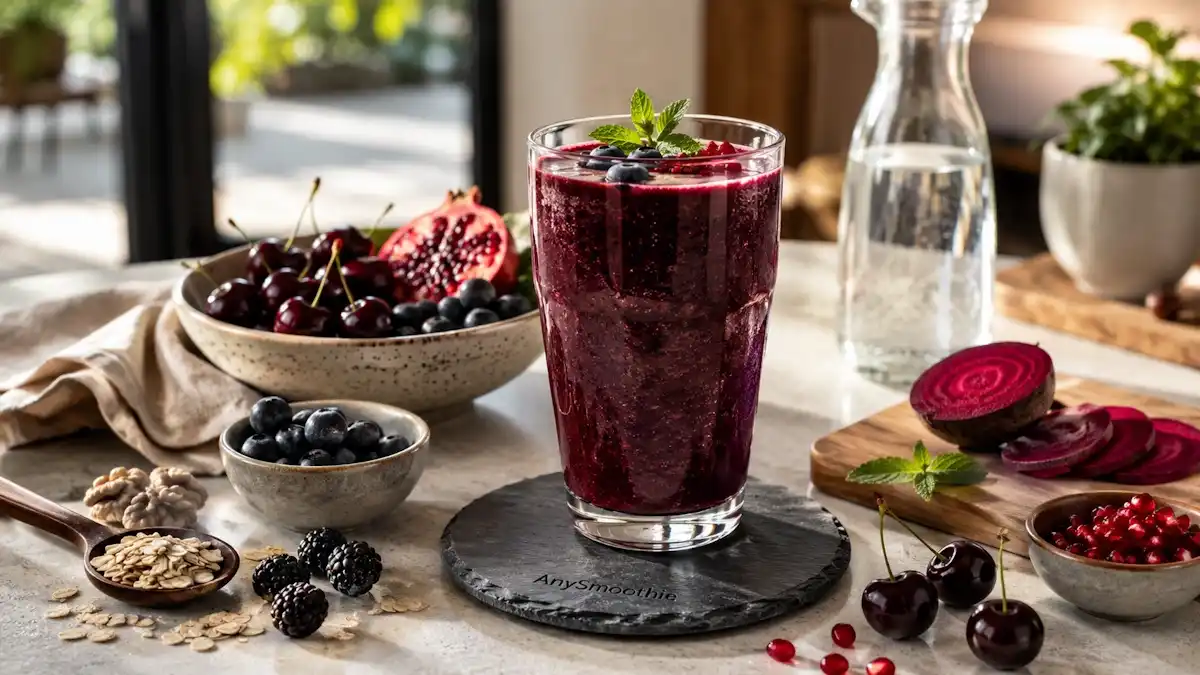
Low energy can feel like a fuel problem, but breakfast is usually where the fix starts. Succinic acid smoothies for cellular energy are a simple way to support normal energy pathways without turning your routine into a lab project.
Succinic acid, also called succinate, is tied to the cell’s energy cycle. In a smoothie, it can be paired with fruit, fiber, protein, and fats that help the blend feel steady instead of sharp and short-lived.
The goal here is support, not a medical promise. You’ll see how succinic acid fits into energy production, what to pair it with, and three smoothie ideas for real life.
What succinic acid does in the body and why it matters for energy
Succinic acid sits inside the citric acid cycle, also known as the Krebs cycle. That cycle is part of cellular respiration, the process cells use to turn food into usable energy. A clear overview of the citric acid cycle shows where this step fits in the chain.
The short version is simple. Succinate helps keep a normal energy pathway moving, and that makes it interesting for people who want food-first support. A review on succinate metabolism also describes its role in ATP generation, which is the body’s main energy currency.
That is why succinic acid shows up in energy-focused routines. The interest is less about a quick jolt and more about giving cells the raw material they use every day.
The basic link between succinic acid and the Krebs cycle
Inside each cell, the Krebs cycle runs like a loop. Food breaks down into smaller parts, and the cycle helps move those parts toward energy production. Succinic acid is one of the compounds in that loop, so it belongs to the system that keeps energy metabolism moving.
That matters because cellular energy is not built from one ingredient alone. It depends on the whole process working in order. When people talk about succinic acid and energy, they are talking about normal metabolism, not a shortcut.
Why smoothies are a smart format for functional ingredients
Smoothies make it easy to combine one functional ingredient with food that actually feels good to drink. Fruit gives quick carbs, fiber slows the pace, and protein or fat helps the blend last longer.
If you want a broader template, the best smoothies for natural energy guide shows the same balance in action. Smoothies also fit a busy morning, a pre-workout window, or a mid-afternoon slump.
That mix of taste and convenience is why this format works so well.
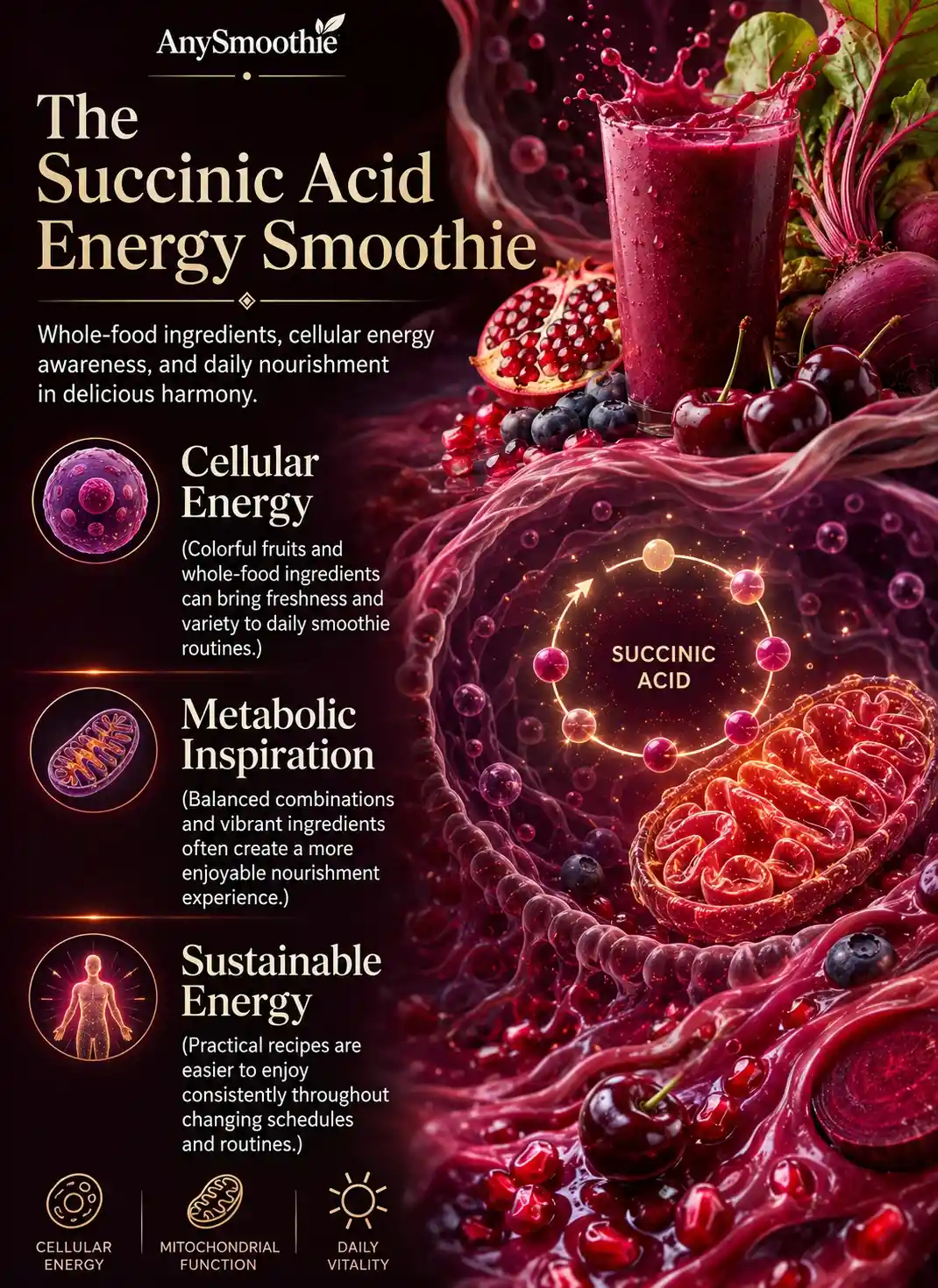
How to build succinic acid smoothies for cellular energy
Start with a clean liquid base, then add fruit, a source of protein or fat, and your succinic acid ingredient if you use one. Keep the blend simple. Too many extras can bury the flavor and make the smoothie feel heavy.
If you want a ready-made structure, the energy-boosting smoothie recipe shows a practical ratio of liquid, fruit, greens, protein, and fat. That same idea works here.
Choose ingredients that steady the ride, not ones that spike it. Berries, citrus, spinach, chia, yogurt, nut butter, and avocado all help slow digestion or improve texture. Juice-heavy recipes do the opposite. They taste sweet fast, then fade fast.
A quick comparison helps when you want the right blend for the day.
| Smoothie style | Main purpose | Key ingredients | Flavor profile | Best time to use |
|---|---|---|---|---|
| Citrus greens | Light morning support | orange, spinach, cucumber, yogurt, chia | fresh and bright | morning |
| Berry protein | Steadier fuel | berries, protein, flax, almond milk | creamy and tart | workout window |
| Creamy cacao | Afternoon reset | cacao, banana, avocado, milk, nut butter | rich and smooth | mid-afternoon |
The right choice depends on how full you want to feel and how long you need the smoothie to carry you.
3 Succinic acid smoothies for cellular energy
Safety, quality, and who should be cautious with succinic acid
Quality matters with any functional ingredient. Check the source, follow the serving size, and pay attention to how your body responds. A smoothie that feels good on day one should still feel good on day seven.
Anyone who is pregnant, nursing, taking medication, or managing a health condition should talk with a qualified professional before trying a new supplement or functional ingredient. That includes succinic acid.
The safest approach is also the simplest. Use one formula, keep the rest of the ingredient list clean, and notice how you feel over time.
Conclusion
Succinic acid smoothies work best when they support the body’s normal energy pathways, not when they try to force a quick fix. The strongest blends are balanced, simple, and built around fruit, fiber, protein, and healthy fat.
Start with one recipe that fits your day, then adjust the flavor and texture until it feels easy to repeat. That is how cellular energy support becomes a habit instead of a project.

Medical Disclaimer: AnySmoothie content is for educational purposes only and is not a substitute for professional medical advice. Consult a healthcare provider for personalized guidance. See our full Disclaimer & Terms of Use. AI Transparency: AnySmoothie may use AI to support content development. All content undergoes human editorial review for accuracy, clarity, and editorial quality. See our full AI Transparency.