
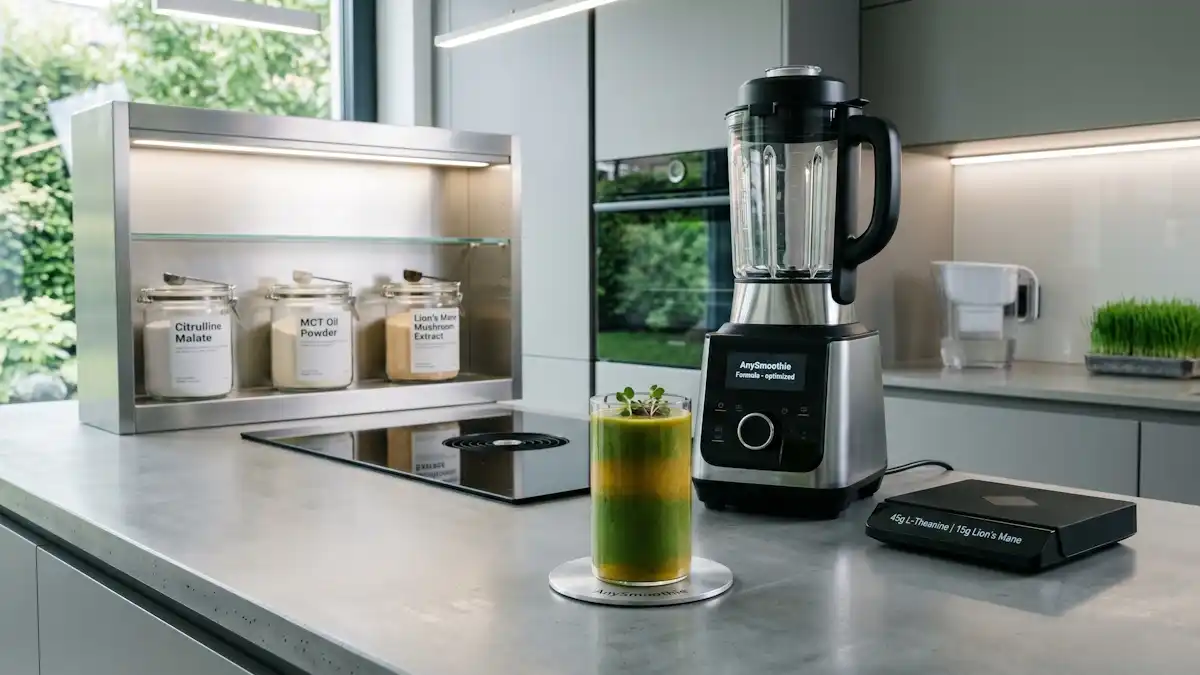
You wake up drained, coffee barely cuts the fog, and your day drags. That was me until I started blending easy smoothie biohacking protocols at home. One simple change fixed my mornings: targeted nutrients that boost energy, balance hormones, and fire up mitochondria.
Nutrient partitioning sends fuel where your body needs it most. Liposomal transport uses fats to shuttle vitamins past gut barriers. Metabolic efficiency turns food into steady power, not crashes. No labs or gadgets required.
This guide shares the biohacking hierarchy, core-three system, 5-minute protocol, and tracking tricks. Busy people get real results fast. You can build habits that stick.
The Biohacking Hierarchy: Prioritizing Nutrient Density Over Flavor
Most smoothies tank because they chase taste over function. Fruit blasts spike sugar and crash energy. Protein shakes ignore micronutrients. The fix starts with a hierarchy: bioavailability first, synergy second, density over flavor.
Bioavailability means your body absorbs what you blend. Synergy pairs nutrients so they amplify each other. Density packs max nutrition per sip. Skip this, and you waste time.
Blender order seals it. Liquids go first for smooth flow. Powders next to avoid clumps. Greens follow for even chop. Fats last protect delicate vitamins from oxidation.
Here’s a quick comparison of common approaches:
| Criteria | Average Fruit Smoothie | Fitness Protein Shake | AnySmoothie Biohacker Protocol |
|---|---|---|---|
| Glycemic Control | Poor (high sugar spike) | Fair (isolated protein) | Excellent (fiber-balanced) |
| Micronutrient Synergy | Low (solo fruits) | Weak (basic add-ins) | High (greens + fats) |
| Mitochondrial Support | Minimal | Decent (some aminos) | Optimal (coQ10 pairs) |
| Satiety Duration | Short (1 hour) | Medium (2 hours) | Long (4+ hours) |
The biohacker protocol stands out. It optimizes cellular communication through balanced inputs. You feel full, focused, and fueled.
Bioavailability First: Why Your Blender Order Actually Matters
Wrong order shreds nutrients. Enzymes like polyphenol oxidase activate on cut greens and kill flavanols. Fats added last create emulsions. This mimics liposomes for better uptake.
Start with 1 cup water or almond milk. Add spinach or kale handfuls. Drop in powders like collagen. Finish with half avocado. Blend 60 seconds high.
Shearing breaks cell walls without heat. Fats coat particles for gut transport. Result: higher vitamin C and mineral absorption. Your cells get the goods.
This simple tweak boosts partitioning. Energy flows to muscles, not fat storage.
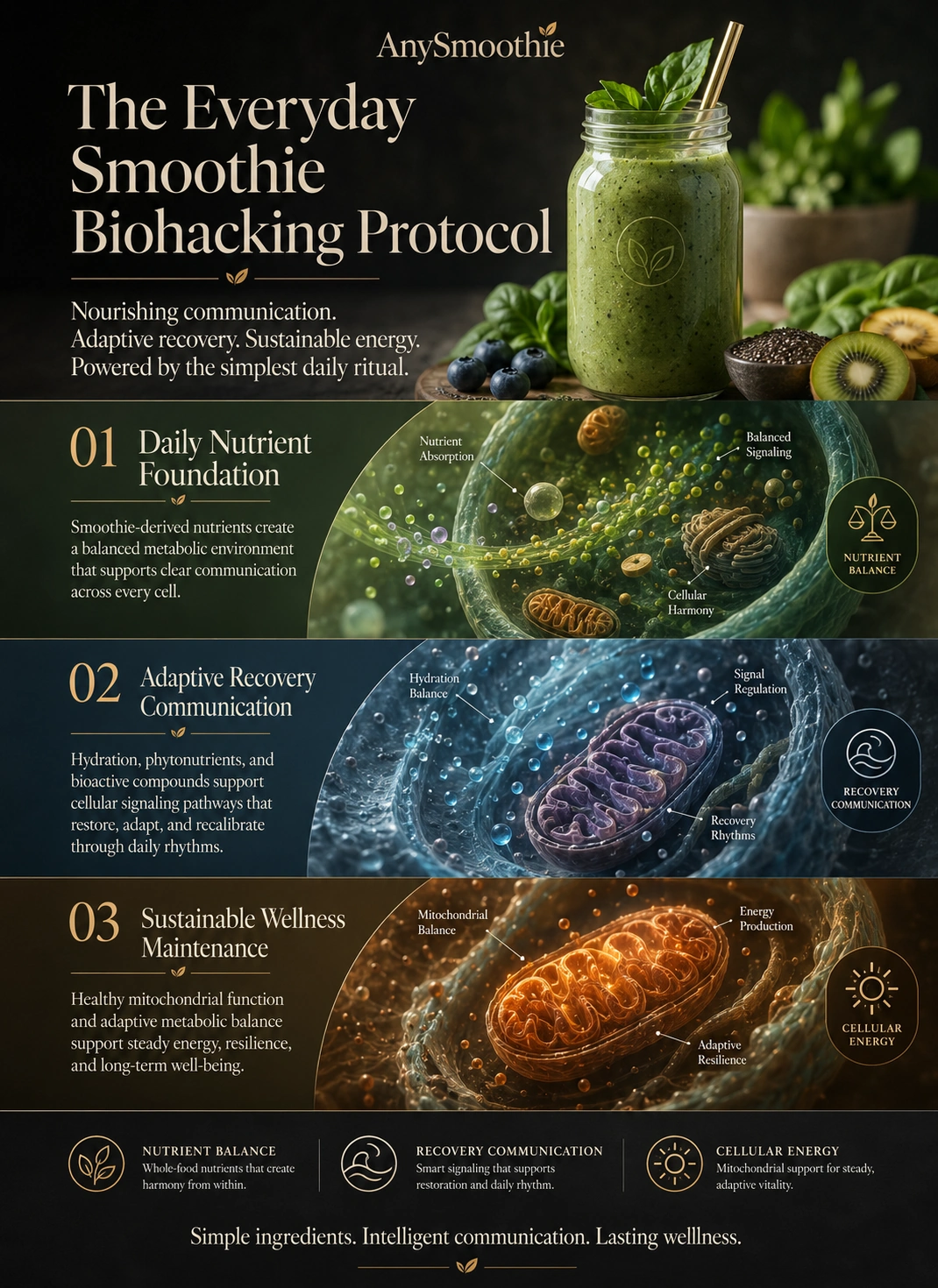
The Core-Three System: Building Every Blend for Hormonal Stability
Every great smoothie rests on three pillars. First, dense greens like kale or spinach deliver micros: magnesium, folate, nitrates. Second, healthy fats from avocado or coconut oil aid transport. Third, protein and fiber from hemp seeds or chia steady blood sugar.
Low glycemic loads keep insulin flat. Hormones stay balanced. No crashes, steady mood.
Morning energy blend: 1 cup spinach, half banana, 1 tbsp hemp seeds, 1 tbsp MCT oil, almond milk base. Post-workout: swap banana for berries, add collagen.
These use grocery staples. Scale portions to needs. For example, see resveratrol and NMN smoothie recipes that fit this system.
Variations keep it fresh. Add ginger for digestion. Always core-three first.
Liposomal Delivery at Home: Using Fats to Transport Micronutrients
Fats act like taxis for nutrients. They form liposomes: phospholipid bubbles that slip into cells. Blend oils after greens to emulsify.
Use 1 tsp MCT for brain fog relief. It crosses blood-brain barrier fast. Olive oil pairs with antioxidants for heart health.
Home method boosts uptake 2-5 times over plain vitamins. Mitochondria prime better. No lab needed.
Phospholipids from avocado mimic body structures. Absorption jumps, waste drops.
Batch-Prepping Biohacks: Freezing Micronutrients Without Nutrient Loss
Freeze portions weekly. Bag chopped greens, fats separate. Blend from frozen.
Blanch optional: 30 seconds boil, ice bath locks 90% vitamins. Freezing alone preserves most.
Pitfalls: avoid watery fruits, they dilute. Label bags by blend type.
Saves 30 minutes daily. Ties perfect to your protocol.
Measuring Success: How to Track Your Biohacking Results
Track to tweak. Start with baseline: note energy 1-10, sleep hours, cravings.
Week one journal daily. Apps like Daylio log mood fast. Affordable CGM like Freestyle Libre shows glucose real-time.
Expect wins: steady power by day 3, sharper focus week 2. Adjust fats if spikes hit.
For glucose insights from smoothies, read this CGM experiment.
Data drives gains. Small changes compound.
Subjective vs. Objective Data: From Energy Scores to CGM Insights
Subjective: rate focus 1-10 post-smoothie. Quick, reveals patterns.
Objective: HRV via Oura ring, CGM for spikes. CGM lags 5 minutes, watch trends.
Combine: low mood plus high glucose? Cut fruit. Example: energy 8/10, glucose peak 110, stable return.
No overload. Weekly review tweaks blends.
Conclusion
Easy smoothie biohacking delivers with hierarchy, core-three, quick protocol, and smart tracking. You gain steady energy, hormone balance, mitochondrial power.
Blend one tomorrow. Track a week. Notice the shift.
Small daily ritual sparks big health wins. Your home protocol starts now.
🛡️ Safety Notes & Dietary Interactions
- Nutrient Density and Metabolic Prioritization Dynamics: Smoothie routines built around greens, fats, protein, and fiber generally create steadier metabolic signaling than blends focused mainly on sweetness or rapid energy. Prioritizing nutrient density over flavor intensity may help support more stable satiety, smoother glucose handling, and longer-lasting cognitive energy throughout demanding mornings.
- Liposomal Transport and Fat-Soluble Nutrient Absorption: Healthy fats from avocado, hemp, olive oil, or MCT oil help create emulsified nutrient structures that improve the transport environment for fat-soluble vitamins and polyphenols. This lipid-assisted delivery pattern is one reason balanced smoothies often feel more sustaining and metabolically efficient than low-fat fruit blends alone.
- Blender Order and Oxidative Stability Considerations: Ingredient order can influence texture, oxidation exposure, and nutrient integration inside the blend. Starting with liquids and greens before adding powders and fats helps reduce clumping while supporting smoother emulsification and more stable nutrient dispersion without generating unnecessary heat during blending.
- Data Tracking and Personalized Metabolic Feedback: Energy, satiety, focus, cravings, and glucose response can vary significantly between individuals even when using similar ingredients. Tracking simple subjective patterns alongside optional objective markers like CGM trends may help refine smoothie structure over time without turning wellness habits into an overly rigid optimization system.
FAQ
Why do many smoothies fail to provide stable energy?
A large number of smoothies rely too heavily on fruit sugars while lacking enough protein, fats, fiber, or micronutrient density to slow digestion and stabilize glucose response. This often creates a quick rise in energy followed by a noticeable crash later in the morning. Biohacker-style smoothie structures aim to create steadier nutrient delivery instead of short-lived stimulation.
What does “nutrient partitioning” mean in practical nutrition terms?
Nutrient partitioning refers to how the body directs incoming nutrients toward energy production, tissue repair, storage, or recovery pathways. Balanced smoothies containing greens, fats, and protein may support steadier metabolic signaling and reduce the tendency for rapid glucose swings that often accompany high-sugar meals or ultra-processed snacks.
Why are fats considered important for smoothie bioavailability?
Fats help transport fat-soluble nutrients and improve emulsification inside the digestive system. Ingredients like avocado, hemp seeds, olive oil, or MCT oil create a more favorable absorption environment for compounds such as carotenoids, flavanols, and certain vitamins. This lipid-assisted transport approach is one reason richer smoothies often feel more metabolically complete and sustaining.
How does the “core-three” smoothie structure improve metabolic stability?
The core-three framework combines nutrient-dense greens, healthy fats, and protein or fiber sources in one blend. Greens contribute minerals and phytonutrients, fats slow digestion and support transport, while protein and fiber improve satiety and glucose pacing. Together, these elements help create steadier energy and fewer hunger swings compared to fruit-dominant smoothie formulas.
Why do some people track glucose or energy after smoothies?
Different people respond differently to the same meal depending on sleep, stress, activity level, digestion, and metabolic flexibility. Tracking focus, hunger, cravings, mood, or glucose trends can help identify which smoothie structures feel most stable personally. In practice, small adjustments to fruit load, fiber, or fats often make a bigger difference than adding more supplements.

Medical Disclaimer: AnySmoothie content is for educational purposes only and is not a substitute for professional medical advice. Consult a healthcare provider for personalized guidance. See our full Disclaimer & Terms of Use. AI Transparency: AnySmoothie may use AI to support content development. All content undergoes human editorial review for accuracy, clarity, and editorial quality. See our full AI Transparency.