
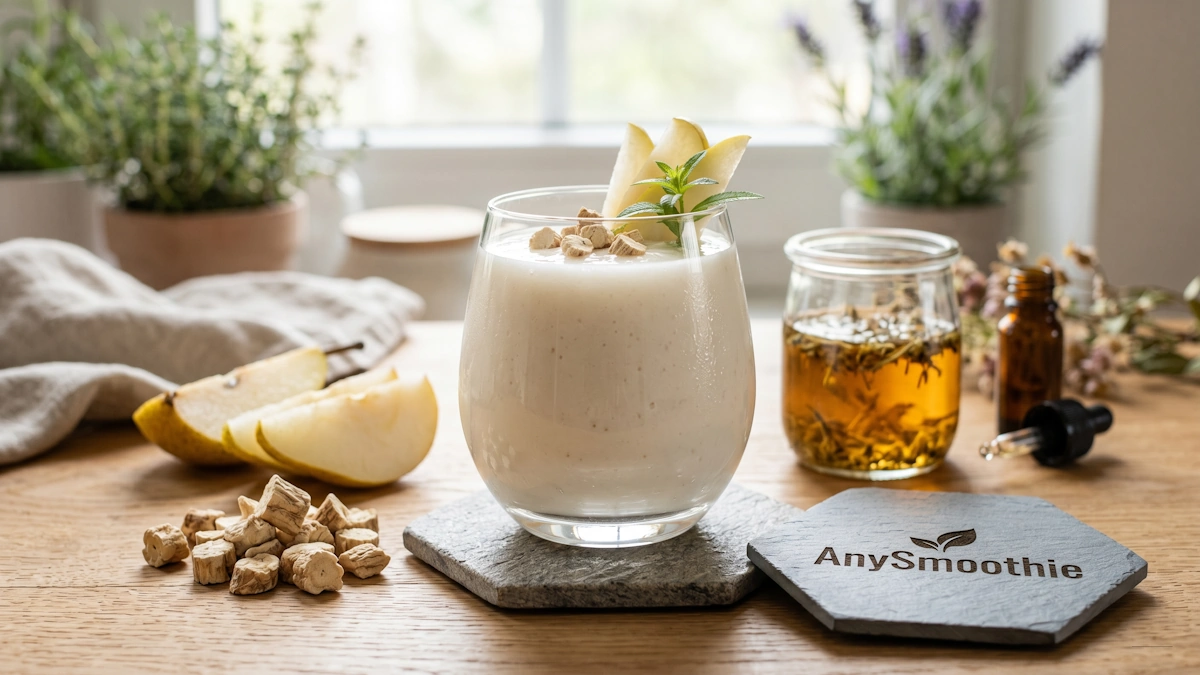
Marshmallow root is a mucilaginous herb, which means it gives liquid a soft, slippery feel. In a smoothie, that texture can support the body’s natural coating and moisture pathways without a strong herbal bite.
That matters when you want something that feels gentle going down. A marshmallow root smoothie for mucilaginous support can be easier to use than tea because fruit, milk, and fat smooth out the taste.
This guide covers how it works, how to build it, what to blend it with, and when to be careful.
What marshmallow root does in a smoothie and why mucilage matters
Marshmallow root contains mucilage, a gel-like plant fiber that swells in water. When you blend it into a drink, it creates a thicker, softer mouthfeel that many people find comforting.
That texture is the main reason people use it in food and drinks. It does not act like flavoring alone. It changes how the smoothie feels on the tongue and in the throat.
For some people, that smooth coating is the whole point. It can make a cold or room-temperature drink feel less sharp, especially when the mouth or throat feels dry.
How mucilage creates the smooth, slippery texture people want
Mucilage absorbs water and turns into a light gel. That gives the smoothie a silkier finish, almost like a thin pudding.
Because the texture is hydrated and cushiony, the drink feels slower and gentler. Many people like that in the morning or after a dry day.
Why smoothies work well for marshmallow root powder or tea
Smoothies make the herb easier to take than plain tea for some people. Fruit masks the earthy note, while milk or yogurt-style ingredients soften the flavor.
You can use powder, or you can use a cooled marshmallow root infusion as the liquid base. Powder is simple. Tea feels lighter.
How to build a balanced marshmallow root smoothie
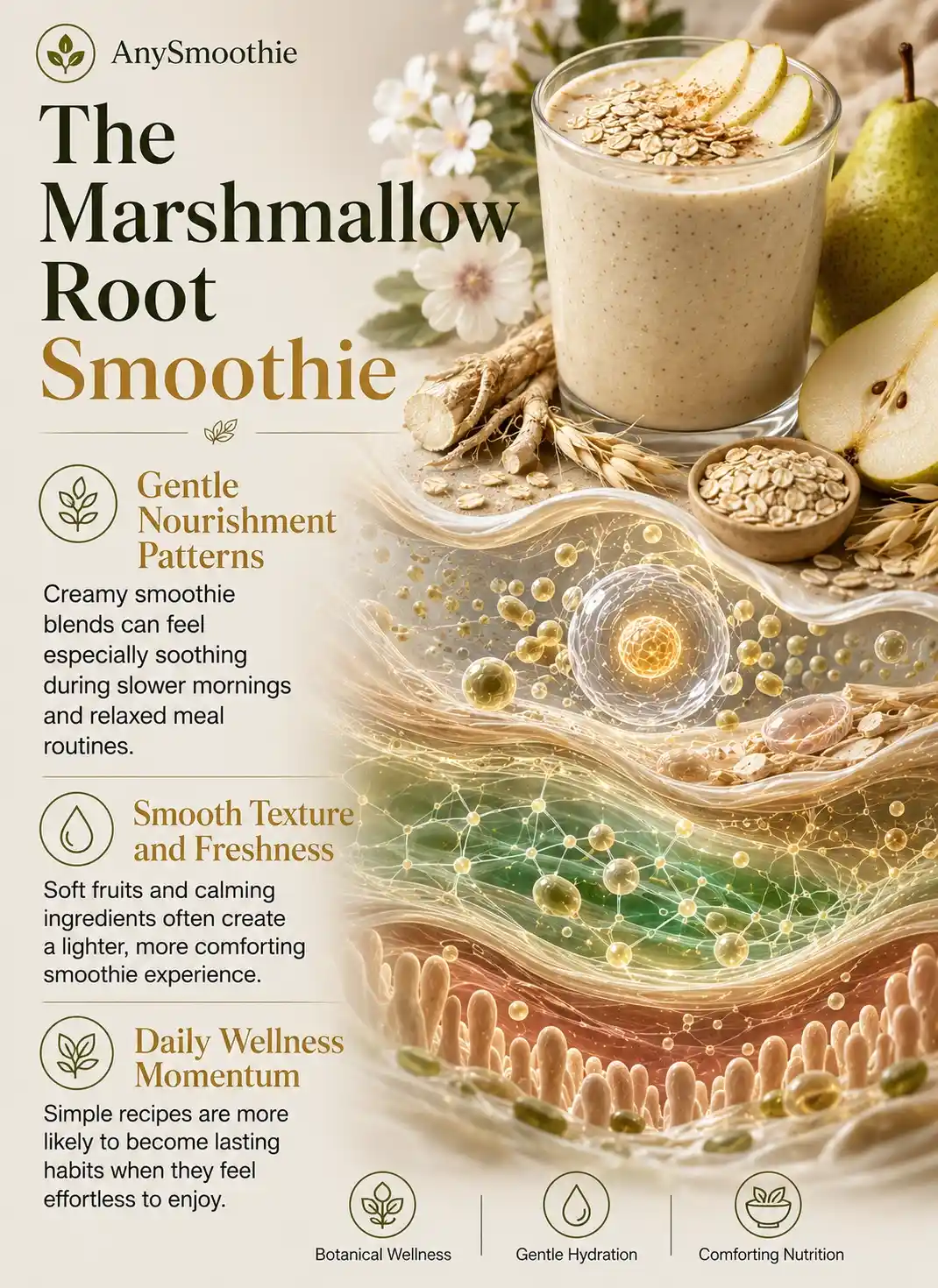
Start with a liquid base, a fruit source, a little fat, and your marshmallow root. Keep the flavor mild so the herb stays in the background.
Good bases include almond milk, oat milk, coconut milk, kefir if you tolerate dairy, or chilled herbal tea. Almond and oat milk keep things light. Coconut milk adds body. Kefir brings tang, while tea keeps the drink clean and simple.
Fruit does the heavy lifting on taste. Banana makes the blend creamy. Pear keeps it soft. Berries add brightness. Mango brings a smooth, tropical note. A spoon of chia, flax, or avocado can deepen the texture without overwhelming the drink.
Blend the liquid first, then add the herb, fruit, and fat. If you use a coarse infusion, strain it before blending. That helps keep the finish smooth.
3 marshmallow root smoothie recipes
Each of these works with a small amount of marshmallow root powder or a chilled infusion. Keep sweetness modest at first, then adjust.
When to be careful, and who should ask a health professional first
Marshmallow root has a long history in herbal use, and its mucilage has been studied for protective effects on moist tissues. A research summary in PubMed Central discusses how marshmallow root extracts can form a protective film on inflamed mucosa. That does not make it a treatment, but it helps explain why the herb feels so coating.
Herbal supplements can also interact with medications or routine care. Because mucilage may affect absorption, it’s smart to space marshmallow root away from prescription drugs when a clinician recommends it.
A slippery herb can also slow timing, so keep it away from medicines when needed.
Possible timing issues with supplements and medications
The gel-like fiber can slow how fast things move through the digestive tract. For that reason, many people keep marshmallow root two hours away from medications or other supplements.
Who may want extra guidance before trying it
Pregnant or nursing people, children, people with ongoing digestive conditions, those with allergies, and anyone on regular medication should check with a health professional first. For a plain-language overview of common uses and side effects, see Healthline’s marshmallow root guide.
Simple ways to make the smoothie fit into a real routine
Use it when you want a soft, easy drink, not as a strict schedule. Prep the fruit ahead of time, chill any tea base, and keep leftovers in the fridge for up to a day.
| Smoothie base | Texture | Flavor | Best use | Prep time |
|---|---|---|---|---|
| Almond milk | Light and smooth | Mild, nutty | Berry blends | 5 minutes |
| Coconut milk | Creamy and rich | Soft tropical note | Mango blends | 5 minutes |
| Chilled herbal tea | Thin and clean | Subtle herbal | Simple daily blends | 10 minutes |
A thin base works best when you want the herb to stay gentle. A richer base works best when you want the smoothie to feel more filling.
Conclusion
A marshmallow root smoothie for mucilaginous support is a simple way to bring a soothing texture into your day. The herb’s mucilage is what gives the drink that soft, hydrating feel, and the rest of the ingredients shape the taste.
The best version is the one you’ll make again. Start with one recipe, keep the flavor mild, and adjust the fruit until it fits your routine.
🛡️ Safety Notes & Contraindications: Marshmallow Root Smoothies
Absorption Interference: Due to its mucilaginous nature, marshmallow root can coat the stomach lining and potentially slow the absorption of oral medications. Consume your smoothie at least 2 hours before or after taking any prescription drugs.
Blood Sugar Monitoring: Marshmallow root may have a mild hypoglycemic effect; individuals with diabetes or those taking blood-sugar-lowering medications should monitor their levels closely.
Hydration Necessity: Mucilage absorbs significant amounts of water. Ensure you drink plenty of fluids throughout the day to prevent the gel from becoming too dense in the digestive tract.
Preparation Safety: Always use high-quality, clean root or powder. If using whole root for infusion, ensure it is thoroughly strained to avoid swallowing woody fibers that could irritate the throat.
Pregnancy and Breastfeeding: Due to a lack of long-term safety data, pregnant or nursing individuals should consult their healthcare provider before introducing concentrated marshmallow root infusions into their routine.
FAQ:
How do “Marshmallow Root Polysaccharides” create a bio-adhesive coating?
Marshmallow root is exceptionally high in mucilage, specifically rhamnogalacturonans and glucans. Biochemically, these large polysaccharide chains possess a high affinity for moist surfaces. Supporting this physiological system through cold-infused smoothies allows these molecules to form a “bio-adhesive” film that clings to the oral and esophageal epithelium. This optimizes the natural pathways of “surface protection,” ensuring the biochemical mechanics of the drink provide a soothing, low-friction interface.
Why is “Cold Extraction” superior to heat for preserving mucilage rheology?
Mucilage is a delicate gel-forming substance. Biochemically, high heat can break down the complex polysaccharide structures, reducing their viscosity and “film-forming” capabilities. Supporting this physiological system through cold-infusion or overnight soaking optimizes the natural pathways of “gel stability,” ensuring the biochemical mechanics of the marshmallow root remain intact for maximum mucosal glide.
What is the role of “Rheology” in reducing frictional stress during swallowing?
Rheology is the study of how substances flow and deform. In the context of a mucilaginous smoothie, the marshmallow root decreases the “shear stress” of the liquid as it moves across the throat. Biochemically, the gel network binds water molecules, creating a lubricated bolus. Supporting this physiological system through texture engineering facilitates the biochemical mechanics of “mechanical glide,” which is particularly beneficial for those with sensitive or dry mucosal tissues.
How does “pH Stability” distinguish marshmallow root from other thickeners?
Many thickening agents, like certain starches or proteins, can lose their structural integrity in acidic or alkaline environments. Biochemically, marshmallow root polysaccharides maintain a stable viscosity across a wider pH range. Supporting this physiological system allows you to pair the root with slightly acidic fruits (like berries) without compromising the “mucilaginous shield,” ensuring the biochemical mechanics of the coating remain effective throughout the upper GI tract.
How does mucilage support the “Glycocalyx” and epithelial hydration?
The glycocalyx is the carbohydrate-rich outer layer of the epithelial cells that helps manage hydration and signaling. Biochemically, the polysaccharides in marshmallow root can interact with and support this layer. Supporting this physiological system through hydrating, mucilage-rich smoothies optimizes the natural pathways of “barrier hydration,” facilitating the biochemical mechanics that keep the soft tissues of the gut and throat resilient against mechanical and chemical irritation.

Medical Disclaimer: AnySmoothie content is for educational purposes only and is not a substitute for professional medical advice. Consult a healthcare provider for personalized guidance. See our full Disclaimer & Terms of Use. AI Transparency: AnySmoothie may use AI to support content development. All content undergoes human editorial review for accuracy, clarity, and editorial quality. See our full AI Transparency.