
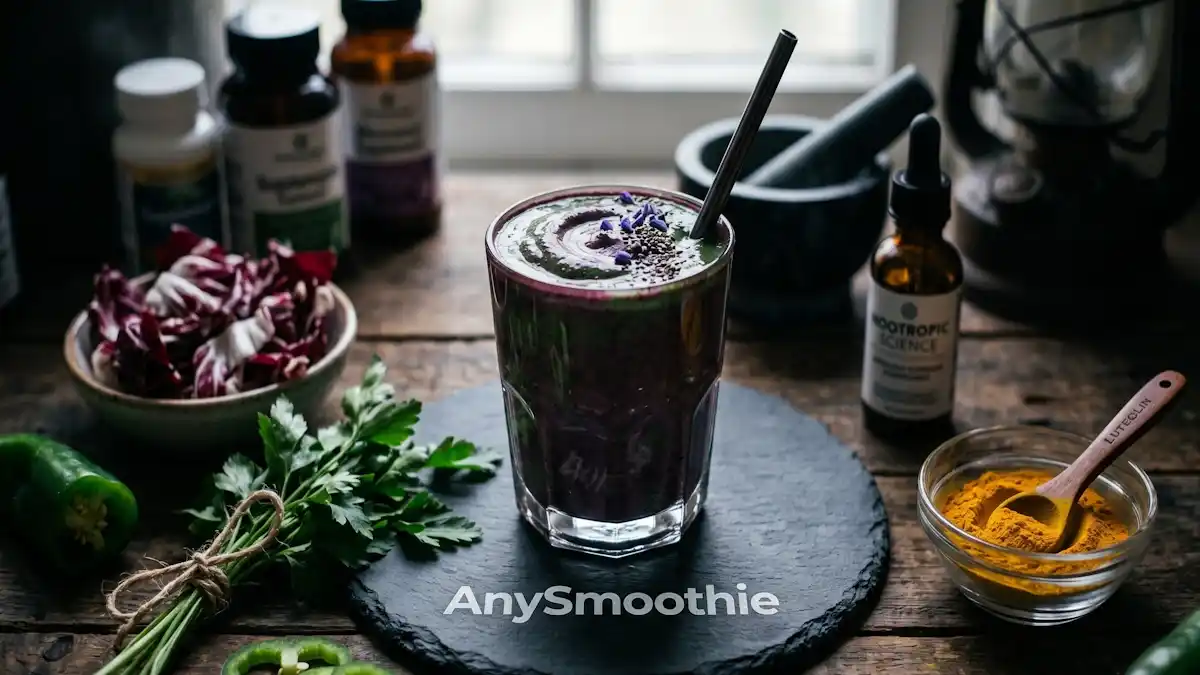
You feel that persistent brain fog after a rough night or high stress. Focus slips away. Mood dips low. These signs point to neuroinflammation, your brain’s immune response gone overboard. Microglia, the brain’s guard cells, activate too much and flood the area with cytokines. This harms clarity and resilience.
Luteolin steps in as a natural flavonoid that dials down this fire. Found in celery and greens, it inhibits those overactive cells. Luteolin smoothies turn this into a simple daily habit. You get tasty blends that support neural health. Science backs the calm it brings. Recipes and tips follow to build your routine.
The Microglia Master-Switch: How Luteolin Calms Brain Inflammation
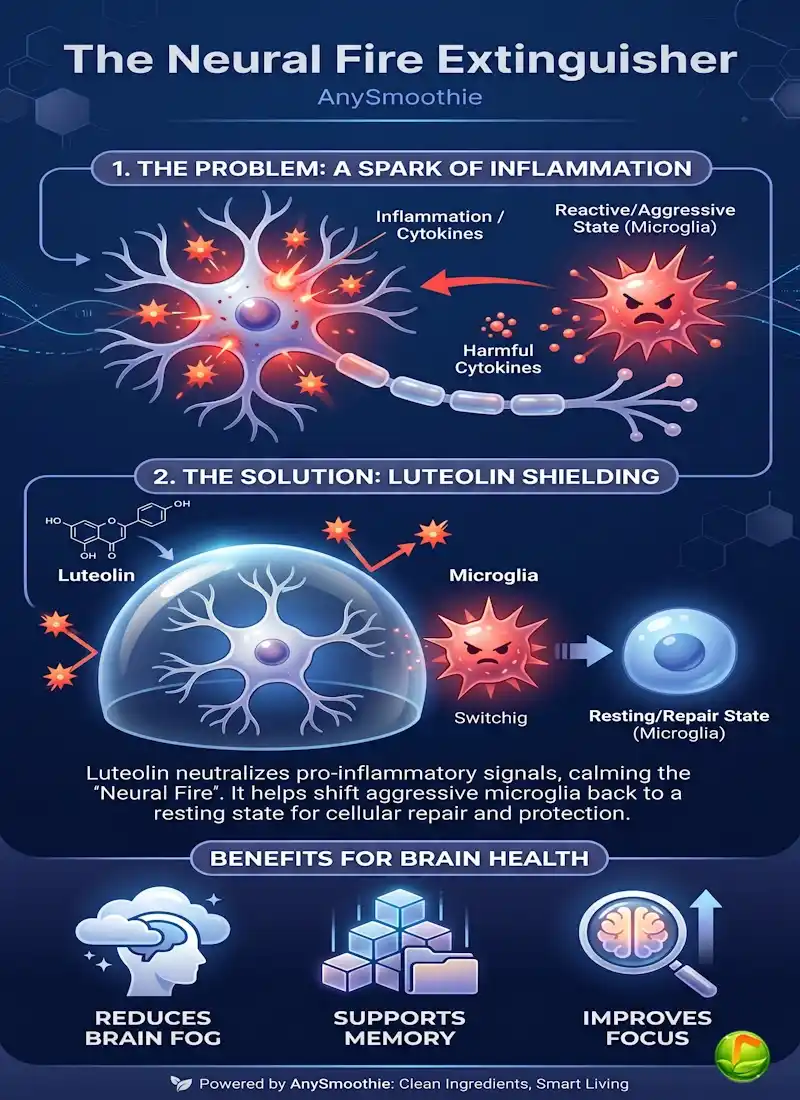
Microglia act as the brain’s first responders. They spot threats and clean up debris. Stress, poor sleep, or toxins make them shift to a pro-inflammatory state. They pump out cytokines like IL-6 and TNF-alpha. This sparks neuroinflammation and fogs your thinking.
Luteolin flips that switch. It blocks microglia activation at key pathways. As a result, cytokine levels drop. Neural tissue stays protected. Celery packs the most luteolin per serving, so it fits smoothies perfectly. Everyday use builds resilience against daily triggers.
Studies confirm this effect. For example, research on luteolin’s role in regulating microglia polarization shows clear inhibition in lab models. Mice fed luteolin diets had fewer pro-inflammatory cells, per another PMC study on senescent brains. You see sharper focus over time. Luteolin doesn’t just ‘block’ inflammation; it encourages microglia to shift back from the aggressive M1 state to the healing M2 state, promoting neural repair.
This sets up stronger brain defense. Next, see how luteolin reaches the brain itself.
Beyond the Blood-Brain Barrier: The Pharmacokinetics of Neuroprotection
Luteolin absorbs well after you eat it. It crosses the blood-brain barrier better than many flavonoids. This means direct action on microglia. Peak levels hit the brain fast, then stay stable for hours.
Absorption starts in the gut. Distribution favors neural tissue. It clears slowly, so benefits last.
Compare it to peers in this table:
| Flavonoid | Main Brain Action | Blood-Brain Barrier Crossing | Best Natural Food Source | Best Smoothie Pairing |
|---|---|---|---|---|
| Luteolin | Potent Microglia Inhibition | High | Celery | Celery blends |
| Quercetin | Mast Cell Support | Medium | Onions/Apples | Apple mixes |
| Apigenin | GABA Modulation | High | Parsley/Chamomile | Parsley greens |
Luteolin stands out as the microglia champ. Its high crossing ability amps protection. Add fats for even better uptake.
Cognitive Rescue: Reversing Brain Fog and Cytokine Overload
Cytokine storms from microglia cloud your mind. They impair focus and memory links. Brain fog sets in, and recovery slows.
Luteolin smoothies cut that overload. They lower cytokines, so thinking clears. Users report steady mood and quick recall after weeks. One study linked luteolin to relieved cognitive issues from inflammation, as in this Springer article.
Consistency matters. Drink one daily, and resilience grows. Fog lifts because neural paths stay clear.
Mast cells add to the mix, so luteolin helps there too.
The Mast Cell Connection: Luteolin’s Role in Reducing Neural Sensitivity
Mast cells live in brain tissue. They release histamine and cytokines on trigger. This heightens sensitivity and worsens fog.
Luteolin stabilizes them. It prevents bursts, so inflammation eases. Think of mast cells as overexcited guards; luteolin calms their alarm.
Smoothies deliver steady doses. Sensitive brains respond best. Clarity returns faster.
3 Anti-Inflammatory Luteolin Smoothie Recipes
These luteolin smoothies load celery and boosters for max effect. Fresh ingredients boost potency. Blend smooth, drink right away. Pair with fats for synergy. Each takes under 5 minutes, serves 1-2. They target microglia and cytokines directly.
Biohacking Bioavailability: Synergy with Palmitoylethanolamide (PEA) and Fats
Luteolin absorbs better with help. Add fats like avocado or nut butter to smoothies. They carry it across barriers.
PEA pairs perfectly. This natural compound inhibits microglia too. Together, they cut neuroinflammation more than alone. Studies show synergy in brain models, like this PubMed on PEA-luteolin neuroprotection.
Get PEA from supplements (300-600mg daily) or trace foods. Stir powder into smoothies. Chill blends; it preserves actives. Black pepper pinch aids uptake.
Start simple. One fat source per recipe. Track fog changes. This hack amps resilience.
Conclusion
Luteolin smoothies tame neuroinflammation at its root. They quiet microglia, curb cytokines, and lift fog. Mast cell stability adds calm. Recipes make it effortless.
Daily use builds neural resilience. Try the blackberry shield first. Add PEA for extra edge. Share your wins below. Clearer days await.
⚠️ Safety Notes for Luteolin & Neuro-Calm Protocols
Gastrointestinal Sensitivity: High doses of luteolin or large amounts of raw celery juice can cause mild stomach upset or diarrhea in sensitive individuals. If you experience this, start with 1 celery stalk and gradually increase.
Photosensitivity: Celery contains psoralens, compounds that can make your skin more sensitive to UV light. If you consume large quantities of these smoothies daily, ensure you wear sunscreen or limit intense sun exposure to avoid burns.
Drug Interactions: Luteolin may interfere with certain medications, including blood thinners like Warfarin or anti-platelet drugs. Consult your physician if you are on a pharmacological protocol for cardiovascular health.
Estrogenic Activity: Luteolin is a phytoestrogen. While much weaker than human estrogen, individuals with hormone-sensitive conditions (such as certain types of breast or uterine cancer) should discuss high-dose flavonoid supplementation with their oncologist.
PEA and Pregnancy: While Palmitoylethanolamide (PEA) is naturally occurring, its safety as a concentrated supplement during pregnancy or breastfeeding has not been fully established. Stick to food-based luteolin sources.
FAQ
What is “brain inflammation” and how can I feel it?
Brain inflammation, or neuroinflammation, isn’t painful like a cut. It manifests as “brain fog,” slow processing speed, mood swings, and mental fatigue. It’s often caused by overactive microglia cells that release pro-inflammatory cytokines in response to stress or toxins.
Can I get enough luteolin from my diet alone?
Luteolin is abundant in parsley, celery, green peppers, and radicchio. However, to achieve the neuroprotective concentrations found in clinical research (100mg-300mg), adding a concentrated luteolin extract to your smoothie is the most reliable way to “quiet” neuroinflammation.
Does luteolin really cross the blood-brain barrier?
Yes. Unlike many other antioxidants that are blocked, luteolin has a unique molecular structure that allows it to cross the blood-brain barrier effectively, where it can directly modulate brain cell activity and protect against oxidative stress.
Why is luteolin often paired with healthy fats?
Like most flavonoids, luteolin is lipophilic. Blending it with fats from avocado, almond butter, or even a dash of olive oil in your smoothie creates micelles that drastically improve its absorption into the bloodstream and, ultimately, the brain.
How is luteolin different from quercetin for brain health?
While both are powerful, luteolin is generally considered more potent at inhibiting the specific inflammatory signals (TNF-alpha, IL-6) released by brain-specific immune cells (microglia). Quercetin is excellent for overall immunity, but luteolin is the specialist for the brain.

Medical Disclaimer: AnySmoothie content is for educational purposes only and is not a substitute for professional medical advice. Consult a healthcare provider for personalized guidance. See our full Disclaimer & Terms of Use. AI Transparency: AnySmoothie may use AI to support content development. All content undergoes human editorial review for accuracy, clarity, and editorial quality. See our full AI Transparency.