
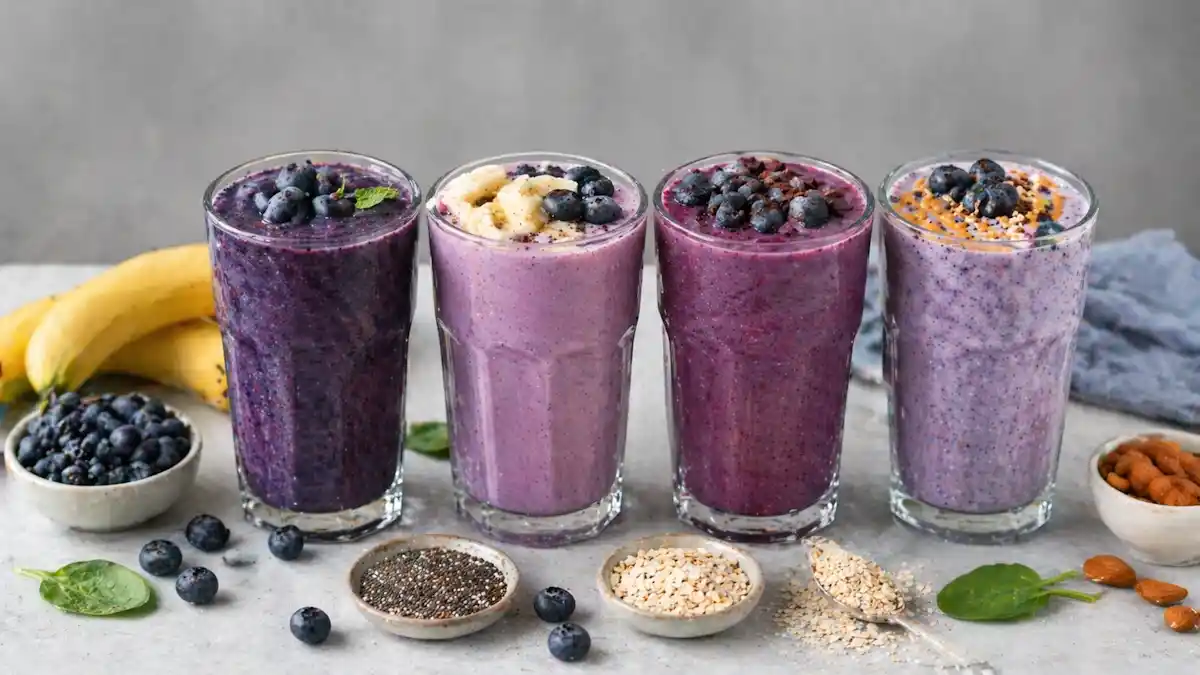
Blueberries bring flavor and color with modest sugar compared to many fruits, plus fiber that helps with fullness. Add protein (like Greek yogurt or protein powder) and a little extra fiber or healthy fat, and you’ve got a drink that feels more like a small meal than a snack.
This formulation is engineered to optimize endothelial function and support the natural pathways governing nitric oxide (NO) synthesis. By leveraging the specific polyphenol architecture and concentrated anthocyanin density of raw, deep-pigmented berries, this liquid matrix interfaces with cellular signaling mechanisms to support systemic blood flow and microvascular efficiency without inducing metabolic turbulence or destabilizing blood sugar kinetics.
The simple blueberry smoothie formula, so you can build your own
A good smoothie isn’t about piling in every “healthy” ingredient you can find. Balance matters more. If protein, fiber, or enough liquid is missing, the texture gets thin, the drink won’t keep you full, and it can fall apart fast. A better blend gives you creaminess, steady energy, and a flavor that still tastes like real food.
| Vascular Phytochemical | Physiological Mechanism | Peak Plasma Concentration Time (Hours post-ingestion) | Best Smoothie Pairing | Target Vessel Segment |
|---|---|---|---|---|
| Blueberry Anthocyanins | Upregulating eNOS phosphorylation and helping prevent monomeric uncoupling; direct, dose-dependent improvement in flow-mediated dilation (FMD) | About 1 to 3 hours | Blueberry, plain Greek yogurt, chia | Macro- and micro-vasculature |
| Pomegranate Ellagitannins | Activating sGC via antioxidant synergy | About 2 to 4 hours | Pomegranate, tart cherry, oats | Mainly micro-vasculature |
| Citrus Flavanones (Hesperidin) | Enhancing capillary resistance and reducing leukocyte adhesion | About 4 to 6 hours | Orange, lemon, kefir | Micro-vasculature |
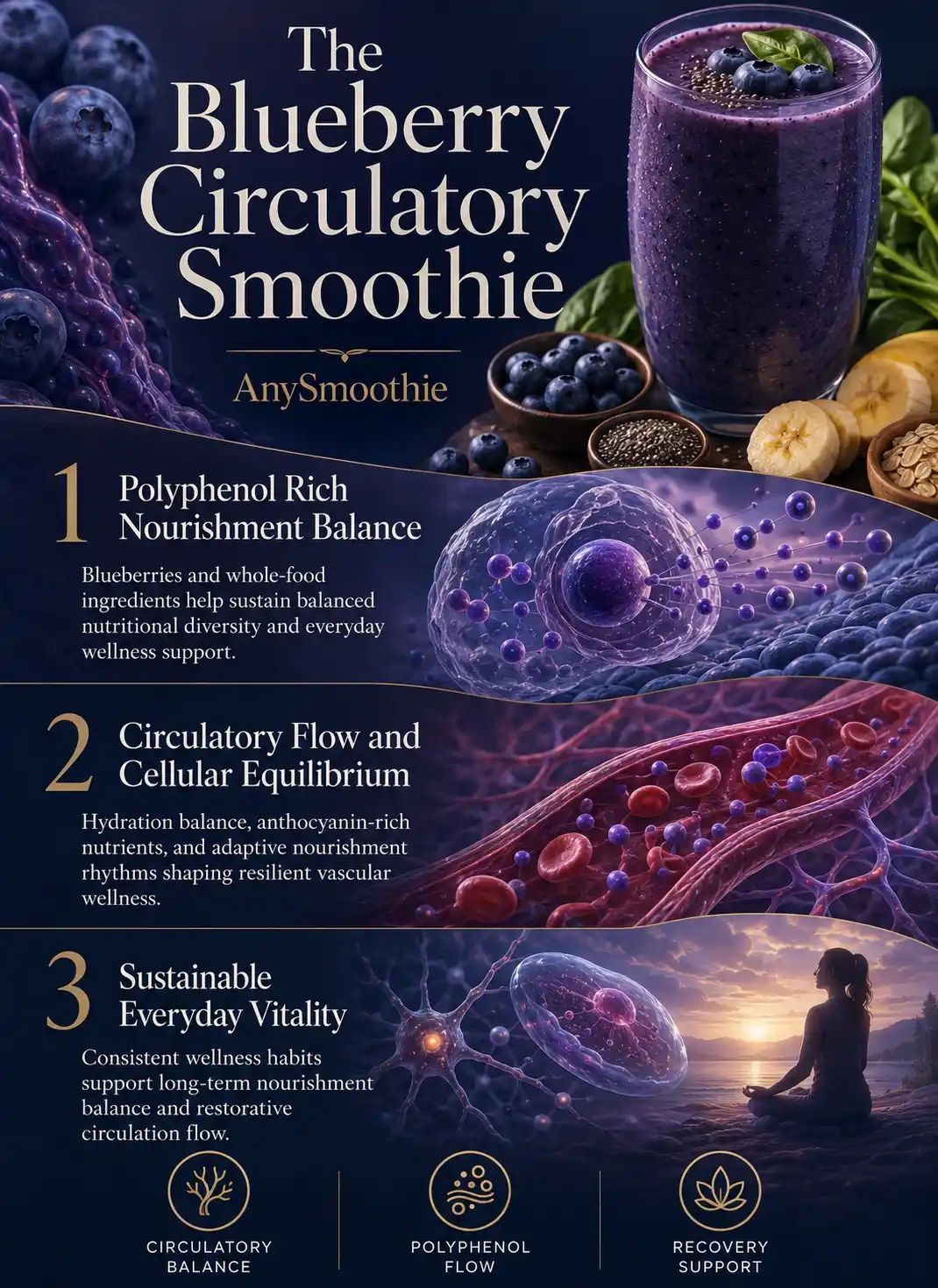
Blueberry anthocyanins are the standout here because they show a direct, dose-dependent improvement in FMD. That makes blueberries a smart base when you want a smoothie that does more than taste good. Add protein for staying power, fiber for structure, and enough liquid to keep everything smooth.
Use this repeatable method:
1) Fruit (flavor + volume)
Blueberries can be your main fruit, or your “base” plus a half banana for creaminess. Using mostly berries helps keep sugar lower.
2) Liquid (blend power)
Start with unsweetened liquids so you control sweetness. Water makes it light, milk makes it creamier, and unsweetened almond milk keeps calories lower.
3) Protein (stays-full factor)
Protein is what turns a smoothie from “tasty drink” into something that can carry you to lunch. Greek yogurt, cottage cheese, and protein powder are the simplest options.
4) Fiber or fat (satiety + texture)
A small amount goes a long way. Chia thickens fast, oats add body, nut butter adds richness (and calories), and flax blends in easily.
5) Flavor boosters (taste without sugar)
Vanilla extract, cinnamon, lemon juice, and unsweetened cocoa powder add punch without turning your smoothie into dessert.
Here’s a simple starting point you can tweak:
| Smoothie part | Easy default | Helpful range |
|---|---|---|
| Blueberries (fresh or frozen) | 1 cup | 3/4 to 1 1/2 cups |
| Liquid (unsweetened) | 1 cup | 3/4 to 1 1/4 cups |
| Protein | 1 serving | 15 to 30 g protein |
| Fiber or fat add-in | 1 small add-in | 1 tsp to 1/4 cup |
| Flavor booster | 1 or 2 | to taste |
If weight loss is your goal, watch the “extras.” A smoothie can be light, or it can quietly match a milkshake. For more general smoothie weight loss ideas, EatingWell’s smoothie roundup is a useful reference point.
Best ingredients for a filling, lower-sugar smoothie
Blueberries: Frozen blueberries usually make a thicker smoothie and taste consistent year-round. Fresh berries work too, but you’ll likely want ice.
Unsweetened liquids: Water, unsweetened almond milk, and low-fat milk are the go-to picks. Skip juice if you’re trying to keep sugar down.
Protein options:
Greek yogurt is thick and tangy, cottage cheese is surprisingly smooth when blended, and protein powder is convenient for post-workout. Aim for 15 to 30 g protein if the smoothie is a meal.
Add-ins for fullness:
Chia or ground flax (1 to 2 tsp) thickens and adds fiber. Oats (2 to 4 tbsp) make it more breakfast-like. Nut butter (1 tbsp) boosts taste but raises calories quickly.
Taste without extra sugar: Cinnamon, vanilla, lemon juice, and cocoa powder help you use less sweetener, or none at all.
Blending tips that make smoothies thick and not watery
Put liquid in first, then soft ingredients (yogurt), then frozen fruit on top. That helps the blades catch and keeps you from adding extra liquid too soon.
Blend on low to break up the frozen pieces, then blend on high until smooth. If your blender struggles, stop and scrape the sides once.
Quick fixes:
- Too thick: Add liquid 1 to 2 tablespoons at a time.
- Too thin: Add more frozen blueberries, a few ice cubes, or 1 teaspoon chia and wait 2 minutes.
- Too tart: Add a quarter banana, vanilla, or a pinch of cinnamon before reaching for sweetener.
For food safety, rinse fresh berries under running water and dry them well. Freeze extras on a sheet pan, then transfer to a bag. Smoothies taste best right away, but keeping them cold (frozen fruit, chilled liquid) helps the texture stay thick.
Blueberry Smoothie recipes you can actually stick with
These Blueberry Smoothie recipes repeat ingredients on purpose, so you’re not buying a new grocery list every time. Each makes 1 large smoothie or 2 small ones. Sweetener is optional, start with none and adjust at the end.
For more smoothie inspiration in a similar “everyday ingredients” style, this list of breakfast smoothies can help you plan a week.
Recipes for breakfast, post-workout, and sweet cravings
1) Classic Blueberry Banana Protein Smoothie
Ingredients
- 1 cup frozen blueberries
- ½ medium banana
- 1 cup unsweetened almond milk
- 1 scoop vanilla protein powder
- 1 teaspoon ground flaxseed
- Pinch of cinnamon
Pour the almond milk into the blender first. Add the protein powder, banana, frozen blueberries, ground flaxseed, and cinnamon. Blend until completely smooth and creamy.
Blueberries provide anthocyanins and fiber, while banana contributes carbohydrates and potassium. Protein powder supplies a concentrated source of protein, and ground flaxseed adds fiber, lignans, and ALA omega-3 fatty acids.
Estimated Nutrition per Serving
- Calories: ~325 kcal
- Protein: ~29 g
- Carbohydrates: ~42 g
- Fat: ~8 g
- Fiber: ~9 g
- Sugars: ~20 g
2) Blueberry Greek Yogurt Smoothie (Thick and Tangy)
Ingredients
- 1 cup blueberries
- ¾ cup plain Greek yogurt
- ½ cup unsweetened almond milk
- 1 teaspoon vanilla extract
- 1 teaspoon fresh lemon juice
Pour the almond milk and Greek yogurt into the blender first. Add the blueberries, vanilla, and lemon juice. Blend until smooth, adding a small amount of additional liquid only if needed.
Greek yogurt provides high-quality protein and creates a thick, creamy base, while blueberries contribute fiber and polyphenols. Lemon and vanilla sharpen the flavor without requiring additional sweetener.
Estimated Nutrition per Serving
- Calories: ~250 kcal
- Protein: ~20 g
- Carbohydrates: ~32 g
- Fat: ~6 g
- Fiber: ~4 g
- Sugars: ~21 g
3) Blueberry Oatmeal Breakfast Smoothie (More Filling)
Ingredients
- 1 cup blueberries
- 1 cup low-fat milk
- ¼ cup rolled oats
- ½ cup plain Greek yogurt
- Pinch of salt
- ¼ teaspoon cinnamon
Pour the milk into the blender first. Add the oats, Greek yogurt, blueberries, salt, and cinnamon. Blend for 45–60 seconds until completely smooth. Let the smoothie stand for about two minutes if you prefer a thicker consistency.
Oats contribute carbohydrates and fiber, including beta-glucan, while milk and Greek yogurt provide high-quality protein. Blueberries add fiber and anthocyanins, making this a more substantial breakfast-style smoothie.
Estimated Nutrition per Serving
- Calories: ~390 kcal
- Protein: ~24 g
- Carbohydrates: ~57 g
- Fat: ~8 g
- Fiber: ~7 g
- Sugars: ~30 g
If I were preparing this on a busy morning, I’d blend the oats with the milk for about 10 seconds before adding everything else. It produces a smoother texture and prevents noticeable oat pieces in the finished drink.
4) Blueberry Spinach Smoothie (Mild Flavor, More Volume)
Ingredients
- 1 cup frozen blueberries
- 1 packed cup spinach
- 1 cup unsweetened almond milk
- ½ cup plain Greek yogurt
- 1 tablespoon chia seeds
Pour the almond milk and Greek yogurt into the blender first. Add the spinach, frozen blueberries, and chia seeds. Blend until completely smooth.
Spinach contributes folate and carotenoids, while blueberries provide anthocyanins and fiber. Chia adds fiber and ALA omega-3 fatty acids, and Greek yogurt contributes protein and a creamier texture.
Estimated Nutrition per Serving
- Calories: ~285 kcal
- Protein: ~17 g
- Carbohydrates: ~34 g
- Fat: ~10 g
- Fiber: ~10 g
- Sugars: ~20 g
5) Blueberry Lemon Cheesecake Smoothie
Ingredients
- 1 cup blueberries
- ¾ cup low-fat cottage cheese
- ¾ cup low-fat milk
- 2 teaspoons fresh lemon juice
- ¼ teaspoon vanilla extract
Pour the milk into the blender first. Add the cottage cheese, blueberries, lemon juice, and vanilla. Blend for 60–90 seconds until silky and completely smooth.
Cottage cheese and milk provide substantial protein and create a rich base. Blueberries contribute fiber and polyphenols, while lemon and vanilla give the smoothie a tangy, cheesecake-inspired flavor.
Estimated Nutrition per Serving
- Calories: ~360 kcal
- Protein: ~30 g
- Carbohydrates: ~43 g
- Fat: ~8 g
- Fiber: ~4 g
- Sugars: ~29 g
6) Blueberry Peanut Butter Smoothie
Ingredients
- 1 cup blueberries
- 1 cup unsweetened almond milk
- ½ medium banana
- 1 tablespoon peanut butter
- 1 scoop vanilla protein powder
Pour the almond milk into the blender first. Add the protein powder, banana, blueberries, and peanut butter. Blend until thick and creamy.
Peanut butter contributes protein and unsaturated fat, while protein powder substantially increases the overall protein content. Blueberries and banana provide carbohydrates, fiber, and naturally occurring sugars.
Estimated Nutrition per Serving
- Calories: ~410 kcal
- Protein: ~33 g
- Carbohydrates: ~45 g
- Fat: ~14 g
- Fiber: ~8 g
- Sugars: ~22 g
7) Blueberry Green Tea Smoothie (Light and Refreshing)
Ingredients
- 1 cup chilled brewed green tea
- 1 cup frozen blueberries
- ½ cup plain Greek yogurt
- 1 teaspoon fresh lemon juice
- ½ cup ice
Pour the completely chilled green tea and Greek yogurt into the blender first. Add the frozen blueberries, lemon juice, and ice. Blend until smooth and slightly slushy.
Green tea naturally provides catechins and caffeine, while blueberries contribute anthocyanins and fiber. Greek yogurt adds protein and gives the otherwise light smoothie a creamier texture. Decaffeinated green tea can be substituted when caffeine is undesirable.
Estimated Nutrition per Serving
- Calories: ~190 kcal
- Protein: ~13 g
- Carbohydrates: ~27 g
- Fat: ~4 g
- Fiber: ~4 g
- Sugars: ~19 g
Make it diet-friendly: easy swaps, portions, and prep
You don’t need a tracking app to keep smoothies aligned with your goals. You need a few guardrails you’ll follow on busy mornings.
Start with one cup of blueberries, pick an unsweetened liquid, and choose one protein source. After that, add only one “extra” (chia, oats, or nut butter). When you stack extras, calories climb fast, even when the ingredients are healthy.
How to cut calories without losing flavor (and avoid common diet mistakes)
Simple swaps that keep taste:
- Use unsweetened milk or water, skip juice.
- Use half a banana instead of a whole one.
- Add ice or a handful of frozen zucchini for volume (it’s mild).
- Choose 0% Greek yogurt if you like tang.
- Keep nut butter to 1 teaspoon to 1 tablespoon.
- Add chia or flax for thickness and staying power.
Common mistakes: too much fruit, sweetened yogurt, “healthy” granola dumps, and huge servings in a 32-ounce cup. One tablespoon of peanut butter can change the whole calorie story, so treat it like a topping, not a main ingredient.
Meal prep smoothie packs and storage tips
Smoothie packs make consistency easier. Use freezer bags or containers and portion: blueberries plus any add-ins like spinach, oats, chia, or lemon zest. Freeze flat so they stack.
Most packs hold well for 2 to 3 months. At blend time, add your liquid and protein (yogurt, cottage cheese, or powder), then blend.
If you need to take it with you, refrigerate up to 24 hours in a sealed jar. It may separate, that’s normal. Shake well, and keep it cold for the best texture.
Conclusion
The best smoothies aren’t complicated. Use the base formula (fruit, liquid, protein, fiber or fat, flavor), keep portions steady, and don’t let added sugar sneak in. Pick one of these Blueberry Smoothie recipes to try this week, then repeat it until it feels automatic.
Choose one goal, more protein, less sugar, or more fiber, and match a recipe to it. When your smoothie fits your taste and your routine, it stops being a “diet thing” and starts being breakfast.
🛡️ Safety Notes & Contraindications
Hypoglycemia Risk with Insulin-Sensitizing Therapeutics: CRITICAL: Because this formulation matrix intensely down-regulates upper GI carbohydrate cleavage and enhances peripheral insulin sensitivity via anthocyanins, it severely flattens the glucose curve. If you are taking prescription anti-diabetic medications (e.g., Insulin, Metformin, Acarbose), consuming this low-glycemic protocol can cause unexpected, unmanaged hypoglycemic drops. Titrate fractions cautiously.
Oxalate Influx and Renal Transport Saturation: Stacking blueberries, spinach, and cocoa powders daily inside a highly bioavailable liquid format introduces a heavy concentration of soluble oxalic acid. In individuals presenting with compromised glomerular filtration rates or a personal history of calcium-oxalate nephrolithiasis (kidney stones), this flux can promote hyperoxaluria. Pro-Tip: Always couple the spinach/cocoa variations with a true calcium donor (Greek yogurt or cottage cheese) to complex oxalates directly in the bowel lumen, preventing kidney filtration distress.
GI Bacterial Fermentation in Severe Dysbiosis (SIBO): The highly fermentable soluble fibers (beta-glucans from oats, inulin structures, and chia hydrocolloids) escape upper GI digestion intact to feed colonic microbes. If you present with active Small Intestinal Bacterial Overgrowth (SIBO) or severe IBS, this prebiotic flux will trigger premature fermentation in the small bowel, presenting as painful meteorism, abdominal distension, and hyper-motility.
Tyramine and Amine Accumulation during Storage Shifts: Raw berries and yogurt bases build up biogenic amines (histamine, tyramine) during prolonged refrigeration or freezing storage if exposed to temperature micro-fluctuations. Phenotypes presenting with diagnosed Histamine Intolerance (HIT) or taking MAO-inhibitor medications should strictly avoid meal-prepped smoothie packs and consume the blend within 10 minutes of high-velocity blending.
Medication Adsorption in High-Viscosity Gel Matrixes: The dense hydrophilic grid generated by chia seeds, flax, and oatmeal can non-specifically trap oral prescription drugs within the chimo core, delaying or partially inhibiting their systemic bioabsorption. To ensure total clinical safety, consume oral therapeutics at least 1 hour before or 3 hours after this fiber-dense protocol.
FAQ
How do “Anthocyanins” in blueberries modulate brush border glucose transport kinetics?
Blueberries are rich in specific polyphenols known as anthocyanins. Biochemically, these compounds exert a competitive modulating effect on alpha-glucosidase and alpha-amylase enzymes anchored to the intestinal brush border membrane. Supporting this physiological system through raw or flash-frozen blueberry infusions optimizes the natural pathways of “glycemic influx attenuation,” slowing down carbohydrate cleavage and ensuring a metered entry of glucose into the bloodstream.
Why is the introduction of a “Viscous Fiber Anchor” like chia or flax necessary for appetite regulation?
Hydrophilic fibers contain complex mucilage polysaccharides that expand dramatically when hydrated. Biochemically, this triggers the self-assembly of a highly dense, viscoelastic gel matrix within the stomach and upper GI tract. Supporting this physiological system through structured fiber additions slows down gastric emptying rates and physically distances simple nutrients from intestinal transporters, facilitating the biochemical mechanics of a prolonged, steady satiety cascade.
What is the role of “Casein and Whey Peptides” in driving cholecystokinin (CCK) secretion?
Utilizing a high-protein anchor—such as Greek yogurt, cottage cheese, or milk—introduces a dense spectrum of complete amino acids into the lumen. Biochemically, the presence of these proteins triggers specialized enteroendocrine cells to release satiety hormones like Cholecystokinin (CCK) and Peptide YY (PYY), which signal the brain’s satiety centers to down-regulate hunger. Supporting this physiological system with 15 to 30 grams of clean protein transforms a simple fruit fluid into a structured metabolic barrier against premature grazing.
How does “Particle Size Homogenization” via liquid-first layering alter digestive kinetics?
Mechanical shear in a high-speed blender breaks down plant cell walls, increasing the surface-area-to-volume ratio of the food matrix. Biochemically, if powders or frozen fractions stick to the container walls, the resulting uneven emulsion accelerates transit time and causes an uneven nutrient flux. Supporting this physiological system with a precise layering sequence—liquids first, then soft proteins, then frozen solids—facilitates the biochemical mechanics of “uniform homogenization,” yielding a smooth rheological texture that digests predictably.
Why does a “Low-Fructose Matrix” support hepatic mitochondrial priming?
Flooding the portal vein with large boluses of high-fructose juices or excessive tropical fruits forces hepatocytes into an intensive, high-friction ATP-depleting pathway to process the sugar load. Biochemically, choosing a blueberry-and-water (or almond milk) base keeps fructose exposure below the hepatic saturation threshold. Supporting this physiological system facilitates the biochemical mechanics of “mitochondrial priming,” allowing liver cells to maintain efficient energy turnover and clean baseline fuel signaling.

Medical Disclaimer: AnySmoothie content is for educational purposes only and is not a substitute for professional medical advice. Consult a healthcare provider for personalized guidance. See our full Disclaimer & Terms of Use. AI Transparency: AnySmoothie may use AI to support content development. All content undergoes human editorial review for accuracy, clarity, and editorial quality. See our full AI Transparency.