
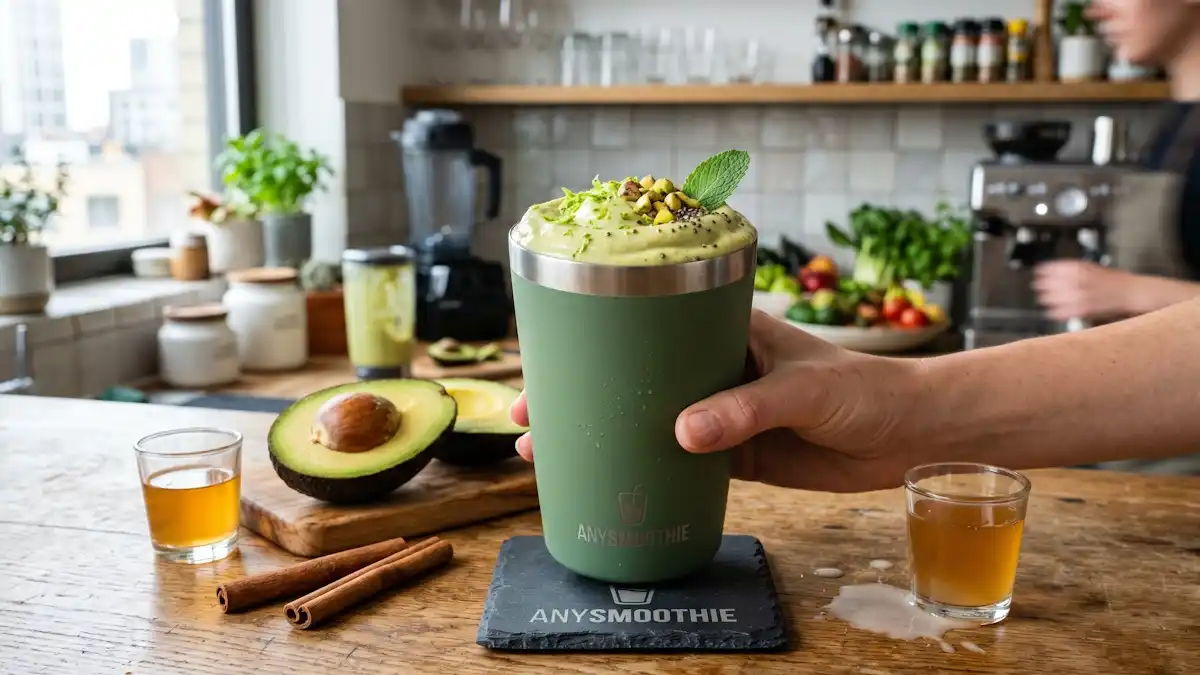
Modern eating is rarely neat. You rush lunch, sleep too little, sit for hours, then wonder why a normal meal leaves you flat, hungry, or wired.
That’s where a metabolic buffer smoothie fits. It’s a practical pre-meal or post-meal tool that supports steadier glucose handling, better nutrient partitioning, and less of that midafternoon crash. No hype, no perfect routine required.
The point is simple, improve the odds when life gets messy. Here’s how it works, what belongs in the blender, when to drink it, and three versions that still make sense on a real calendar.
The Buffer Principle: Defending Your Metabolism from Daily Stress
A buffer is not a cure-all. It is a small metabolic margin that helps your body handle a bigger carb load, a rushed meal, or a less-than-ideal day.
Busy life makes that useful. Large portions, fast eating, travel food, desk work, and random meal times all push glucose control in the wrong direction. Over time, repeated stress can make fuel handling less efficient.
Glucose Spikes and Glycation in Real Life
When blood sugar rises fast, cells have more work to do. That extra demand can increase oxidative stress and raise the chance of glycation, which is what happens when sugar binds to proteins and fats in ways the body does not prefer.
One spike is not a crisis. Repeated spikes, though, can affect energy, hunger, and recovery. You may feel fine for an hour, then wiped out.
That is why buffering matters. It softens the hit, so fuel moves through the system with less friction.
Why a Smoothie Can Work Better Than Willpower Alone
A smoothie is fast. That matters more than people admit.
It can carry fiber, fat, protein, acids, and targeted nutrients in one glass. It also removes decision fatigue. If the good choice takes less effort, you will use it more often.
A well-built smoothie can also support mitochondrial priming, because it gives your cells steadier fuel instead of a sugar rush. For more on that balance, this smoothie blueprint explains why protein, fiber, and fat matter together.
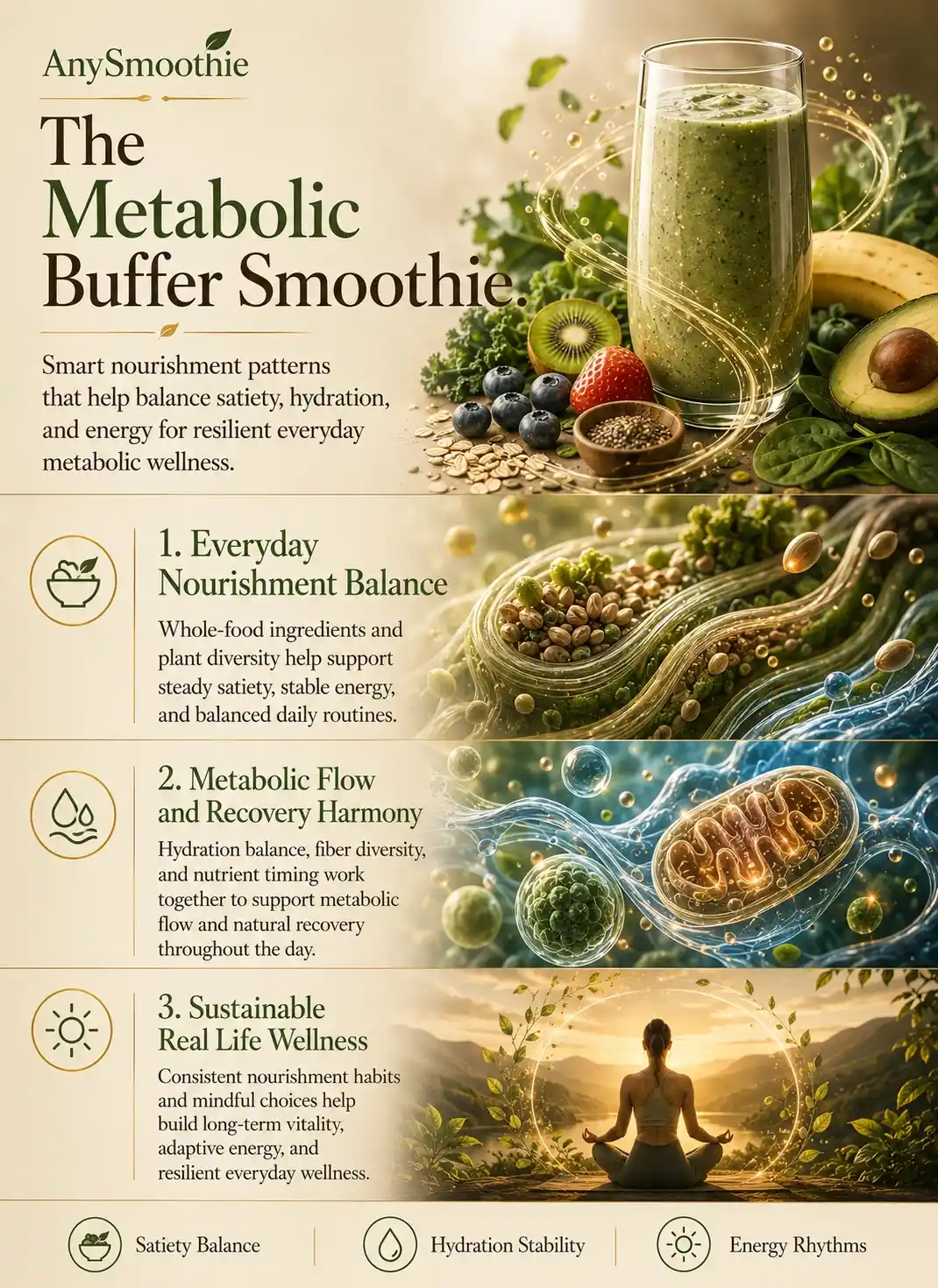
What Goes Into a Good Metabolic Buffer Smoothie
The best formula is simple. Start with a low-sugar base, then add pieces that slow digestion and improve satiety.
Fiber is the first anchor. Chia, flax, berries, spinach, and avocado all help slow absorption. Fat adds staying power and keeps the smoothie from feeling thin. Protein helps appetite control and gives the drink more staying power between meals.
Acids can help too. Apple cider vinegar is the most practical one, especially before a higher-carb meal. It adds a small buffer without turning the smoothie into a science project.
The best buffer is the one you can repeat on a normal Tuesday.
Taste matters as much as theory. If you hate the flavor, the recipe fails. Use ingredients you can buy easily and enjoy often.
The Ingredient Roles That Matter Most
Fiber slows the speed of digestion. That means less of a sharp glucose rise.
Fat supports fullness and slows how fast the stomach empties. Protein helps keep hunger in check and makes the smoothie feel like food, not dessert.
Acids, especially acetic acid from apple cider vinegar, can blunt the impact of a carb-heavy meal. That makes them useful before lunch, dinner, or takeout nights.
The Insulin Sensitivity Stack: Chromium, Cinnamon, and Alpha-Lipoic Acid
These add-ins are optional. They fit better in a more targeted version of the smoothie.
Chromium supports normal glucose metabolism. Cinnamon, especially Ceylon cinnamon, is an easy daily add-in with a warm flavor. Alpha-lipoic acid is more advanced and fits best when someone wants support for cellular energy pathways and antioxidant balance.
Choosing the Right Base So the Smoothie Still Tastes Good
Unsweetened almond milk keeps things light. Kefir adds tang and a little more body. Plain Greek yogurt gives the most creaminess and protein.
Avoid juice and sweetened yogurt. They turn a buffer into a sugar load. The base should support the goal, not fight it.
The Best Ingredients to Use, and When Each One Makes Sense
Here’s a quick way to choose the right buffer for the meal in front of you.
| Buffer | Primary mechanism | Best use case | Impact on post-prandial glucose | Best smoothie pairing |
|---|---|---|---|---|
| Apple cider vinegar | Delayed gastric emptying, acetic acid support | Pre-meal, especially high-carb meals | Often the most noticeable and practical | Avocado, cinnamon, unsweetened almond milk |
| Ceylon cinnamon | Support for glucose handling and flavor | Daily maintenance | Mild to moderate | Greek yogurt, berries, chia |
| Berberine or alpha-lipoic acid | AMPK support, cellular energy pathways | Targeted, more advanced use | Can be stronger, but more context-dependent | Protein base, greens, low-sugar fruit |
Acetic acid is the most practical emergency buffer for a carb-heavy meal. It is cheap, easy to prep, and fits real life.
Cinnamon is more of a daily helper. Berberine or alpha-lipoic acid fit a narrower job, so they should match the goal, not replace food quality.
How Apple Cider Vinegar Acts as the Most Practical Emergency Buffer
Apple cider vinegar works best before the meal. Its acetic acid may help slow how fast the stomach empties, which can smooth the glucose rise that follows.
That makes it easy to use on busy days. A small amount goes a long way. More is not better here, and consistency matters more than force.
Where Cinnamon and Advanced Compounds Fit Best
Ceylon cinnamon is the simplest add-in for everyday use. It brings flavor and a modest metabolic support role.
Berberine and alpha-lipoic acid are more targeted. They are not interchangeable with cinnamon, and they are not needed for every smoothie. Food still comes first.
3 Real-Life Metabolic Buffer Smoothie Recipes
These recipes are built for different situations, not for a perfect pantry.
Strategic Timing: Using the Buffer Smoothie Before or After Indulgence
Timing changes the effect.
Before a meal, the smoothie can prepare digestion and help blunt a bigger glucose rise. After a meal, it is more about support and consistency. If the meal is heavy in starch or sugar, pre-meal use usually wins.
Before the Meal Versus After the Meal
Use it before when the meal will be carb-heavy. Use it after when the goal is to steady the rest of the day.
That rule is easy to remember, pre-meal for buffering, post-meal for cleanup.
How to Use It on Travel Days, Busy Workdays, and Cheat Meals
Airport food, office lunches, restaurant dinners, and holiday meals all leave less control. That is exactly when this tool helps.
You do not need a perfect routine. You need a repeatable one that works when schedules break.
Conclusion
The metabolic buffer smoothie is about improving the odds in real life. It helps you handle stress, bigger meals, and rough schedules with less metabolic noise. The strongest version combines fiber, fat, protein, and a simple acid like apple cider vinegar. Cinnamon adds an easy daily layer, while more advanced compounds fit only when the goal calls for them. Use it before a carb-heavy meal when you can. Keep one version simple enough to repeat. Try one this week, then adjust it to your routine.
⚠️ Safety Notes for Metabolic Buffer Smoothies
Esophageal Sensitivity (ACV): Never consume apple cider vinegar (ACV) undiluted. The acetic acid can cause esophageal burns. Always blend it thoroughly into the smoothie or ensure it is diluted in at least 250ml of liquid.
Berberine and Medication: If you add berberine to your buffer, be aware it can inhibit CYP450 enzymes and significantly lower blood sugar. Consult your doctor if you are on metformin, insulin, or blood thinners, as it can potentiate their effects to dangerous levels.
Chromium and Kidney Health: While chromium supports glucose metabolism, excessive supplementation can be hard on the kidneys. Individuals with pre-existing renal conditions should stick to food-based chromium sources and avoid high-dose powders.
Cinnamon Type: Always use Ceylon cinnamon (True Cinnamon). Common “Cassia” cinnamon contains high levels of coumarin, which can be toxic to the liver if consumed daily in large amounts.
Gastric Emptying (Delayed): Because the buffer is designed to slow digestion, it may cause bloating or discomfort if you have Gastroparesis (delayed stomach emptying). Monitor your response and reduce fiber content if necessary.
FAQ
What is a “Metabolic Buffer” and why is it useful in real life
A metabolic buffer is a combination of nutrients designed to stabilize your physiological response to dietary stress, such as a high-carbohydrate meal or a spike in cortisol. In “real life,” we cannot always be metabolically perfect. This smoothie supports the body’s natural pathways for glucose disposal and insulin signaling, acting as a “safety net” that helps maintain metabolic efficiency despite environmental or dietary fluctuations.
How does Apple Cider Vinegar (ACV) act as a glycemic buffer
The acetic acid in ACV supports the body’s natural pathways for delaying gastric emptying. This biochemical mechanic ensures that glucose enters the bloodstream more slowly. Furthermore, acetic acid supports the physiological systems involved in skeletal muscle glucose uptake, meaning your body can process carbohydrates more efficiently, reducing the overall glycemic load of your meal.
Why is cinnamon more than just a flavor enhancer in these smoothies
Cinnamon, particularly the Ceylon variety, contains bioactive compounds that mimic insulin and support the activation of GLUT4 transporters in your cells. These transporters are the “doors” that allow glucose to move from your blood into your muscles for energy. By including cinnamon in a metabolic buffer smoothie, you are optimizing the natural pathways of nutrient partitioning, directing fuel where it’s needed most.
Can healthy fats like avocado improve metabolic flexibility
Yes. Including lipids like those found in avocado supports the “slow-burn” metabolic model. Fats do not trigger an insulin response and help stabilize the absorption of other nutrients. This biochemical environment supports mitochondrial priming, encouraging the body to maintain its ability to switch between burning glucose and burning stored fats, which is the hallmark of metabolic flexibility.
When should I consume the Metabolic Buffer Smoothie for best results
For maximum efficiency, consume this smoothie approximately 20 to 30 minutes before a planned “large” meal or as a mid-day anchor during high-stress periods. This “primes” your physiological systems, ensuring that your insulin receptors and mitochondrial enzymes are ready to handle the incoming nutrient load, supporting systemic stability and preventing the energy crashes associated with glucose volatility.

Medical Disclaimer: AnySmoothie content is for educational purposes only and is not a substitute for professional medical advice. Consult a healthcare provider for personalized guidance. See our full Disclaimer & Terms of Use. AI Transparency: AnySmoothie may use AI to support content development. All content undergoes human editorial review for accuracy, clarity, and editorial quality. See our full AI Transparency.