
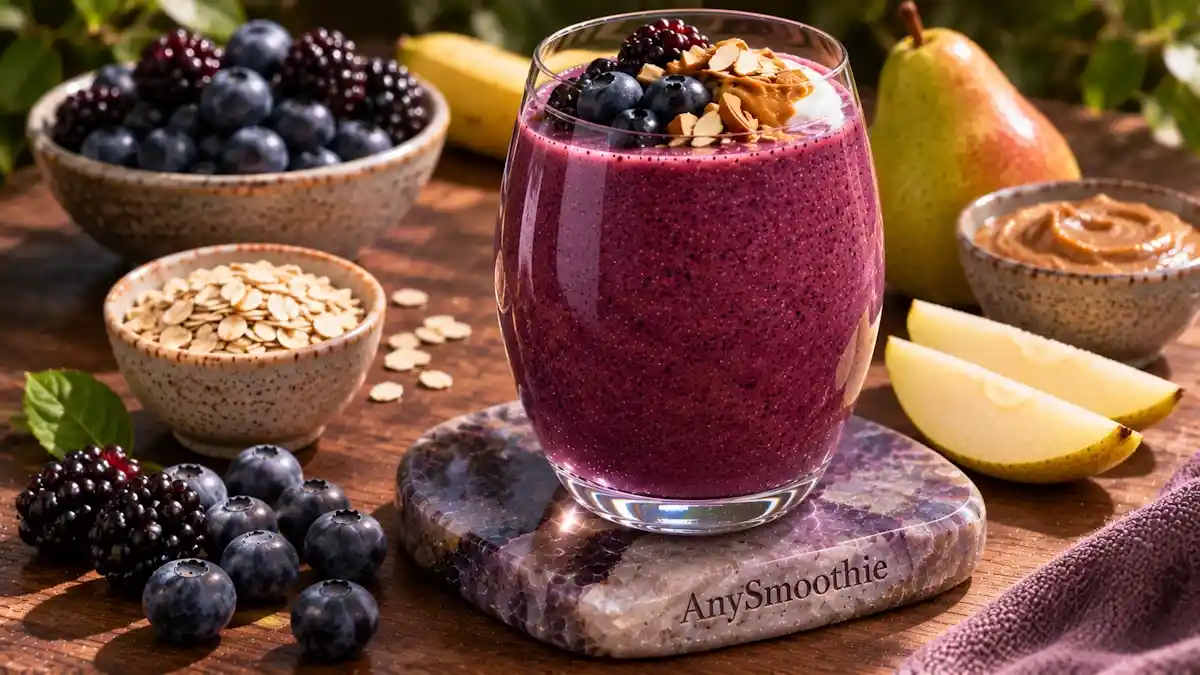
Smoothies for gut-derived indole metabolites can combine tryptophan-containing foods with fiber-rich plants, but no smoothie guarantees a specific metabolite change. Your gut microbes and overall diet affect what happens next.
These three recipes offer practical ways to support normal gut processes, with clear limits on what food can promise. First, it helps to separate the roles of protein and fiber.
How food supports gut-derived indole pathways
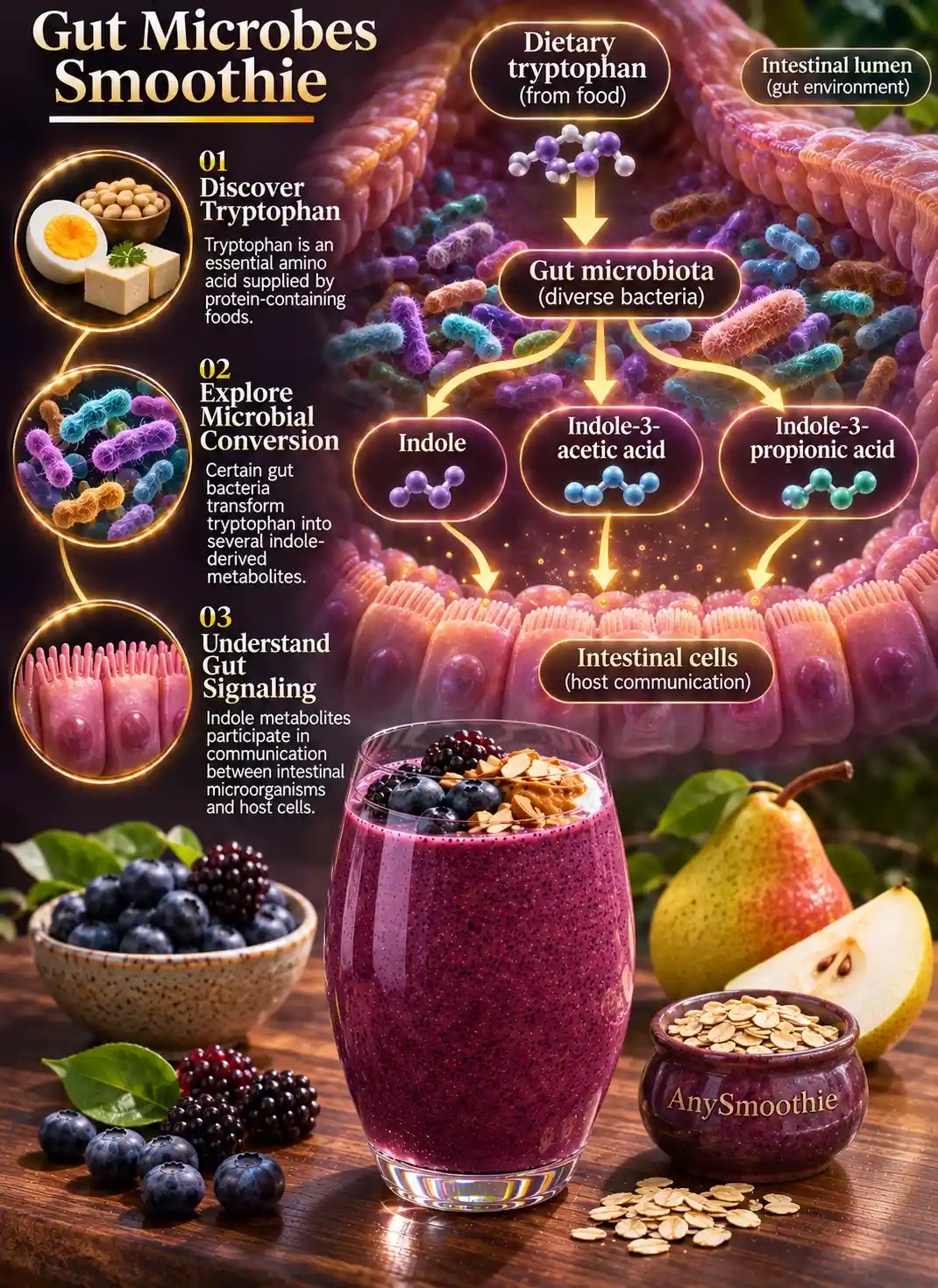
Gut microbes can use tryptophan, an amino acid found in protein-containing foods, to make several indole compounds. These include indole-3-acetic acid and indole-3-propionic acid. Different microbes have different enzymes, so they don’t all produce the same compounds.
A related example of gut bacteria transforming plant compounds into metabolites is smoothies for equol production from soy isoflavones.
Soy milk, Greek yogurt, kefir, and seeds supply protein that contains tryptophan. However, your body digests and absorbs much of that protein before it reaches the colon. Eating more tryptophan doesn’t translate directly into more of a particular microbial metabolite.
Fiber plays a separate role. Certain fibers provide fermentable material for gut microbes, while a varied plant-food intake helps nourish a varied microbial community. A 2024 study of dietary fiber examined how fiber influences microbial tryptophan metabolism. Fiber isn’t interchangeable with tryptophan; the two contribute differently to these processes.
For another fiber-focused collection of recipes, see fiber smoothies for hemorrhoid-friendly meal routines.
The type and amount of metabolites depend on your microbial community, overall diet, and other individual factors. These recipes provide food components involved in normal pathways. They can’t target a specific indole level, and their protein or fiber totals don’t predict your metabolite response. Even the same recipe can have different effects across people.
Another example of microbial conversion of plant compounds is flax lignan smoothies for enterolactone production.
3 Smoothies for Gut-Derived Indole Metabolites
Each recipe makes one serving. Use unsweetened soy milk and plain yogurt or kefir. Nutrition estimates vary by product and portion; extra milk changes the totals.
Berry Oat and Flax Smoothie
Ingredients
- 1 cup unsweetened soy milk
- 1/2 cup plain Greek yogurt
- 1/2 cup blueberries
- 1/2 medium banana
- 1/4 cup rolled oats
- 1 tablespoon ground flaxseed
Instructions
Add all ingredients to a blender and blend until smooth. Add a splash of water or more soy milk to thin it, if needed.
Estimated Nutrition (per serving)
- Calories: ~360 kcal
- Protein: ~23 g
- Carbohydrates: ~48 g
- Fat: ~9 g
- Fiber: ~10 g
- Sugars: ~19 g
Kiwi, Spinach, and Chia Smoothie
Ingredients
- 3/4 cup plain kefir
- 1/2 cup unsweetened soy milk
- 1 medium kiwi, peeled
- 1 cup baby spinach
- 2 tablespoons rolled oats
- 1 tablespoon chia seeds
Instructions
Blend the kefir, soy milk, kiwi, spinach, oats, and chia until creamy. Let it stand for a few minutes to thicken, then blend again briefly if desired.
Estimated Nutrition (per serving)
- Calories: ~295 kcal
- Protein: ~15 g
- Carbohydrates: ~37 g
- Fat: ~10 g
- Fiber: ~8 g
- Sugars: ~16 g
Cocoa, Banana, and Pumpkin Seed Smoothie
Ingredients
- 1 cup unsweetened soy milk
- 1/2 cup plain Greek yogurt
- 1/2 medium banana
- 1 tablespoon pumpkin seeds
- 1 tablespoon unsweetened cocoa powder
- 1/4 cup rolled oats
Instructions
Blend all ingredients until smooth. For a thinner drink, add a little cold water or soy milk and blend again.
Estimated Nutrition (per serving)
- Calories: ~350 kcal
- Protein: ~25 g
- Carbohydrates: ~42 g
- Fat: ~11 g
- Fiber: ~7 g
- Sugars: ~13 g
Compare the smoothies by flavor, texture, and nutrition
Each option pairs protein with plant foods that provide dietary fiber, but their flavors and estimated nutrition differ.
| Smoothie | Indole-pathway context | Nutrition standout | Flavor and texture | Best fit |
|---|---|---|---|---|
| Berry Oat and Flax | Protein and fiber support normal pathways | Highest estimated fiber | Fruity, creamy, lightly grainy | A thicker breakfast drink |
| Kiwi, Spinach, and Chia | Protein and plant fiber support normal pathways | Lowest estimated calories | Tart, fresh, thickens as it rests | A tangier, lighter option |
| Cocoa, Banana, and Pumpkin Seed | Protein and fiber support normal pathways | Highest estimated protein | Chocolatey, mildly sweet, creamy | A less fruit-forward choice |
Choose according to taste and appetite rather than trying to rank these recipes by metabolite output. The nutrition estimates describe the drink, not what your microbes will produce. A higher protein total doesn’t establish a stronger indole response.
Choose a smoothie that fits your gut and routine
If you usually eat little fiber, start with a smaller serving. A sudden increase can cause gas or discomfort, so increase portions gradually and drink enough fluids throughout the day. You don’t need to finish a full serving immediately to make the recipe part of your routine.
Dairy-free swaps can change the nutrition substantially. Replace yogurt or kefir with a plain, unsweetened option that suits your needs, then check its label for protein and added sugars. Coconut-based and almond-based alternatives often contain less protein than dairy yogurt or soy-based options.
Also, consider what you eat beyond the blender. Your gut microbial community responds to your broader eating pattern, so keep room for varied plant foods and other protein sources. Smoothies are one convenient option within that pattern, not a way to measure or treat indole levels.
If you follow a prescribed diet, ask your clinician or dietitian before making major changes. The same applies if you have a health condition that affects protein or potassium intake.
Conclusion: Make your choice about food, not metabolite targets
These smoothies combine tryptophan-containing protein with fiber-rich plant foods to support normal gut pathways. However, individual microbes and diets vary, so no recipe promises a particular indole result.
Choose the flavor you enjoy and a portion you tolerate. Treat it as one supportive part of a varied diet.
🛡️ Safety Notes & Dietary Interactions
- Fiber Adjustment: Oats, flaxseed, chia, spinach, kiwi, and berries make these smoothies fiber-rich. If your usual intake is low, increase gradually and maintain adequate fluids to reduce gas or digestive discomfort.
- Protein Sources: Greek yogurt, kefir, soy milk, and pumpkin seeds contribute protein containing tryptophan, but dietary protein is not equivalent to a predictable increase in microbial indole production.
- Dairy and Soy: The recipes contain dairy and soy, with yogurt or kefir alongside soy milk. Check labels and choose appropriate alternatives for milk or soy allergies, noting that substitutions alter protein and nutrition.
- Individual Dietary Needs: The article specifically notes that prescribed diets or conditions affecting protein or potassium intake may require professional guidance. Major dietary changes should be reviewed with a clinician or dietitian.
FAQs
Which smoothie provides the most protein?
The Cocoa, Banana, and Pumpkin Seed Smoothie provides the highest estimated protein, at approximately 25 grams per serving. The Berry Oat and Flax Smoothie provides about 23 grams, while the Kiwi, Spinach, and Chia Smoothie provides approximately 15 grams.
Does more tryptophan produce more gut-derived indole metabolites?
Not necessarily. Much dietary protein is digested and absorbed before reaching the colon, while microbial metabolite production depends on which microbes are present and their enzymes. Therefore, increasing protein or tryptophan intake does not reliably predict a specific indole metabolite response.
Why are fiber and protein both included in these recipes?
They play different roles. Protein-containing foods provide tryptophan among their amino acids, while certain fibers provide fermentable material for gut microbes. Neither component independently predicts a particular metabolite level, so the recipes combine them as part of a broader dietary pattern.
Which smoothie is the lightest option?
The Kiwi, Spinach, and Chia Smoothie has the lowest estimated calories, at approximately 295 calories per serving. It also provides about 15 grams of protein and 8 grams of fiber, making it lighter than the other two recipes while remaining relatively substantial.
Can I make these smoothies dairy-free?
Yes, but substitutions change the nutritional profile. Yogurt or kefir can be replaced with suitable unsweetened plant-based alternatives. Check protein and added-sugar values because coconut- and almond-based products may provide considerably less protein than dairy yogurt or soy-based options.

Medical Disclaimer: AnySmoothie content is for educational purposes only and is not a substitute for professional medical advice. Consult a healthcare provider for personalized guidance. See our full Disclaimer & Terms of Use. AI Transparency: AnySmoothie may use AI to support content development. All content undergoes human editorial review for accuracy, clarity, and editorial quality. See our full AI Transparency.