
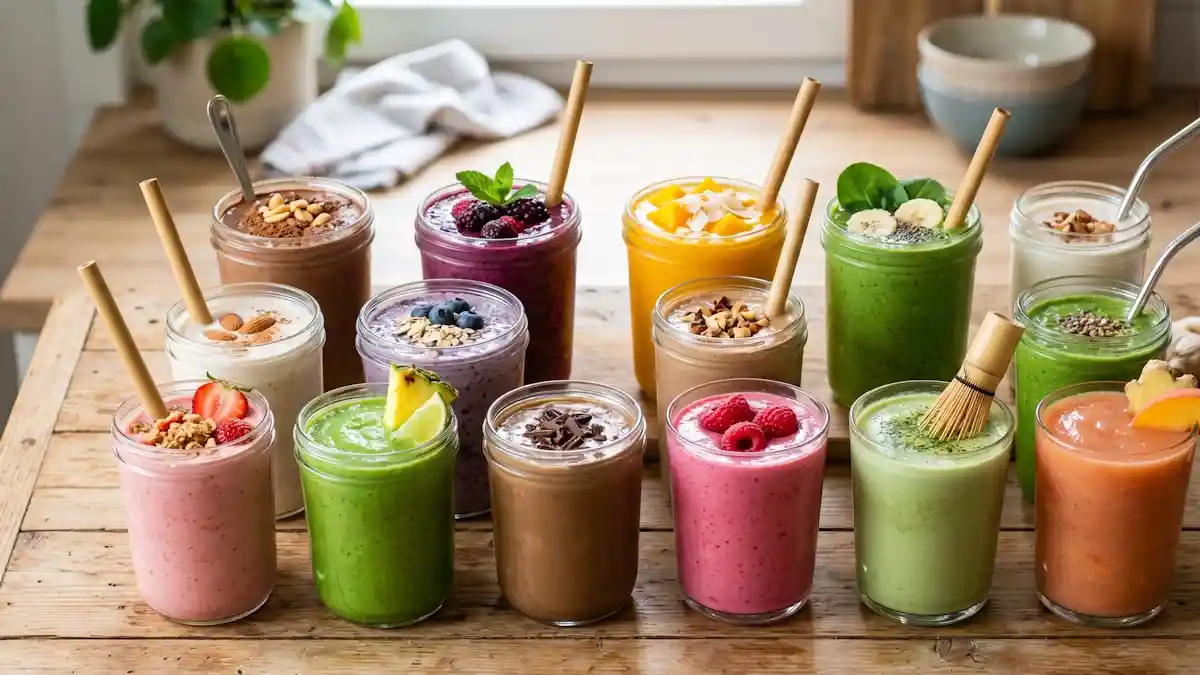
This compendium outlines 12 structurally distinct macromolecular formulations engineered to support systemic amino acid delivery, optimize the nitrogen pool, and sustain physiological systems during recovery phases. Rather than relying on standard commercial parameters, these targeted liquid matrices prioritize precise macronutrient partitioning—utilizing specific botanical protein anchors, viscous fibers, and dense lipid profiles to modulate nutrient assimilation and support clean energy kinetics without inducing metabolic turbulence.
This technical guide provides a versatile framework to adapt your smoothie architecture based on specific physiological windows, whether your goal is neurocognitive priming, glycogen resynthesis, or post-exertion myocellular maintenance. You will discover the exact mechanics of substrate layering required to eliminate protein powder denaturation, optimize rheological consistency, and calibrate enzymatic preservation across diverse ingredient configurations.
What Makes a Smoothie High-Protein Without Making It Complicated
A high-protein smoothie doesn’t need a long ingredient list or a thick, gritty texture. It works best when it feels like a small meal in a glass, with enough protein to hold you over without weighing you down. If you’re having it for breakfast or lunch, a practical target is about 20 to 30 grams of protein. That amount gives the smoothie real staying power. For a snack, you can go lower and still get something that keeps hunger in check, especially if you pair the protein with fruit, yogurt, or a little fat.
| Macronutrient Matrix for Amino Acid Delivery | Physiological Mechanism | Plasma Influx Peak (Time) | Best Smoothie Pairing | Target Physiological State |
|---|---|---|---|---|
| High-Glycemic Carbs + Hydrolyzed Protein (Rapid Spike) | Accelerates transport via insulin-mediated Akt activation, which helps drive amino acids into circulation faster. | 15 to 30 minutes | Banana, honey, whey hydrolysate | Acute post-workout |
| Medium-Chain Lipids (MCT) + Peptides (Enhanced Membrane Diffusion) | Spars amino acids from hepatic oxidation via rapid lipid energy flux, and the lipid + peptide matrix optimizes systemic retention by providing alternative cellular fuel. | 30 to 60 minutes | MCT oil, peptide protein, light fruit | Between meals, early recovery |
| Viscous Soluble Fibers + Isolate Protein (Sustained Release) | Delays gastric emptying to prevent enterocyte saturation, which helps extend amino acid delivery over time. | 60 to 120 minutes | Oats, chia, protein isolate, berries | Nocturnal fasting support, longer satiety |
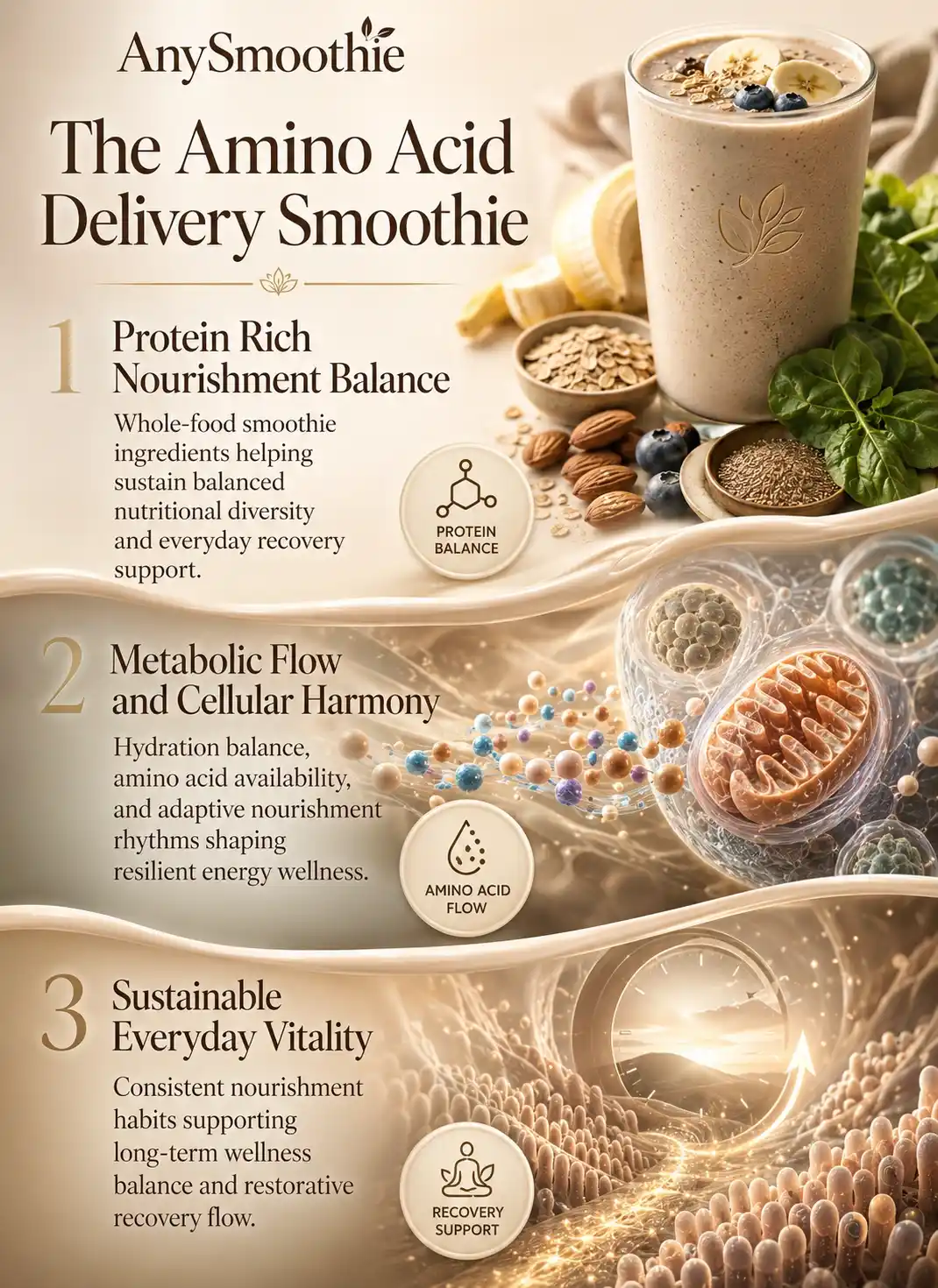
The simplest way to get there is to think in four parts:
1) Protein base: This is your anchor. Soy milk, pea protein, tofu, or plant Greek-style yogurt can do most of the heavy lifting.
2) Fiber: Fruit, leafy greens, oats, chia, or even frozen cauliflower help slow digestion so you stay full.
3) Healthy fats: Nut butter, seeds, or avocado make the smoothie creamy and steady, instead of a quick sugar spike.
4) Flavor boosters: Cocoa, coffee, vanilla, citrus, spices, and a pinch of salt make “healthy” taste like something you’d actually choose.
For blending, order matters. Start with liquids, then powders and soft ingredients, then frozen fruit and ice. That quick step helps protein powder dissolve so you don’t get dry pockets. If the texture still tastes chalky, add a spoon of nut butter, a few oats, or a small pinch of salt to round it out. For more general technique ideas, Minimalist Baker’s collection of smoothie tips is a helpful reference.
Best protein boosters for plant-based smoothies
If you want protein without fuss, these are the usual MVPs:
- Silken tofu: Neutral flavor, ultra-creamy, great with berries or chocolate.
- Soy milk: One of the easiest ways to raise protein without changing texture much.
- Pea protein powder: A clean option when you need a bigger protein jump.
- Hemp hearts: Nutty taste, blends well, pairs with fruit and greens.
- Chia seeds: Adds protein plus thickness, especially if you let it sit.
- Nut butters: Peanut, almond, cashew, or sunflower seed butter for nut-free needs.
- Oats: More of a “stay full” booster, still adds a bit of protein and creaminess.
- Greek-style plant yogurt: Tangy, thick, and great for “cheesecake” vibes.
Quick swap rule: no tofu, use plant yogurt. No protein powder, combine hemp hearts + soy milk for a steady boost.
How to keep smoothies thick, creamy, and not gritty
A great smoothie should drink like a milkshake, not like sandy juice. A few habits help:
- Freeze bananas (or use frozen cauliflower) for thickness without tons of ice.
- Start with less liquid, you can always add more.
- Blend powders with the liquid first for 10 seconds, then add frozen items.
- Let chia sit 3 to 5 minutes if you want a thicker finish.
- Add ice last, and only if you need it.
- Use a high-speed blender when you can, it makes seeds and oats feel smoother.
Quick fixes:
Too thick: add a splash of milk.
Too thin: add frozen fruit or a spoon of oats.
Too sweet: add lemon juice, a pinch of salt, or more greens.
12 Protein-Packed Smoothies, Minimalist Baker Style (Fast, Flavorful, and Filling)
These are “mini cards” you can riff on. Keep the base the same, change one flavor, and suddenly your week feels less repetitive. For the original inspiration, see Minimalist Baker’s 12 Protein-Packed Smoothies.
Fruity and bright protein smoothies
Berry Almond Butter Smoothie
Ingredients
- 1 cup frozen mixed berries
- 1 cup unsweetened soy milk
- 1 tablespoon almond butter
- 1 tablespoon chia seeds
- ½ cup ice, optional
Pour the soy milk into the blender first. Add the frozen berries, almond butter, chia seeds, and ice if using. Blend until thick and creamy.
Soy milk provides high-quality plant protein, while almond butter contributes unsaturated fats and additional protein. Berries provide fiber and polyphenols, and chia adds fiber and ALA omega-3 fatty acids.
Estimated Nutrition per Serving
- Calories: ~320 kcal
- Protein: ~14 g
- Carbohydrates: ~34 g
- Fat: ~17 g
- Fiber: ~14 g
- Sugars: ~14 g
Strawberry Cheesecake Smoothie
Ingredients
- 1 cup frozen strawberries
- ¾ cup unsweetened Greek-style plant yogurt
- ¼ cup rolled oats
- ½ teaspoon vanilla extract
- 1 tablespoon fresh lemon juice
- ½ cup unsweetened soy milk
Pour the soy milk and plant yogurt into the blender first. Add the strawberries, oats, vanilla, and lemon juice. Blend until completely smooth and creamy.
Strawberries provide vitamin C, fiber, and polyphenols, while oats contribute fiber, including beta-glucan. Vanilla and lemon create the sweet-tangy character associated with cheesecake without requiring a large amount of added sugar.
Estimated Nutrition per Serving
- Calories: ~300 kcal
- Protein: ~14 g
- Carbohydrates: ~43 g
- Fat: ~10 g
- Fiber: ~8 g
- Sugars: ~16 g
Mango Lassi Smoothie
Ingredients
- 1 cup frozen mango
- ¾ cup unsweetened plant yogurt
- ¾ cup unsweetened soy milk
- ¼ teaspoon ground cardamom
- ½ cup ice, optional
Pour the soy milk and plant yogurt into the blender first. Add the frozen mango, cardamom, and ice if using. Blend until creamy.
Mango provides vitamin C, carotenoids, and natural sweetness, while soy milk contributes plant protein. Cardamom adds the aromatic character of a lassi-style drink without requiring additional sweetener.
Estimated Nutrition per Serving
- Calories: ~280 kcal
- Protein: ~14 g
- Carbohydrates: ~39 g
- Fat: ~9 g
- Fiber: ~5 g
- Sugars: ~25 g
Pineapple Green Smoothie
Ingredients
- 1 cup frozen pineapple
- 1 cup spinach
- 2 tablespoons hemp hearts
- 1 cup unsweetened soy milk
- ½ cup ice, optional
Pour the soy milk into the blender first. Add the spinach, frozen pineapple, hemp hearts, and ice if using. Blend until completely smooth.
Pineapple contributes vitamin C and natural sweetness, while spinach provides folate and carotenoids. Hemp hearts and soy milk add plant protein, minerals, and unsaturated fats.
Estimated Nutrition per Serving
- Calories: ~290 kcal
- Protein: ~16 g
- Carbohydrates: ~33 g
- Fat: ~13 g
- Fiber: ~5 g
- Sugars: ~21 g
Chocolate Peanut Butter Smoothie
Ingredients
- 1 tablespoon unsweetened cocoa powder
- 1 medium frozen banana
- 1 tablespoon peanut butter
- 1 cup unsweetened soy milk
- 1 scoop pea protein
Pour the soy milk into the blender first. Add the pea protein, frozen banana, peanut butter, and cocoa. Blend until thick and completely smooth.
Pea protein and soy milk provide substantial plant protein, while peanut butter contributes unsaturated fat and additional protein. Cocoa adds flavanols, magnesium, and a deeper chocolate flavor.
Estimated Nutrition per Serving
- Calories: ~450 kcal
- Protein: ~38 g
- Carbohydrates: ~45 g
- Fat: ~17 g
- Fiber: ~9 g
- Sugars: ~19 g
Mocha Oat Smoothie
Ingredients
- ½ cup chilled coffee
- 1 tablespoon unsweetened cocoa powder
- ⅓ cup rolled oats
- 1 cup unsweetened soy milk
- ½ teaspoon vanilla extract
- ½ cup ice
Pour the coffee and soy milk into the blender first. Add the oats, cocoa, vanilla, and ice. Blend until completely smooth.
Oats provide complex carbohydrates and beta-glucan fiber, while soy milk contributes protein. Coffee supplies caffeine and cocoa provides flavanols. Caffeine can support alertness, although individual sensitivity and response vary.
Estimated Nutrition per Serving
- Calories: ~250 kcal
- Protein: ~13 g
- Carbohydrates: ~34 g
- Fat: ~8 g
- Fiber: ~6 g
- Sugars: ~3 g
Chocolate Cherry Recovery Smoothie
Ingredients
- 1 cup frozen dark cherries
- 1 tablespoon unsweetened cocoa powder
- ¾ cup unsweetened plant yogurt
- 2 tablespoons hemp hearts
- ½ cup unsweetened soy milk
Pour the soy milk and plant yogurt into the blender first. Add the frozen cherries, cocoa, and hemp hearts. Blend until thick and creamy.
Cherries provide carbohydrates and anthocyanins, while hemp hearts contribute protein, minerals, and unsaturated fats. Cocoa adds flavanols and magnesium. This can contribute nutrients after exercise, although recovery depends on overall protein, carbohydrate, energy intake, and training demands.
Estimated Nutrition per Serving
- Calories: ~390 kcal
- Protein: ~18 g
- Carbohydrates: ~48 g
- Fat: ~16 g
- Fiber: ~8 g
- Sugars: ~30 g
Salted Caramel Date Smoothie
Ingredients
- 1 Medjool date, pitted
- 1 medium frozen banana
- 1 tablespoon tahini
- 1 cup unsweetened soy milk
- ½ teaspoon vanilla extract
- Small pinch of salt
- ½ cup ice, optional
Pour the soy milk into the blender first. Add the banana, date, tahini, vanilla, salt, and ice if using. Blend until silky and creamy.
Banana and date provide natural sweetness and carbohydrates, while tahini contributes unsaturated fats, protein, and minerals. Vanilla and a small amount of salt deepen the caramel-like flavor without requiring additional sweetener.
Estimated Nutrition per Serving
- Calories: ~365 kcal
- Protein: ~13 g
- Carbohydrates: ~58 g
- Fat: ~12 g
- Fiber: ~8 g
- Sugars: ~34 g
Vanilla Matcha Green Smoothie
Ingredients
- 1 teaspoon matcha
- 1 cup spinach
- 1 medium frozen banana
- 1 cup unsweetened soy milk
- ½ cup unsweetened plant yogurt
- ½ teaspoon vanilla extract
- 1 teaspoon fresh lime juice
Pour the soy milk and plant yogurt into the blender first. Add the spinach, banana, matcha, vanilla, and lime juice. Blend until completely smooth.
Matcha naturally contains caffeine, L-theanine, and catechins, while spinach contributes folate and carotenoids. Soy milk and plant yogurt provide body and plant protein. Matcha has been studied in relation to attention and cognitive performance, but individual responses to caffeine vary.
Estimated Nutrition per Serving
- Calories: ~310 kcal
- Protein: ~16 g
- Carbohydrates: ~43 g
- Fat: ~9 g
- Fiber: ~6 g
- Sugars: ~22 g
Creamy Avocado Lime Smoothie
Ingredients
- ½ avocado
- 1 tablespoon fresh lime juice
- ¾ cup frozen pineapple
- 2 tablespoons hemp hearts
- 1 cup unsweetened almond milk
Pour the almond milk into the blender first. Add the avocado, frozen pineapple, hemp hearts, and lime juice. Blend until thick and creamy.
Avocado provides fiber and unsaturated fats, while hemp hearts contribute protein, minerals, and additional unsaturated fats. Pineapple provides vitamin C and natural sweetness, balancing the richer avocado base.
Estimated Nutrition per Serving
- Calories: ~390 kcal
- Protein: ~11 g
- Carbohydrates: ~36 g
- Fat: ~26 g
- Fiber: ~11 g
- Sugars: ~18 g
If I were making this especially thick, I’d hold back about a quarter of the almond milk at first. Avocado and frozen pineapple create plenty of body, and the remaining liquid can be added gradually until it reaches the right consistency.
Carrot Cake Smoothie
Ingredients
- ½ cup grated carrot
- 1 medium banana
- ¼ cup rolled oats
- ¼ teaspoon ground cinnamon
- ¼ teaspoon ground ginger
- ¾ cup unsweetened plant yogurt
- ½ cup unsweetened soy milk
- Small pinch of salt
Pour the soy milk and plant yogurt into the blender first. Add the carrot, banana, oats, cinnamon, ginger, and salt. Blend until completely smooth.
Carrot provides beta-carotene and fiber, while oats contribute carbohydrates and beta-glucan fiber. Banana supplies natural sweetness, and the cinnamon and ginger create the familiar warm-spice profile of carrot cake.
Estimated Nutrition per Serving
- Calories: ~355 kcal
- Protein: ~15 g
- Carbohydrates: ~58 g
- Fat: ~9 g
- Fiber: ~9 g
- Sugars: ~27 g
Pumpkin Pie Spice Smoothie
Ingredients
- ½ cup pumpkin puree
- ½ cup frozen cauliflower rice
- 1 scoop pea protein
- 1 cup unsweetened soy milk
- ½ teaspoon vanilla extract
- ½ teaspoon pumpkin pie spice
- 1 teaspoon finely grated orange zest
Pour the soy milk into the blender first. Add the pea protein, pumpkin puree, frozen cauliflower, vanilla, pumpkin pie spice, and orange zest. Blend until thick and completely smooth.
Pumpkin provides beta-carotene and fiber, while pea protein and soy milk create a substantial plant-protein base. Frozen cauliflower adds body with a mild flavor, and orange zest brightens the pumpkin and warm spices.
Estimated Nutrition per Serving
- Calories: ~280 kcal
- Protein: ~33 g
- Carbohydrates: ~27 g
- Fat: ~7 g
- Fiber: ~8 g
- Sugars: ~7 g
If you want another chocolate-forward reference point, this Chocolate Nut Banana Protein Smoothie shows how classic flavors can still feel “protein-first.”
Make Them Work for Your Life: Prep, Swaps, and When to Drink Them
Smoothies are only “easy” if they stay easy on your busiest days. The goal is to make good choices feel automatic. Drink these as breakfast when you need a fast meal, as a post-workout option when you want protein without cooking, or as a 3 p.m. snack that prevents random grazing.
To turn any smoothie into a fuller meal, add one or two of these: oats, nut or seed butter, plant yogurt, silken tofu, or an extra scoop of protein powder. Think of it like adding bricks to a wall, it stands longer.
For a flavor you can copy directly, Minimalist Baker’s Blueberry Almond Butter Smoothie is a great template for fruit plus fat plus protein.
Freezer smoothie packs and 5-minute prep routine
Portion frozen fruit, greens, and add-ins (like chia or hemp) into freezer bags. Leave out liquids, nut butters, and powders until blending, they’re easier to measure fresh.
Most packs keep well for about 1 to 2 months if sealed tightly. A simple shopping rhythm: frozen berries, frozen mango, spinach, soy milk, hemp hearts, oats, and your preferred protein powder.
Easy swaps for allergies and preferences
Nut-free: sunflower seed butter or tahini instead of nut butter.
Soy-free: pea protein plus oat milk, then add hemp hearts for extra support.
Gluten-free: use certified gluten-free oats if oats are in the plan.
Lower-sugar: choose berries, use half the dates, add cinnamon or vanilla for “sweet” aroma without extra sugar.
Conclusion
You don’t need a complicated recipe list to make smoothies that actually satisfy. With a solid protein base, a few smart boosters, and flavors you crave, protein-packed smoothies can feel as comforting as breakfast and as convenient as a snack.
Start with one idea from this 12 Protein-Packed Smoothies – Minimalist Baker inspired lineup, then rotate through the week so you don’t get bored. What combo are you making first, and what swap do you need to make it work for your pantry?
🛡️ Safety Notes & Contraindications
Urea Cycle Overload and Nitrogen Clearance Deficits: CRITICAL: Concentrating 30 grams of plant-based protein alongside isolated amino acid pools (hemp/soy) creates a rapid ultrafiltration load on the kidneys and forces the liver to process large amounts of waste nitrogen through the urea cycle. If you present with advanced Chronic Kidney Disease (CKD, Stages 3-5) or subclinical hepatic insufficiency, monitor your blood urea nitrogen (BUN) metrics and calibrate the total daily protein floor.
Anticoagulant Interactions with Phylloquinone Spikes (Matcha/Spinach): Green-focused protein blends (Vanilla Matcha Green, Pineapple Green) concentrate significant amounts of Vitamina K1 (fillochinone). Vitamin K1 is an essential co-factor for the synthesis of blood clotting factors. If you are taking vitamin K antagonists (such as Warfarin/Coumadin), sudden changes in green vegetable intake can directly counteract the clinical efficacy of your medication.
Oxalate Seeding and Intestinal Complexation Rules: Spinach, cocoa, and certain nut butter derivatives contain dense concentrations of soluble oxalic acid. In individuals with a personal history of calcium-oxalate kidney stones, an unmitigated oxalate flux can lead to hyperoxaluria. The addition of calcium-fortified plant milks or plant-based yogurts rich in mineral co-factors is required to complex oxalates directly in the intestine, avoiding renal uptake.
GI Osmotic Fluid Shifts from Highly Viscous Hydrocolloids: Ingredients like chia seeds, flax, and silken tofu dramatically alter the osmolarity of the intestinal chimo. If consumed too rapidly or without adequate hydration, these dense hydrophilic gels draw fluid from the vascular system into the bowel lumen, potentially triggering sudden osmotic cramping, flatulence, or loose bowel transit. Dilute the matrix with a minimum of 300ml of base liquid.
Phytic Acid and Divalent Cation Malabsorption: Raw oats, hemp hearts, and un-sprouted seeds are rich in acido fitico (fitati), powerful anti-nutrients that chelate divalent minerals like Iron ($Fe^{2+}$), Zinc ($Zn^{2+}$), and Magnesium ($Mg^{2+}$). To prevent micronutrient deficiencies over time, individuals with iron-deficiency anemia should utilize rolled oats that have been pre-soaked or flash-blanched before blending.
FAQ
How does “Viscous Fiber Stratification” from oats and chia prevent an acute glucose surge?
Soluble fibers, such as the beta-glucans in oats and the hydrophilic mucilage in chia seeds, form a thick, cross-linked viscoelastic hydrogel when hydrated. Biochemically, this gel network traps simple fruit sugars, increasing the physical distance they must travel to interface with intestinal brush border disaccharidases. Supporting this physiological system through high-fiber additions optimizes the natural pathways of “delayed gastric emptying,” ensuring a metered carbohydrate flux into the portal vein rather than an abrupt glycemic spike.
Why does a “Lipid-Anchored Amino Base” like soy milk or tahini enhance macro-nutrient partitioning?
Hydrophilic amino acids and sugars transport quickly, but they can clear the system just as fast if left unprotected. Biochemically, pairing plant-based proteins (such as soy or pea isolate) with polar lipids and monounsaturated fatty acids (found in nut butters, hemp hearts, or avocado) triggers the spontaneous self-assembly of micelles within the intestinal lumen. Supporting this physiological system slows down transit velocity, providing a steady, prolonged delivery of systemic amino acids to peripheral tissues.
What is the advantage of using “Silken Tofu” as an structural and proteinaceous texturizer?
Silken tofu delivers a highly dense pool of complete plant protein consisting of globulin fractions ($7\text{S}$ and $11\text{S}$ globulins). Biochemically, these soy proteins contain a balanced spectrum of essential amino acids that are highly digestible when homogenized. Supporting this physiological system inside a smoothie matrix yields an ultra-creamy, stable emulsion that carries fat-soluble pigments and supports muscle turnover with minimal digestive friction or osmotic disruption in the gut lumen.
How does “Mitochondrial Priming” determine whether macro-nutrients are stored or oxidized for energy?
Cells require a continuous, predictable supply of fuel to generate ATP without creating localized oxidative stress. Biochemically, a fruit-heavy “sugar bomb” floods cell pathways with rapid fructose and glucose, forcing cellular mitochondria into an overworked, inefficient redox state. Supporting this physiological system by framing your carbohydrates within a dense protein-and-fat barrier facilitates the biochemical mechanics of “bioenergetic stability,” allowing mitochondria to process incoming fuel via steady cellular respiration.
Why do “Phytochemical Modulators” like matcha or cacao stabilize the baseline redox environment?
Mechanical blending shears plant tissue, instantly exposing fragile intracellular compounds to destructive atmospheric oxygen. Biochemically, bioactive compounds like the catechins in matcha or the flavanols in cacao act as sacrificial electron donors that intercept reactive oxygen species (ROS). Supporting this physiological system inside the blender cup protects the vulnerable fatty acids of hemp or chia from rapid lipid peroxidation, maintaining structural integrity until the moment of ingestion.

Medical Disclaimer: AnySmoothie content is for educational purposes only and is not a substitute for professional medical advice. Consult a healthcare provider for personalized guidance. See our full Disclaimer & Terms of Use. AI Transparency: AnySmoothie may use AI to support content development. All content undergoes human editorial review for accuracy, clarity, and editorial quality. See our full AI Transparency.